7 Smart September Tree & Shrub Moves for Every USDA Zone (Root-Growth Math Included)
Your soil is still warm right now, and that six-week window before the ground freezes is the cheapest root growth you’ll get all year. Here’s how to use it by zone.
Never miss an update — choose Garden Kindred as your preferred source on Google.
How it works: Tap the button below to open Google’s settings page, then check the box next to Garden Kindred.
Tap the checkbox to turn it blue — that’s how you know it’s set.
September is the best month to plant most deciduous trees and shrubs because soil stays above 50°F for weeks after air temperatures drop, and roots keep growing until soil hits about 40°F. That gap, warm soil plus cool air, lets a plant build root mass without also feeding leaves or flowers. The rule of thumb from university extension programs: count back six weeks from your area’s average first hard freeze and plant before that date, giving new roots enough active growing time to anchor before the ground locks up for winter.
In zones 3-5, that means early-to-mid September, sometimes late August in the coldest pockets. In zones 6-7, you get through late September into October.
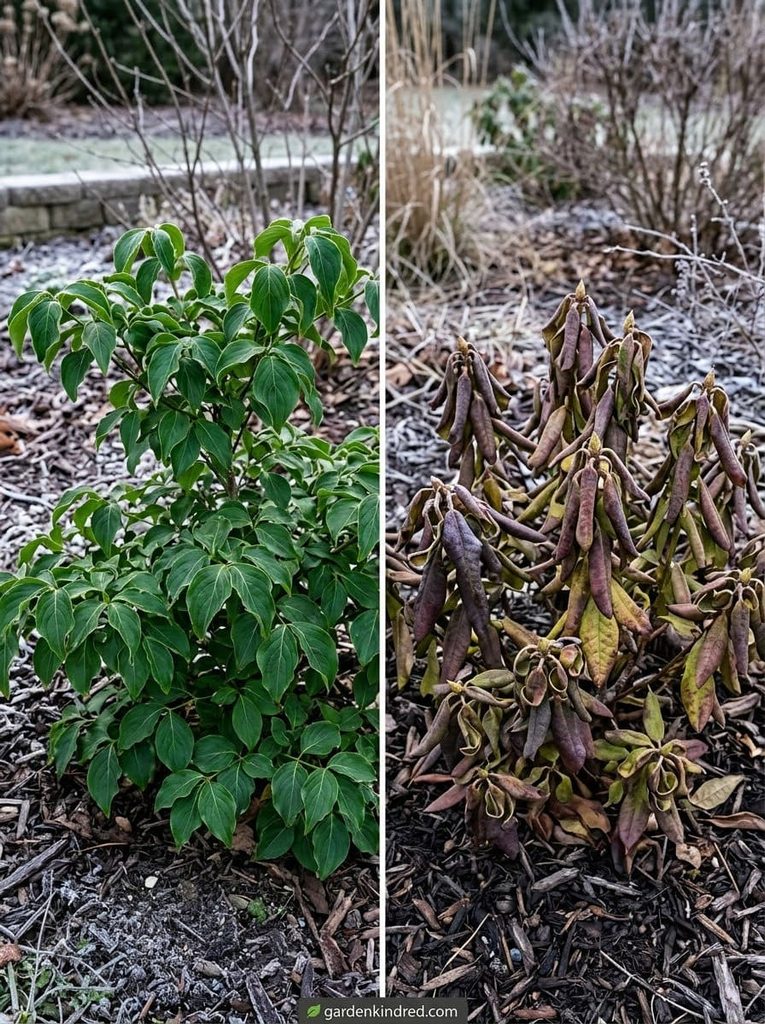
Zones 8-10 can keep planting into November or December, though earlier is still better. Broadleaf evergreens like rhododendron and narrow-leaf evergreens like yew are the exception, plant those in spring instead, since their leaves keep losing water all winter and a shallow fall root system can’t keep up with that demand.
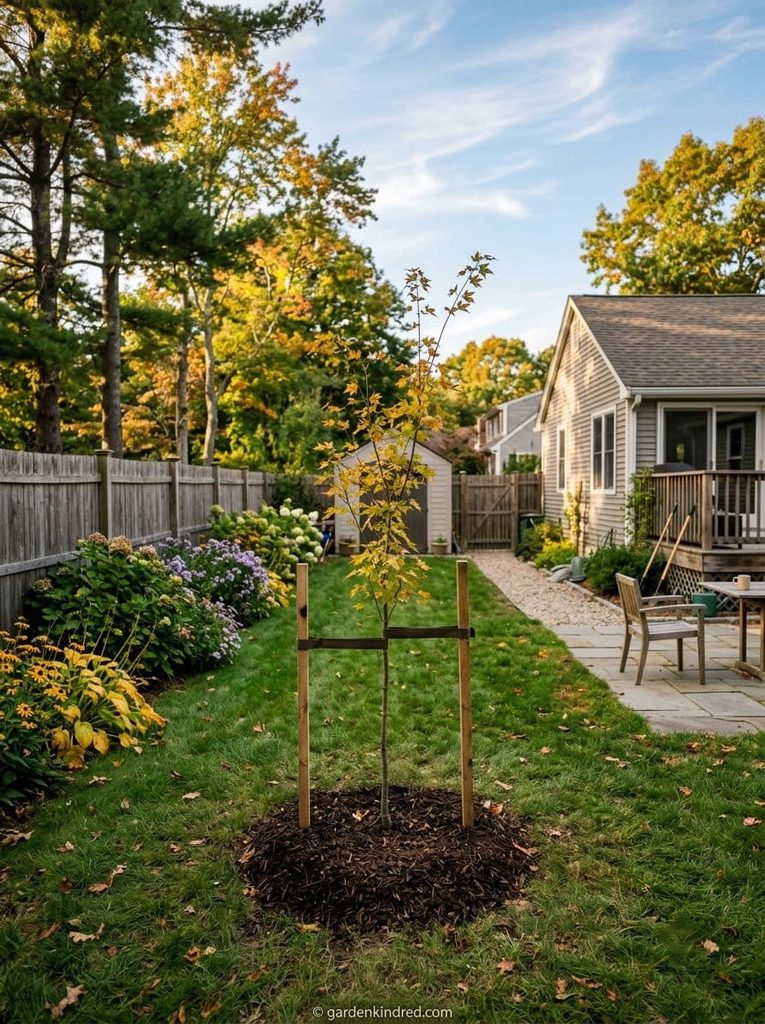
Why does fall planting actually work for trees and shrubs?
Soil is a slow-moving thermal battery. It holds summer heat for weeks after the air above it cools off, and that lag is the entire mechanism behind fall planting.
Root growth on most woody plants continues as long as soil temperature at a 4-inch depth stays above 50°F, according to home-garden guidance from UMass Amherst’s Center for Agriculture, Food, and the Environment. Roots keep extending until soil drops to roughly 40°F, per The Morton Arboretum, which in most of the continental US is weeks after the first frost has already killed tender annuals.
Meanwhile, shortening daylight is a separate signal. It tells the plant to stop pushing top growth and drop leaves, regardless of how warm the soil still is. That’s the part people miss.
A tree planted in September isn’t fighting to support new leaves, flowers, or fruit while also growing roots the way a spring-planted tree is. All of its stored carbohydrate reserves go straight into the root system instead, per UConn Extension.
The practical number extension offices use is six weeks. K-State Research and Extension, Johnson County puts it plainly: trees and shrubs need at least six weeks of active root-growing conditions before the ground freezes solid to build enough root mass to survive winter desiccation. Count backward from your area’s average first hard freeze date, not the first light frost, and that’s your real planting deadline.
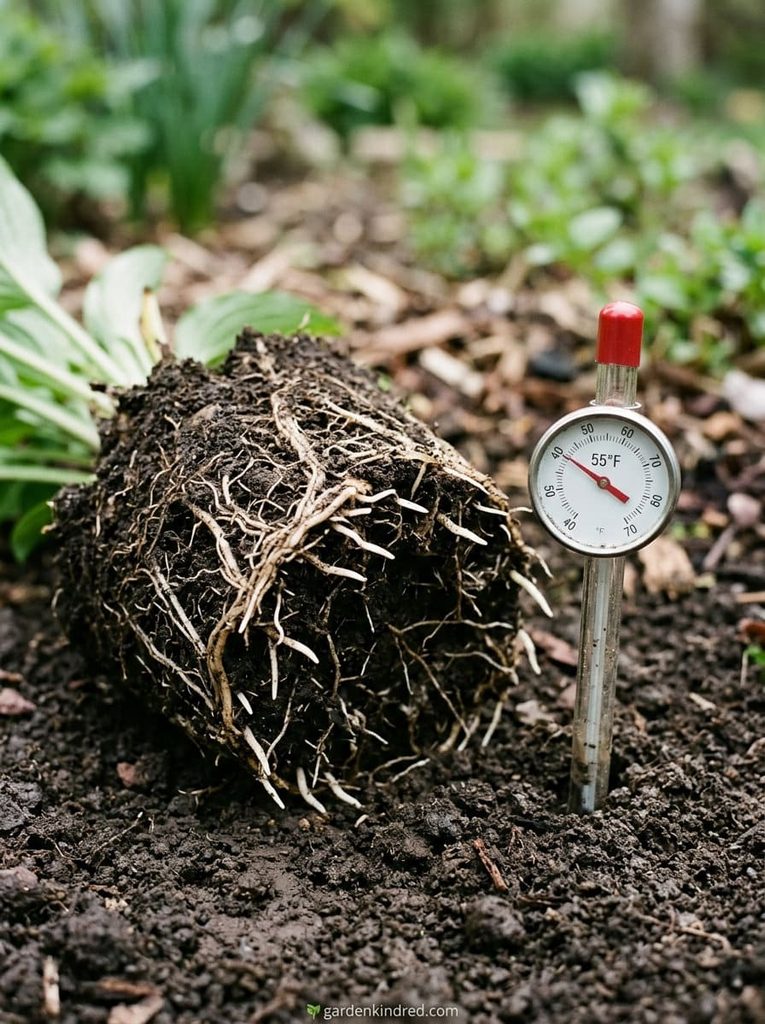
What’s the real September planting window for zones 3-5?
Cold-climate gardeners have the least room for error, because the ground freezes hard and early. Average first hard freeze in zones 3-5 lands between September 1 and September 21, depending on exact location, per USDA Plant Hardiness Zone Map regional data compiled by extension offices.
That means the six-week rule pushes the real planting cutoff to early September, sometimes late August in the coldest pockets of zone 3. If you’re reading this in the first two weeks of September and you garden in zone 4 or colder, plant this week. Don’t wait for a cooler, more “fall-like” day, the soil clock is already running.
Zone 3-5 picks that establish reliably in this compressed window: paper birch, Amur maple, ninebark, and dogwood shrubs (red-twig and gray dogwood) all root fast in cool soil and tolerate a short establishment period. Skip broadleaf evergreens entirely here, spring is the only safe window in zones 3-5.
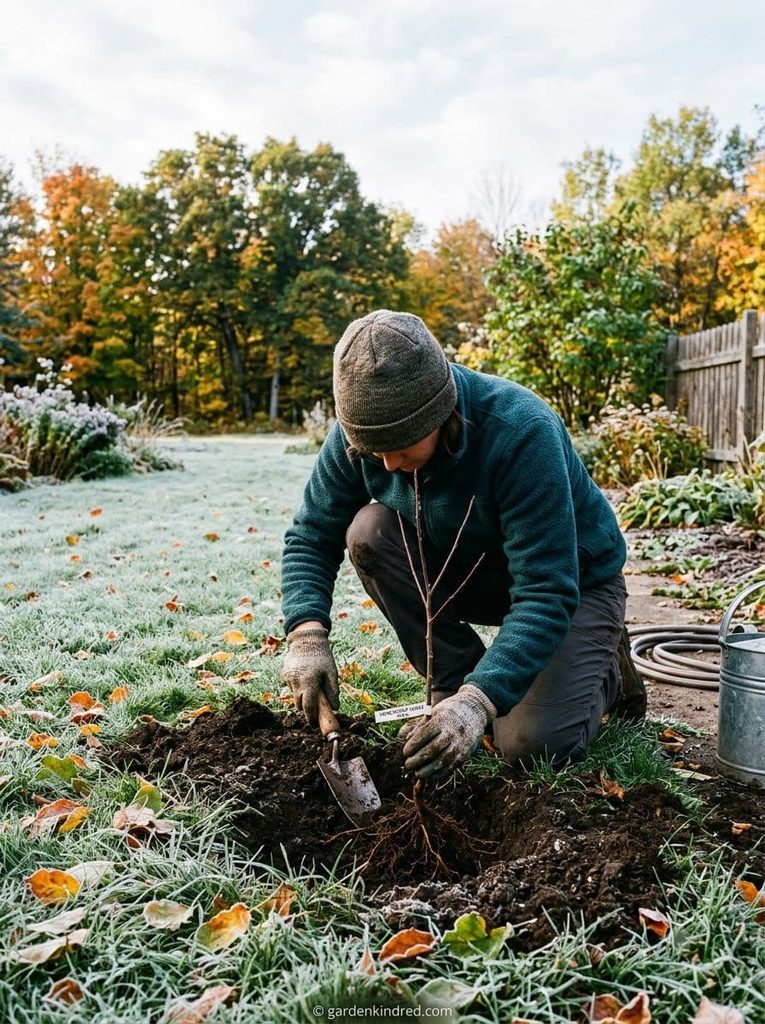
What’s the real September-October window for zones 6-7?
Zones 6-7 have more room to work with. Average first hard freeze runs roughly October 13 to October 21 in zone 6 and later still moving into zone 7, per USDA regional frost-date compilations. Counting back six weeks from those dates puts the safe planting cutoff around early-to-mid September for zone 6, stretching into early October for zone 7.
This is genuinely the sweet spot zone for fall planting. Fall is the preferred planting season across zones 7 through 10, and it works well in zones 5 and 6 too, according to nursery and extension horticulture guidance summarized by Plants By Mail’s fall planting research. You get a genuinely long window, warm-enough soil, and mild enough air that root establishment isn’t a race against the calendar.

These are formulated for early spring or, per the label's own use window, late fall application after a plant has gone dormant, not the active root-growth window this article covers. Use them at the tail end of the six-week establishment period once the plant has dropped its leaves, not right at September planting, since a nitrogen spike right after transplanting pushes exactly the tender top growth the "mistakes" section above warns against.
Shop NowThis post contains affiliate links. We may earn a commission on qualifying purchases at no extra cost to you.
Reliable September-October picks for zones 6-7: crabapple, eastern redbud, hydrangea (panicle types especially), viburnum, and most deciduous hollies. All are on the “establishes easily in fall” list compiled from UMass Extension’s species guidance, which also names ash, elm, catalpa, maple, hackberry, hawthorn, honeylocust, sycamore, and linden as fast fall-establishers.
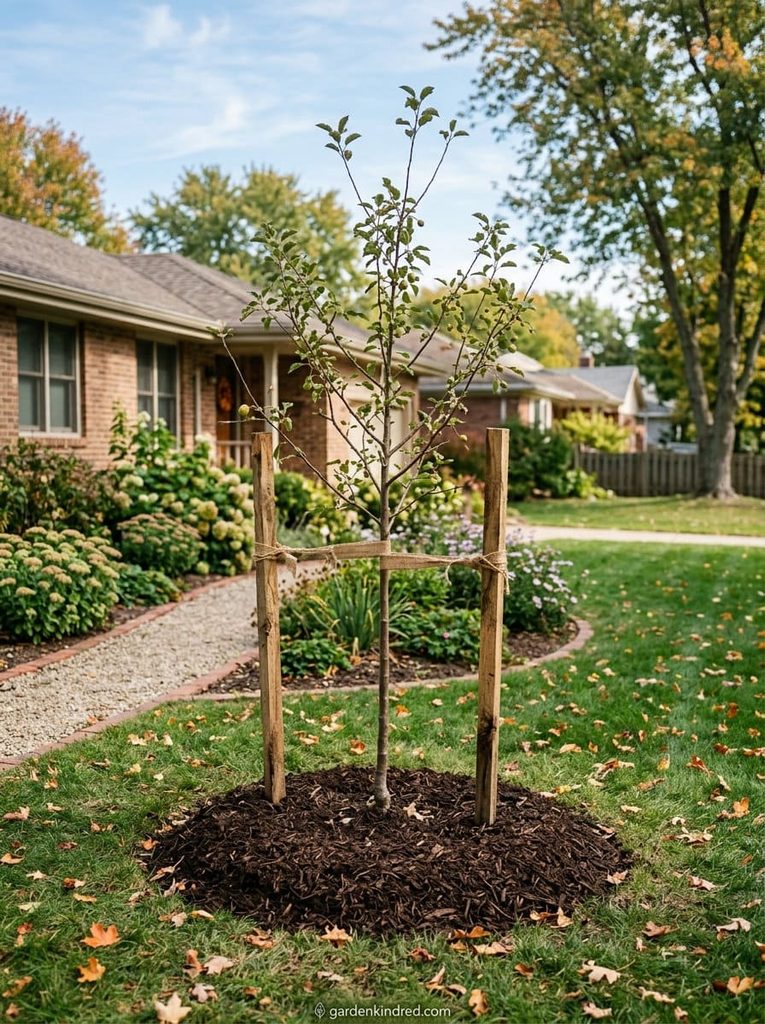
What can you still plant into November in zones 8-10?
Warm-winter zones get the longest fall planting calendar on the continent. Zones 8-10 can plant trees and shrubs as late as November or even December in many years, per nursery zone-by-zone research from Nature Hills.
That doesn’t mean rush timing doesn’t matter here, it means the deadline is later, not gone. Ground doesn’t freeze in most of zones 8-10, so the limiting factor shifts from soil freeze to summer heat stress on new transplants. September still beats November for one reason: earlier planting gives roots more total weeks of active growth before the plant’s late-winter growth flush starts pulling resources toward leaves again.
Good zone 8-10 fall picks: crape myrtle, Southern magnolia, camellia (in the milder end of this range), and most citrus-adjacent ornamentals. Pines and spruce also do well planted before the end of September while soil is still warm, per the same UMass Extension guidance cited above, a detail that applies across zones, not just the cold end.
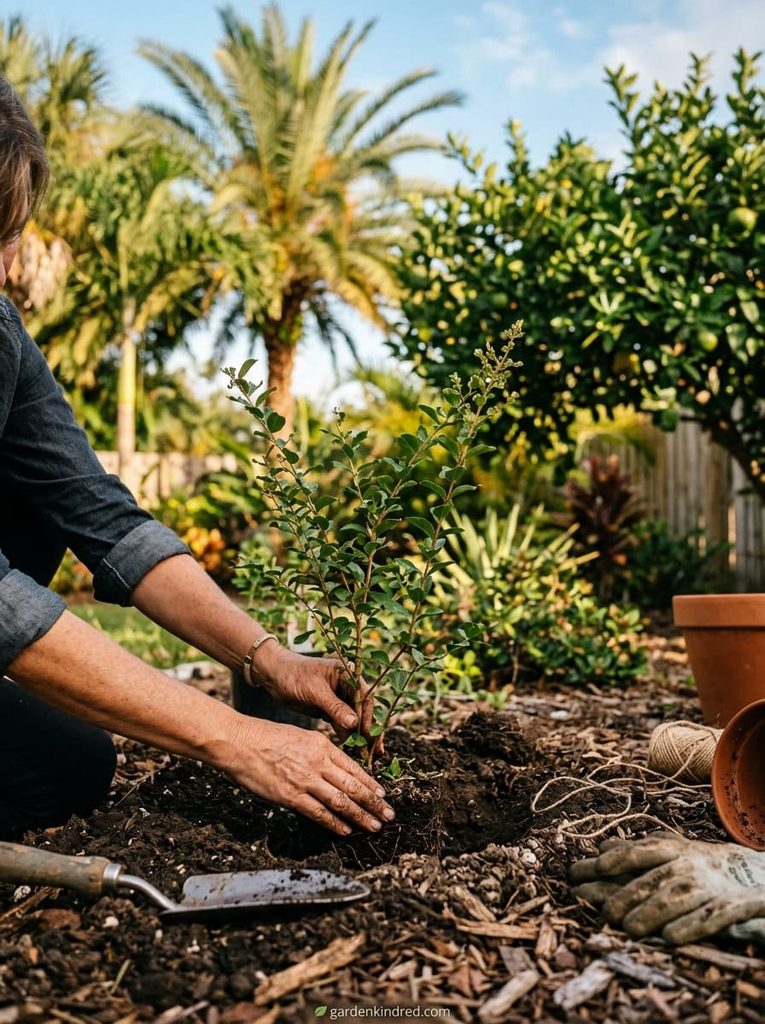
Which trees and shrubs establish easily in fall, and which should wait for spring?
Not every woody plant handles a fall root-only start the same way. Most deciduous shrubs establish easily in fall, but broadleaved evergreens like rhododendron and narrow-leaved evergreens like yew should wait for spring, per UMass Extension’s species-specific guidance.
| Group | Fall-plant now | Wait for spring |
|---|---|---|
| Shade/street trees | Maple, ash, elm, hackberry, honeylocust, linden, sycamore | Southern magnolia in zones colder than 7 |
| Ornamental/flowering trees | Crabapple, eastern redbud, hawthorn, catalpa | Japanese maple in zones colder than 6 |
| Conifers | Pine, spruce (before soil cools past 50°F) | Arborvitae in exposed windy sites |
| Shrubs | Dogwood, viburnum, ninebark, panicle hydrangea | Rhododendron, azalea, boxwood in zones colder than 6 |
| Broadleaf evergreens | Holly (in milder zones 7+) | Yew, rhododendron in zones colder than 7 |
The mechanism behind the “wait for spring” column is simple. Evergreen foliage keeps losing water through transpiration all winter, even while dormant. A root system that only had six to eight weeks to establish before freeze can’t always replace that lost water fast enough, and the plant shows up dead or badly bronzed by March. Deciduous plants drop their leaves, so they stop losing water almost entirely once dormant, which is why they tolerate a short fall establishment period so much better.
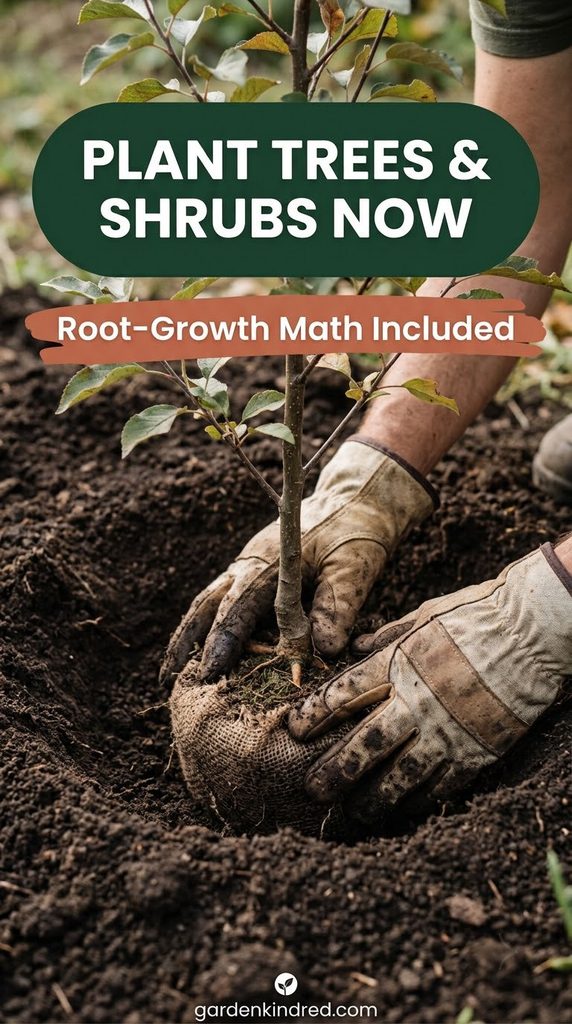
How do you plant a tree or shrub in September so it actually survives winter?
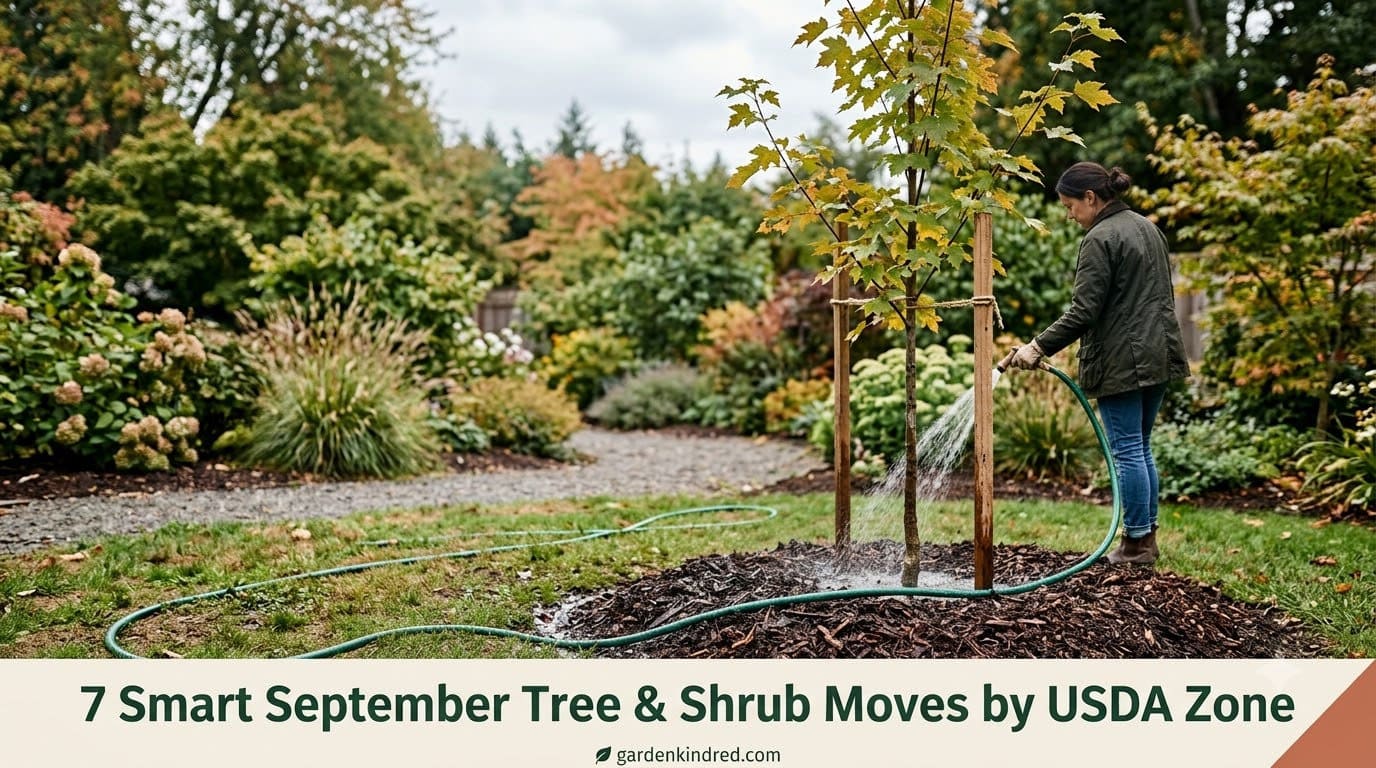
Planting depth is the single most common mistake, and it’s an easy one to get wrong with container-grown stock. The root flare, where the trunk widens out into roots, needs to sit at or slightly above grade, not buried under mulch or potting soil.
Dig the hole only as deep as the root ball, but two to three times as wide. Wide, shallow holes match how roots actually spread in the top 12 to 18 inches of soil, per arboriculture guidance from The Morton Arboretum. A too-narrow, too-deep hole creates a compacted-wall effect that roots struggle to grow through, sometimes called “planting in a pot” even after the container is removed.
Water immediately after planting, then again two to three times a week for the first several weeks, tapering as soil cools. Newly planted trees typically need about 10 gallons of water per week during establishment for a young tree, split across two to three waterings, more in zones 8-10 where fall heat still runs high.
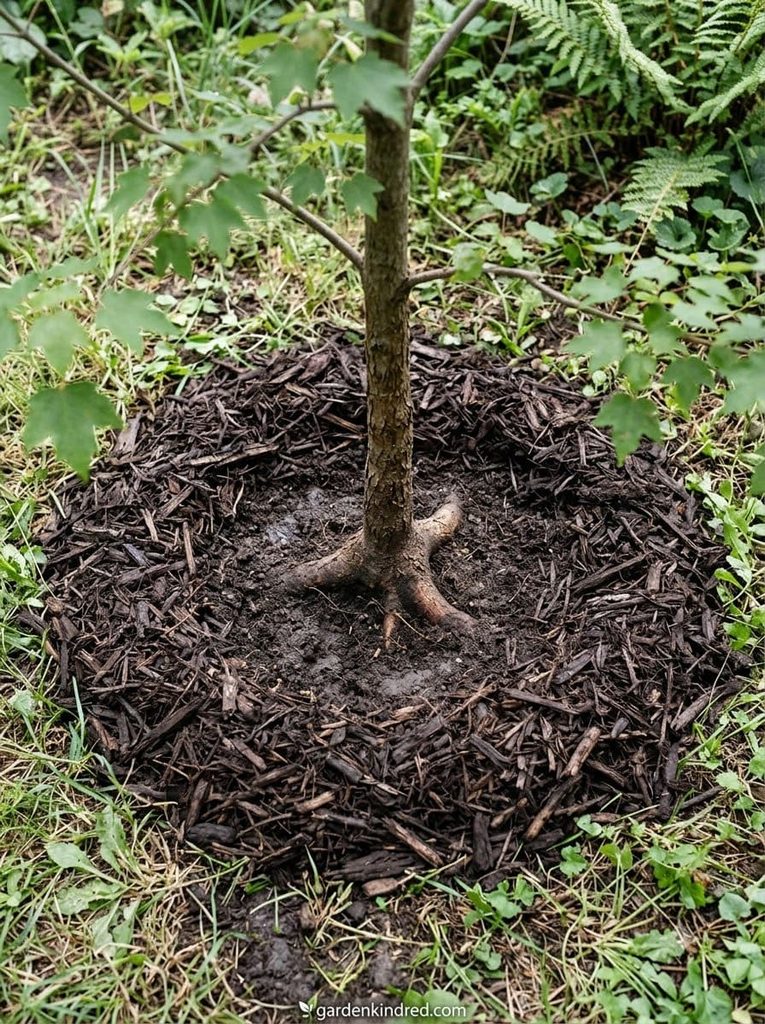
Apply 2 to 3 inches of mulch in a ring around the base, pulled back a few inches from the trunk itself, not piled against the bark. Mulch keeps soil temperature more stable and holds moisture, both of which directly extend the root-growing window described above.
What mistakes ruin fall-planted trees and shrubs?
Fertilizing too late is the most common one. Standard fertilizer applications are best used early in fall, well before freezing weather, per Nature Hills’ growing-zone guidance. A late nitrogen application pushes new soft growth right when the plant should be shutting down for winter, and that tender growth gets killed by the first hard freeze, wasting energy the plant needed for roots instead.
Skipping the water-before-freeze step is the second big one. Newly planted roots dry out faster than established ones because they haven’t spread far enough to access deep soil moisture yet. A deep watering right before the ground freezes for winter, sometimes called a “winterizing watering,” matters even in zones that get regular fall rain, because a dry warm spell in October can undo weeks of root establishment in a few days.
Planting too late in the season is the third. If you’re past your zone’s six-week cutoff, per the math above, either wait for spring or choose a plant on the “establishes easily in fall” list and plant it immediately rather than pushing further into a compressed window that leaves no margin for a bad winter.
Frequently asked questions
Is September too early to plant fall trees and shrubs? No, in most zones September is actually the ideal start of the window, not too early. Waiting until October or November uses up weeks of the soil’s warm-enough-for-roots period that you don’t get back.
Can I plant a balled-and-burlapped tree the same way as a container tree in September? Yes, the same root-flare-at-grade and wide-shallow-hole rules apply. Just remove or fold back as much burlap, wire, and twine as possible once the tree is in the hole, buried synthetic burlap doesn’t decompose and can girdle roots later.
Do I need to stake a tree planted in September? Only if it’s bare-root, top-heavy, or in a windy site. Most container and B&B trees with an intact root ball don’t need staking, and unnecessary staking can actually weaken trunk taper over time.
Products We Recommend
This post contains affiliate links. We may earn a commission on qualifying purchases at no extra cost to you.
Jobe's Slow Release Tree and Shrub Fertilizer Spikes, 15 Count
These are formulated for early spring or, per the label's own use window, late fall application after a plant has gone dormant, not the active root-growth window this article covers. Use them at the tail end of the six-week establishment period once the plant has dropped its leaves, not right at September planting, since a nitrogen spike right after transplanting pushes exactly the tender top growth the "mistakes" section above warns against.
Shop Now
Espoma Organic Bio-Tone Starter Plus 4-3-3 with Endo & Ecto Mycorrhizae, 18 lb Bag
This is a planting-time product, not an after-the-fact fertilizer, mixed into the backfill soil at the moment a tree or shrub goes into the ground. The mycorrhizal fungi colonize new root tips as they grow, which is exactly the process the six-week fall window is trying to maximize.
Shop now
Treegator Original Slow Release Watering Bag, 2-Pack
Wraps around the trunk and releases 15-20 gallons slowly over 5-9 hours, which solves the "water two to three times a week" requirement above without a hose schedule. Particularly useful for zone 8-10 gardeners still fighting fall heat during establishment.
Shop nowNever miss an update — choose Garden Kindred as your preferred source on Google.
How it works: Tap the button below to open Google's settings page, then check the box next to Garden Kindred.
Tap the checkbox to turn it blue — that's how you know it's set.