7 Real Water-Wise Plants for Hot, Low-Rainfall Regions (Zone Data Included)
Seven plants that shrug off 100-degree afternoons and weeks without rain, plus the actual biology behind why they survive when everything else wilts.
Never miss an update — choose Garden Kindred as your preferred source on Google.
How it works: Tap the button below to open Google’s settings page, then check the box next to Garden Kindred.
Tap the checkbox to turn it blue — that’s how you know it’s set.
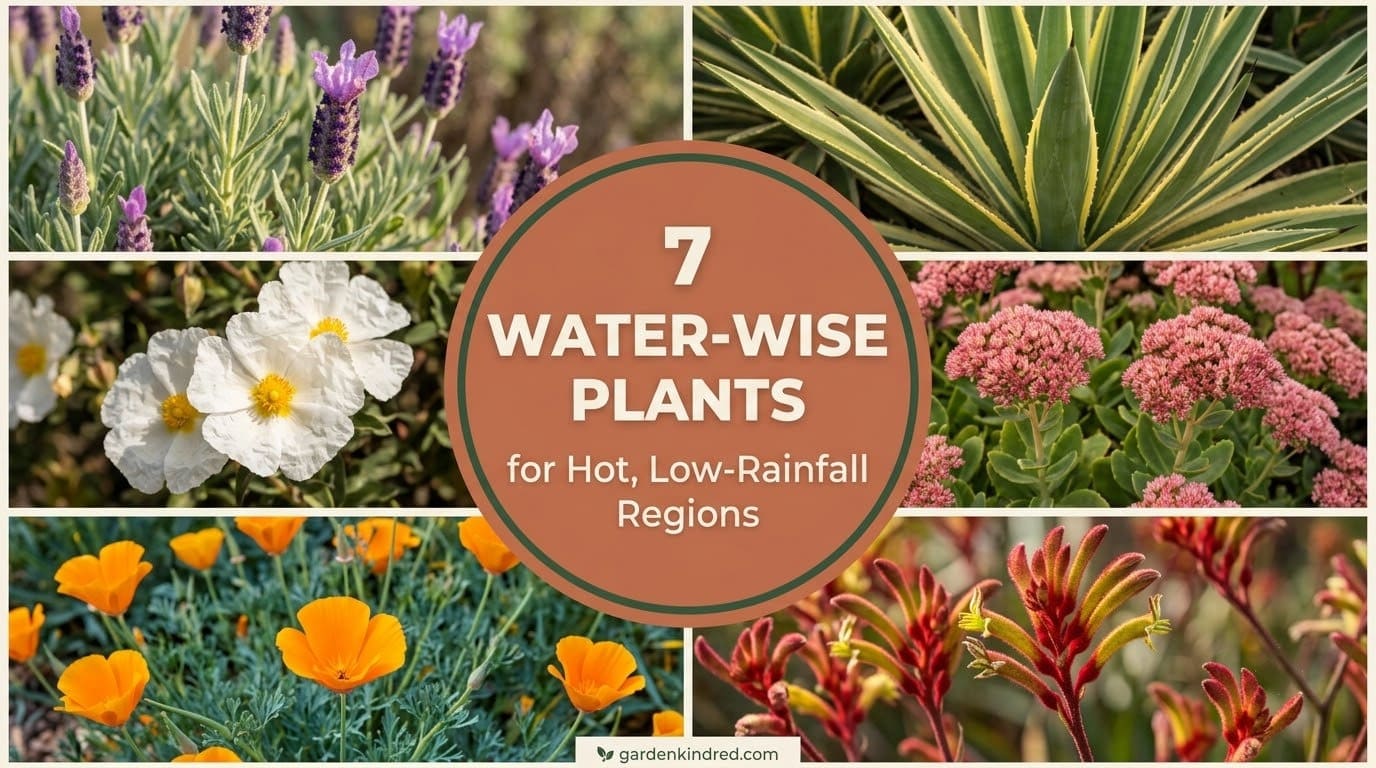
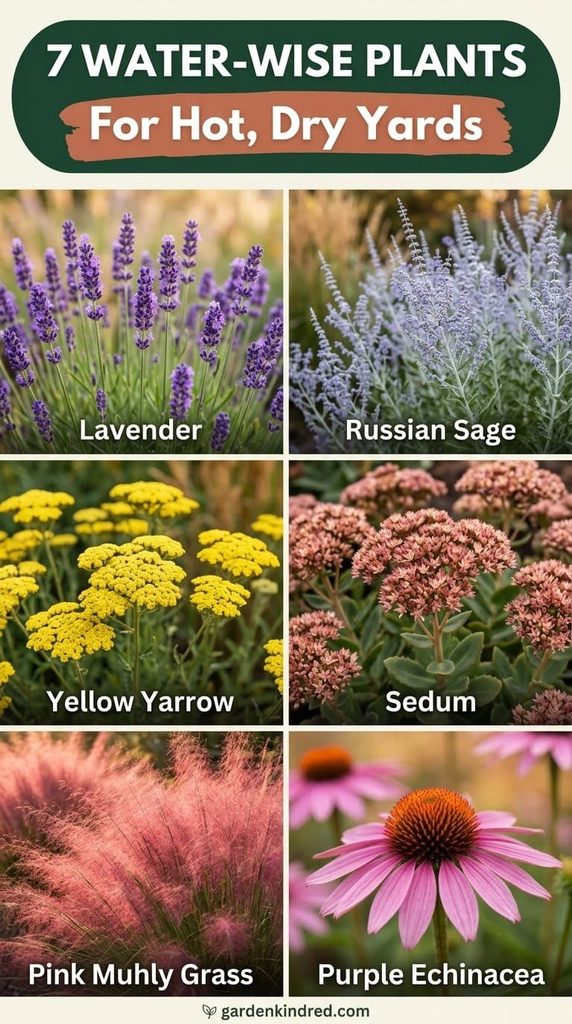
Quick Answer: For hot, arid, low-rainfall yards, the most reliable water-wise plants are lavender, Russian sage, yarrow, sedum (stonecrop), pink muhly grass, autumn sage/penstemon, and black-eyed Susan/coneflower. Each survives drought through a different real mechanism: CAM-adjacent water storage in sedum’s fleshy leaves, silvery leaf reflectance in Russian sage and lavender that cuts heat absorption, deep taproots in yarrow and coneflower that reach moisture 3 to 4 feet down, and drought-triggered dormancy in muhly grass. Most need weekly deep watering only through their first growing season, then drop to little or no supplemental water once established, per Colorado State University Extension’s xeriscape guidance. Match plants to your actual USDA zone and your soil’s real drainage, since root rot from overwatering, not drought, kills more of these plants than the dry season ever does. Mix mechanisms rather than planting all one type, since a bed built only from succulents looks flat by midsummer next to one pairing a structural grass with a vertical bloomer and a low groundcover.
Most “drought-tolerant plant” lists are recycled from cooler, wetter climates and just tack on the word “drought-tolerant” without checking whether the plant can actually handle 100-degree afternoons with no rain for six weeks straight. This list skips that. Every plant below is verified against university extension data for real water requirements, not vibes.
Why do some plants barely need water in hot, low-rainfall regions?
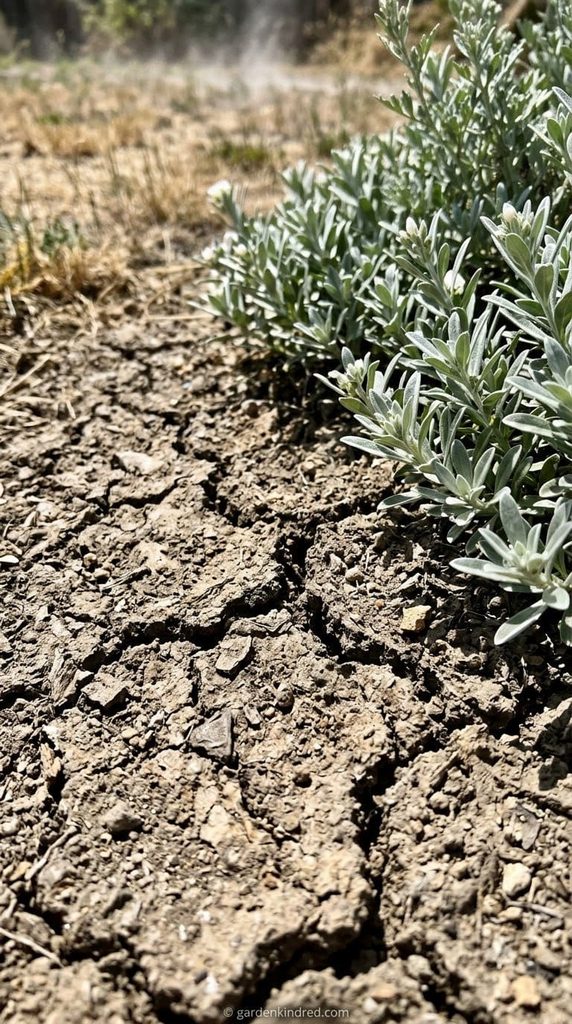
Drought tolerance is not one trick. It is four or five separate survival strategies that plants evolved independently, and knowing which one a plant uses tells you how to actually care for it.
Some plants, like sedum and other succulents, store water directly in fleshy leaves and stems, then run a photosynthesis variant called CAM (Crassulacean Acid Metabolism) that opens their stomata only at night to cut water loss. CAM plants lose roughly one-tenth as much water per unit of sugar produced compared to standard C3 plants, according to research on succulent leaf structure published in the journal Tree Physiology.
Other plants rely on structure instead of chemistry. Lavender and Russian sage both have fine silvery hairs or a waxy coating on their leaves that reflect sunlight and trap a thin layer of still air against the leaf surface, which slows evaporation the same way a light-colored shirt keeps you cooler than a dark one in full sun.
A third group just digs deeper. Yarrow and purple coneflower send taproots 2 to 4 feet into the soil profile within their first two seasons, well past where a typical lawn sprinkler ever reaches, tapping moisture that shallow-rooted plants never see. Muhly grass takes a fourth path: it slows growth and drops into partial dormancy during the driest stretches, then resumes fast once rain returns, a strategy common in native prairie and desert-adjacent grasses.
Understanding which mechanism a plant uses also explains its most common failure mode. A CAM succulent dies from soggy roots, not thirst. A silvery-leafed Mediterranean plant like lavender resents heavy clay that holds water around its crown through winter. That distinction matters more than any generic “plant it and forget it” advice.
What should you look for in a water-wise plant?
Four factors separate a plant that survives a hot, low-rainfall yard from one that limps through it and dies the first real dry spell.
Real USDA zone match, not a marketing label. “Drought-tolerant” on a plant tag means nothing if the species is only rated for zones 8-10 and you garden in zone 5. Cross-check the actual hardiness range against your zone before buying, every time, even for plants you have seen recommended everywhere.
Establishment-period water needs versus mature needs. Nearly every plant on this list needs regular water, often 1 inch per week, for its first 6 to 8 weeks after planting while roots are still shallow. The “drought-tolerant” payoff only shows up after that root system is established, typically one full growing season in.
Drainage, not just dryness tolerance. Colorado State University Extension’s xeriscape program lists “soil analysis and preparation” as one of its seven core xeriscape principles, specifically because most water-wise plants fail from poor drainage long before they fail from actual drought. Heavy clay that stays wet through winter rots the crown of sedum, lavender, and Russian sage even in a genuinely dry-summer climate.
Bloom timing and use case, not just survival. A plant list built only around “will it live” produces a yard of gray-green shrubs with no color. The seven below cover distinct roles: groundcover, pollinator forage, vertical structure, and season-long flowering, so a real water-wise bed still looks like a garden.
7 water-wise plants at a glance
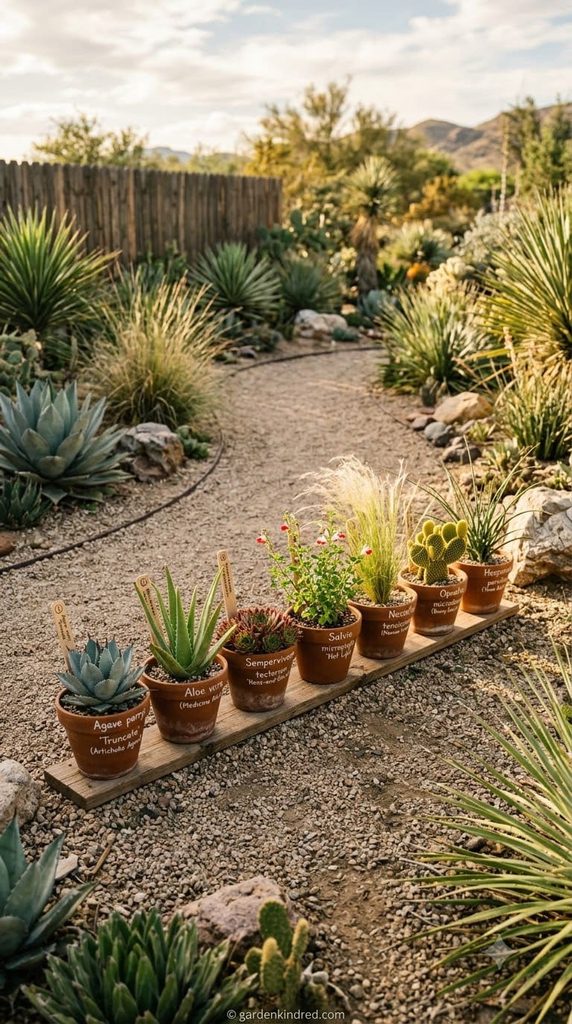
| Plant | USDA zones | Water once established | Mature size | Bloom season & color |
|---|---|---|---|---|
| Lavender | 5-9 | Deep soak every 2-3 weeks | 18-24 in. tall, 24-36 in. wide | Early to midsummer, purple-blue |
| Russian sage | 4-9 | Deep soak every 10-14 days | 3-4 ft. tall, 3-4 ft. wide | Midsummer to fall, lavender-blue |
| Yarrow | 3-9 | Rarely, after first year | 2-3 ft. tall, 2-3 ft. wide | Late spring to fall, yellow/white/pink |
| Sedum (stonecrop) | 3-9 | Rarely, only in extended heat | 4-24 in. depending on variety | Late summer to fall, pink/red/yellow |
| Pink muhly grass | 5-9 (some sources 6-9) | Deep soak every 10-14 days first year, minimal after | 3-4 ft. tall and wide | Early to mid-fall, pink-mauve plume |
| Autumn sage / penstemon | 6-9 (penstemon varies by species, some to zone 4) | Deep soak every 2 weeks | 18-36 in. tall, 18-30 in. wide | Spring through fall, red/pink/purple |
| Black-eyed Susan / coneflower | 3-9 | Deep soak every 10-14 days | 2-3 ft. tall, 1-2 ft. wide | Summer through frost, yellow/purple |
Lavender (Lavandula angustifolia)
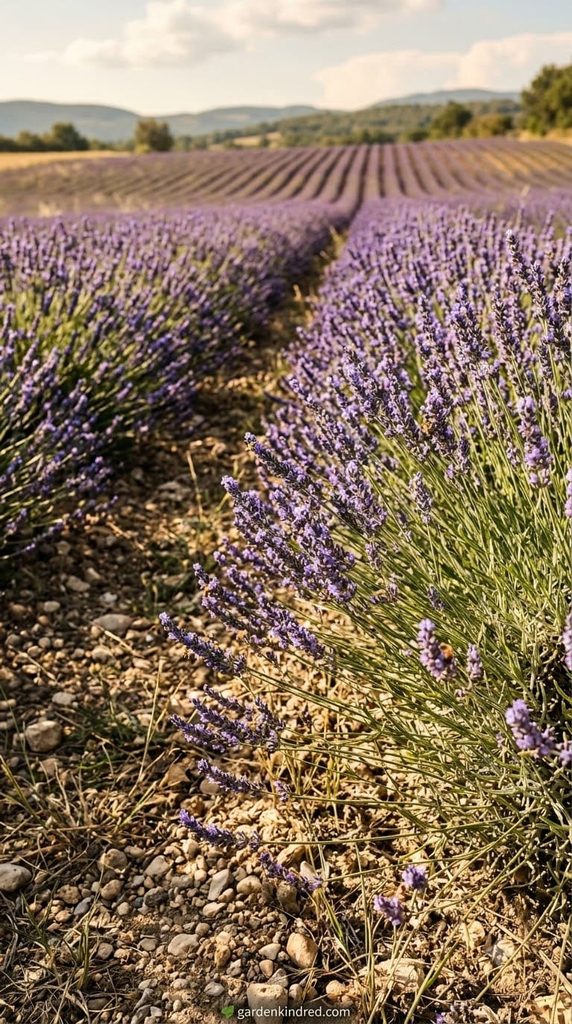
Lavender is hardy in USDA zones 5-9 and is one of the most cold-hardy Mediterranean herbs available to American gardeners, according to plant hardiness data compiled from extension sources. It wants full sun, at least 6 hours a day, and soil that drains fast, sandy or gravelly ground outperforms rich garden loam here.
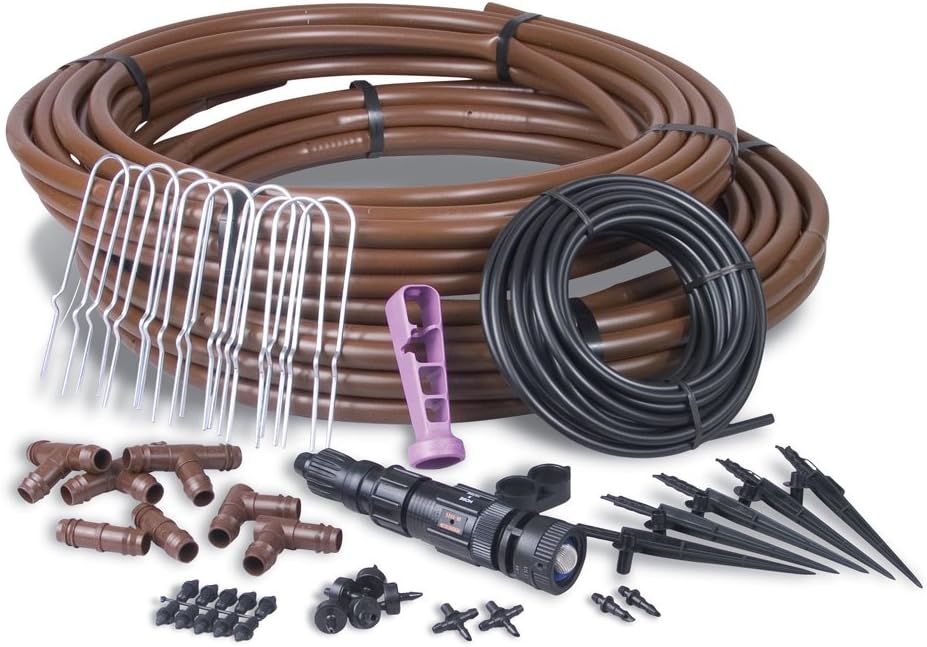
This 50-piece kit covers up to 75 square feet and directly solves the establishment-period watering problem above: it delivers water straight to the root zone of each new lavender, sage, or coneflower planting instead of wetting the whole bed, which cuts water waste and keeps foliage dry (drier foliage means less fungal disease risk on plants like sedum that already hate excess moisture)
Shop NowThis post contains affiliate links. We may earn a commission on qualifying purchases at no extra cost to you.
Once established, usually after its first full season, lavender wants a deep soak every 2 to 3 weeks in genuinely hot, dry stretches and basically nothing the rest of the year. The number one killer of home-garden lavender is not summer drought, it is winter or spring root rot from soil that stays wet, which is why raised beds or a sloped planting site beat flat clay ground every time.
The mechanism behind its tolerance is the same silvery, hairy leaf surface mentioned above, combined with a naturally low, woody, compact growth habit that reduces total leaf surface area exposed to sun and wind compared to a broad-leafed perennial of similar size. That is also why lavender smells the way it does. The same essential oils in its leaf hairs that give it fragrance also help slow water loss through the leaf surface.
Russian sage (Perovskia atriplicifolia)
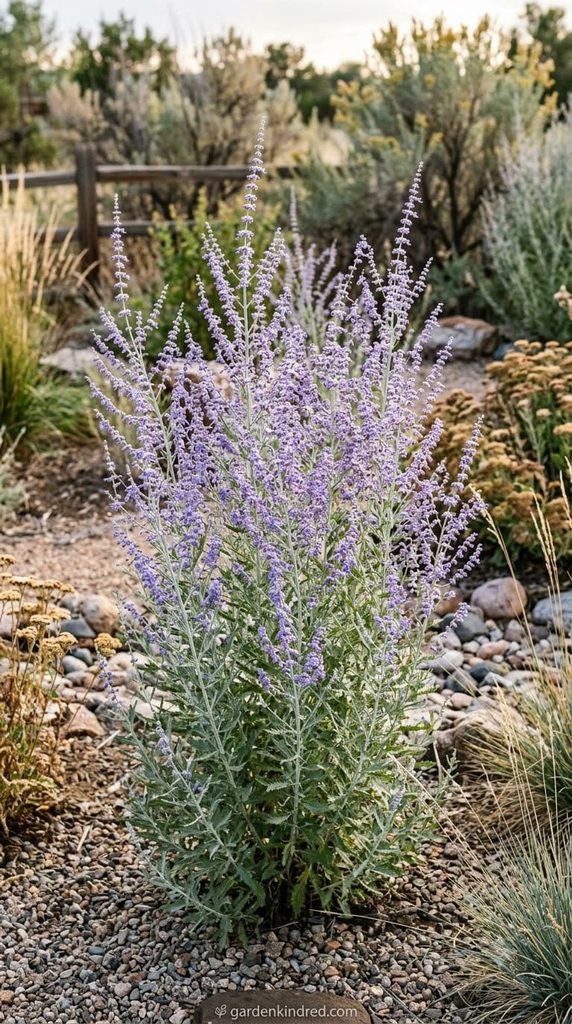
Russian sage is hardy in USDA zones 4-9, one zone hardier on the cold end than lavender, which makes it the better pick for gardeners in the northern edge of the hot, low-rainfall belt (think eastern Colorado or the Texas Panhandle in a hard winter). It reaches 3 to 4 feet tall and wide at maturity and reads as a soft, airy vertical accent rather than a solid mass.
Water it deeply every 10 to 14 days through its first growing season, then cut back hard once established, roughly once a month in extended heat is plenty for most zone 6-8 gardens. Penn State Extension lists Russian sage among its recommended heat and drought tolerant plants for exactly this reason, it holds up in prolonged summer heat with minimal supplemental irrigation once its root system matures.
Like lavender, the silvery cast on its stems and leaves is the mechanism doing the work, reflecting sunlight and reducing leaf surface temperature by a few degrees compared to a plain green leaf under the same sun. Its woody base also means it needs almost no winter protection in its hardiness range, cut it back to about 6 inches in early spring and it regrows fast once soil warms.
Yarrow (Achillea millefolium)
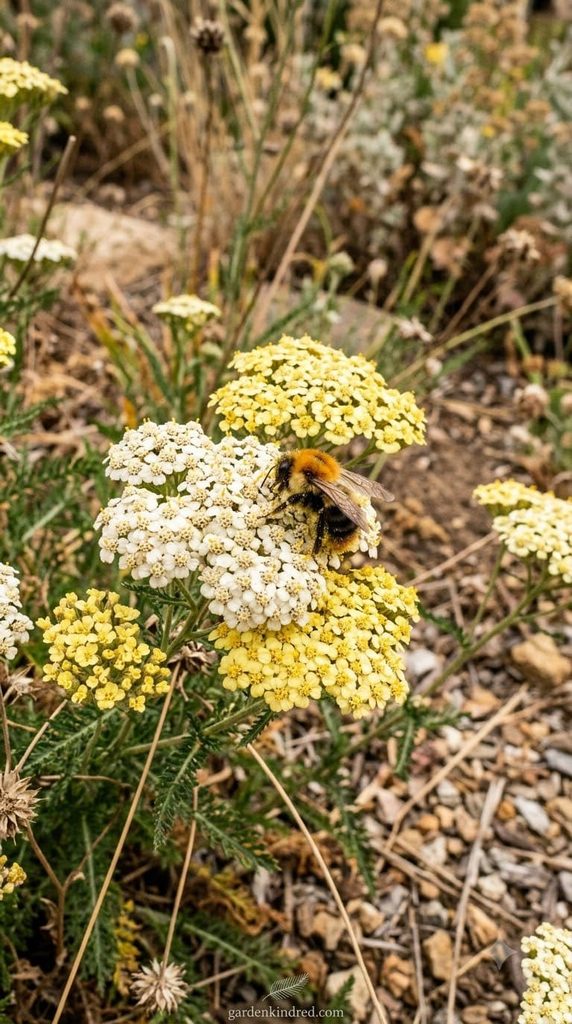
Yarrow is one of the widest-ranging plants on this list, hardy from USDA zones 3 through 9, and it is genuinely one of the toughest low-water perennials available, not a marketing exaggeration. It tolerates poor, rocky, even compacted soil that would stunt most other flowering perennials.
The drought mechanism here is almost entirely root-based. Yarrow develops a fibrous, deep-reaching root system within its first year that can pull moisture from well below the top 6 inches of soil where most surface watering stops, which is why established plants often need no supplemental water at all outside of true extended drought.
It also carries real pollinator value, its flat-topped flower clusters are a documented nectar source for a wide range of beneficial insects, which matters if this bed doubles as a pollinator planting. Deadhead spent blooms to encourage a second flush later in the season, and divide clumps every 3 to 4 years since yarrow spreads by rhizome and can crowd itself out if left unchecked.
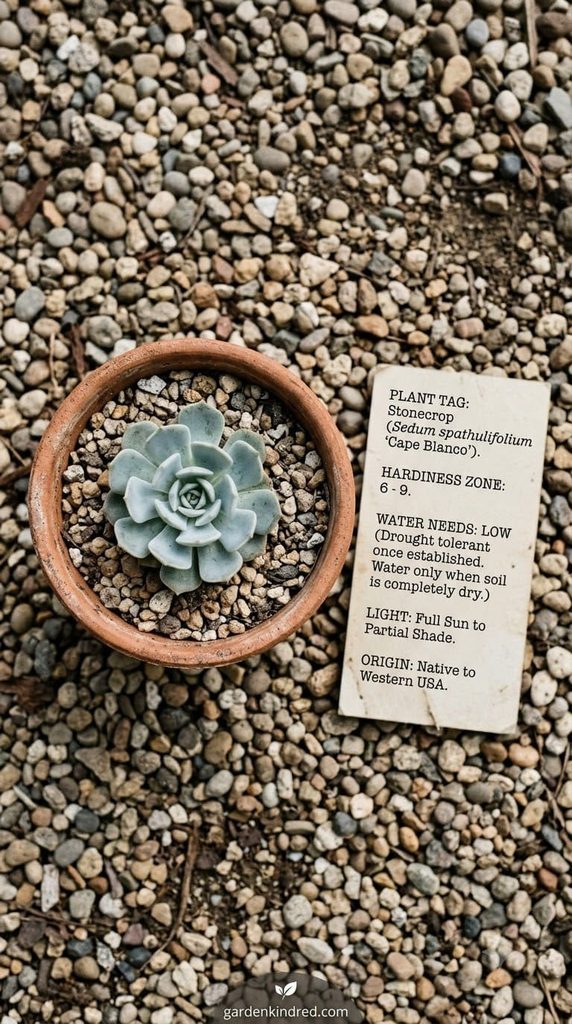
Sedum, also called stonecrop (Sedum spp.)
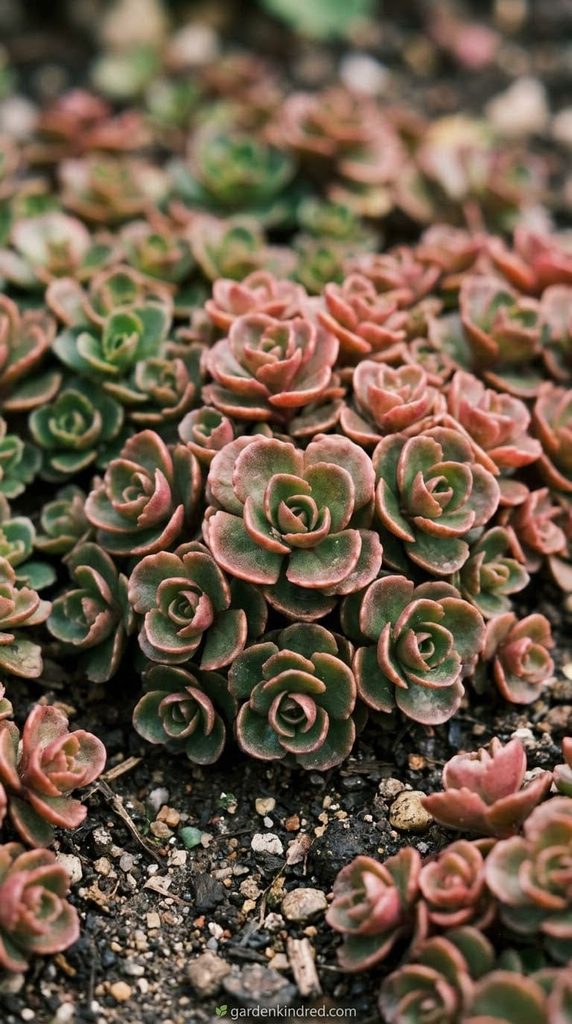
Sedum spans USDA zones 3-9 depending on the specific cultivar, and it is the most literal example of drought-storage on this list. All sedum species store water directly in thick, fleshy leaves, the same succulent adaptation seen in agave and cactus, and most run at least a partial CAM photosynthesis cycle that keeps water loss low even in direct summer sun.
Established sedum needs almost no supplemental water outside of extended, multi-week heat waves, and even then a single deep soak resets it. This is also the plant most commonly killed by good intentions. Sedum, ice plant, and agave rank among the most frequently overwatered plants in American home gardens, not because gardeners ignore them but because gardeners assume a struggling-looking succulent needs more water when it usually needs better drainage instead.
Low, spreading varieties like ‘Angelina’ or ‘Dragon’s Blood’ work as a true groundcover that outcompetes weeds once filled in, while upright types like ‘Autumn Joy’ read more like a structural border plant with late-season pink-to-rust blooms that stay attractive well into fall, a genuine multi-season value most perennials on this list can’t match.
Pink muhly grass (Muhlenbergia capillaris)
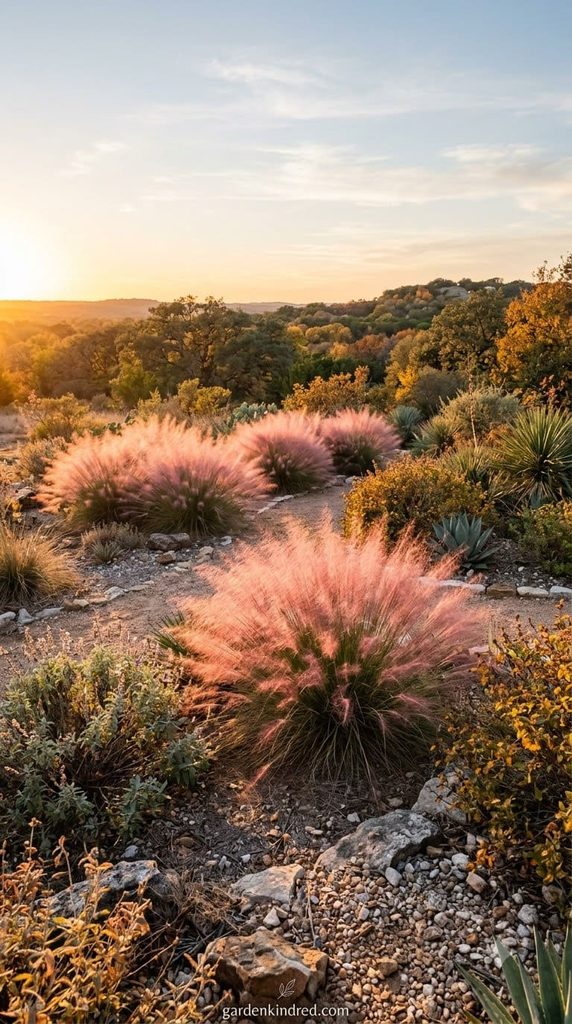
Pink muhly grass is rated for USDA zones 5-9 by most nurseries, though it performs most reliably from zone 6 south, and it is the structural, architectural pick on this list, the one plant here that looks dramatically different depending on time of day, catching low fall sunlight through its airy pink-mauve seed plumes. The University of Florida’s IFAS Extension documents it as highly tolerant of heat, drought, wind, humidity, and even salt spray, which makes it one of the few plants on this list that also works in coastal, low-rainfall regions.
New plantings need a deep soak every 10 to 14 days for the first growing season. After that, muhly grass wants deep, infrequent watering at most and actively struggles in consistently wet or poorly drained soil, the opposite problem of a typical lawn grass.
Its dormancy-based drought strategy is different from the leaf-reflectance or water-storage plants above it on this list. During the driest, hottest stretches of summer, muhly grass slows its growth rate and conserves resources rather than pushing new leaf tissue, then channels that saved energy into its signature pink bloom display once temperatures ease into early fall, a bet-hedging strategy common among native prairie grasses.
Autumn sage and penstemon
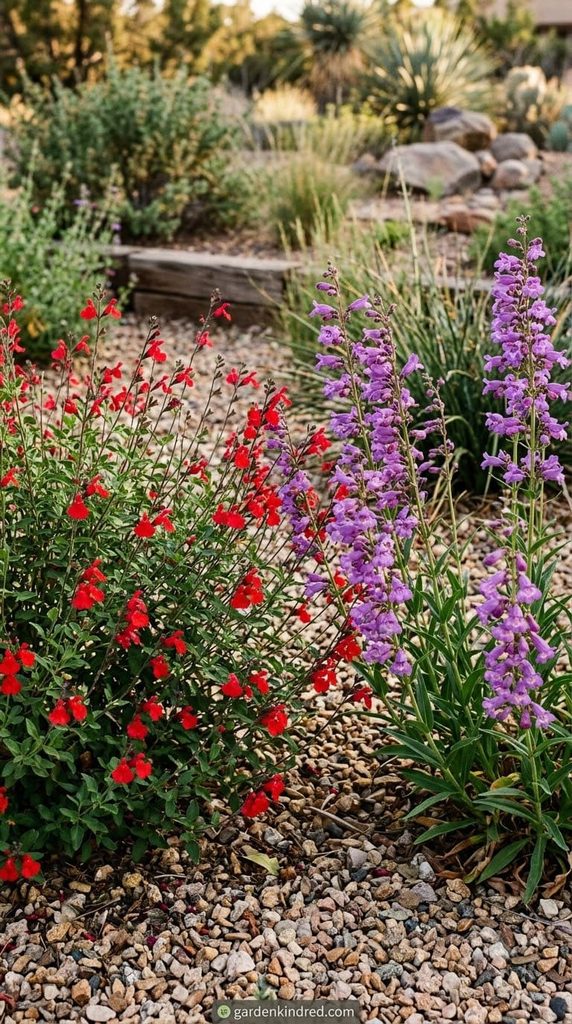
Autumn sage (Salvia greggii) is hardy in USDA zones 6-9, while penstemon species vary more widely, some like Penstemon pseudospectabilis hold to zone 6-9 as well, while others tolerate down to zone 4. Both genera are grouped here because they fill the same role in a water-wise bed: continuous, long-blooming color from spring through fall, which most of the plants above this one on the list don’t offer in the same volume.
Both want a deep soak roughly every 2 weeks once established, more frequently the first season while roots are shallow. Both also share lavender and Russian sage’s preference for sharp drainage over rich soil, and both tend to rebloom faster after a light shearing once the first flush of flowers fades, which keeps color going for months instead of weeks.
The mechanism differs slightly by species but generally combines moderate leaf-surface water conservation with a genuinely deep, fibrous root system that develops within the first year or two, giving these plants access to soil moisture well below where casual surface watering reaches.
Black-eyed Susan and purple coneflower
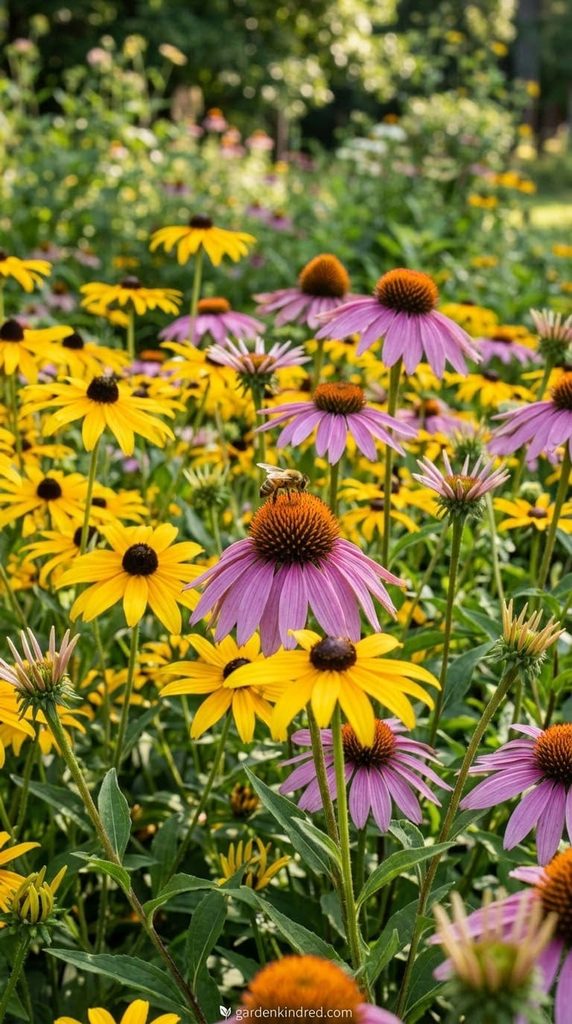
Black-eyed Susan (Rudbeckia hirta) and purple coneflower (Echinacea purpurea) are grouped together here because they are both North American prairie natives with nearly identical care needs and USDA zone 3-9 hardiness, making them the widest-range picks on this entire list. Both are genuinely native to much of the historically dry central US prairie belt, not just “tolerant” of dry conditions after being bred for a wetter climate elsewhere.
Established plants need a deep soak every 10 to 14 days in real drought stretches and largely fend for themselves otherwise. Their taproot system, the same mechanism yarrow uses, develops within the first year and reaches well below typical sprinkler-zone depth, which is the real reason prairie natives outlast ornamental imports during a multi-week dry spell.
Both also carry documented pollinator and bird value beyond bloom color: coneflower seed heads left standing through winter feed finches, and both species host a range of native bee species during their long summer bloom window, a real ecological function most purely ornamental drought-tolerant shrubs don’t provide.
How do you choose the right water-wise plants for your yard?
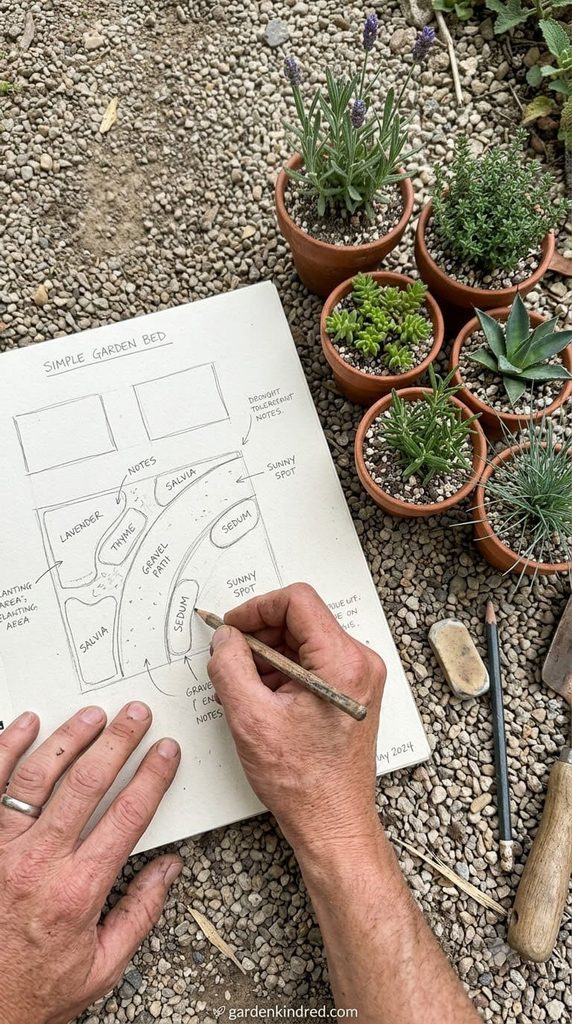
Start with your actual USDA zone, checked against the current map, not a number you half-remember. A plant rated to zone 6 that gets planted in a zone 5 yard is a plant you’ll be replacing next spring regardless of how little water it needs in summer.
Next, walk your yard and note where water actually drains versus pools after a hard rain. Sedum, lavender, and Russian sage belong on the higher, faster-draining ground. A low spot that stays damp for a day or two after rain is a better fit for a moisture-tolerant native than for any plant on this list.
Then plan for the establishment gap. Every plant here needs real, regular water for roughly its first 6 to 8 weeks in the ground, some gardeners give up on a “failed” drought-tolerant plant during this window because they expected zero maintenance from day one. Budget for that first season honestly and the payoff (a bed that needs almost no irrigation by year two) actually happens.
Finally, mix mechanisms, not just colors. A bed built entirely from succulent water-storage plants like sedum looks flat and one-note by midsummer. Pairing a structural grass like muhly grass, a vertical bloomer like Russian sage, and a low groundcover like sedum gives the bed real depth while keeping every plant in it genuinely suited to hot, low-rainfall conditions.
Products We Recommend
This post contains affiliate links. We may earn a commission on qualifying purchases at no extra cost to you.
Rain Bird GRDNERKIT Drip Irrigation Gardener's Drip Kit
This 50-piece kit covers up to 75 square feet and directly solves the establishment-period watering problem above: it delivers water straight to the root zone of each new lavender, sage, or coneflower planting instead of wetting the whole bed, which cuts water waste and keeps foliage dry (drier foliage means less fungal disease risk on plants like sedum that already hate excess moisture)
Shop Now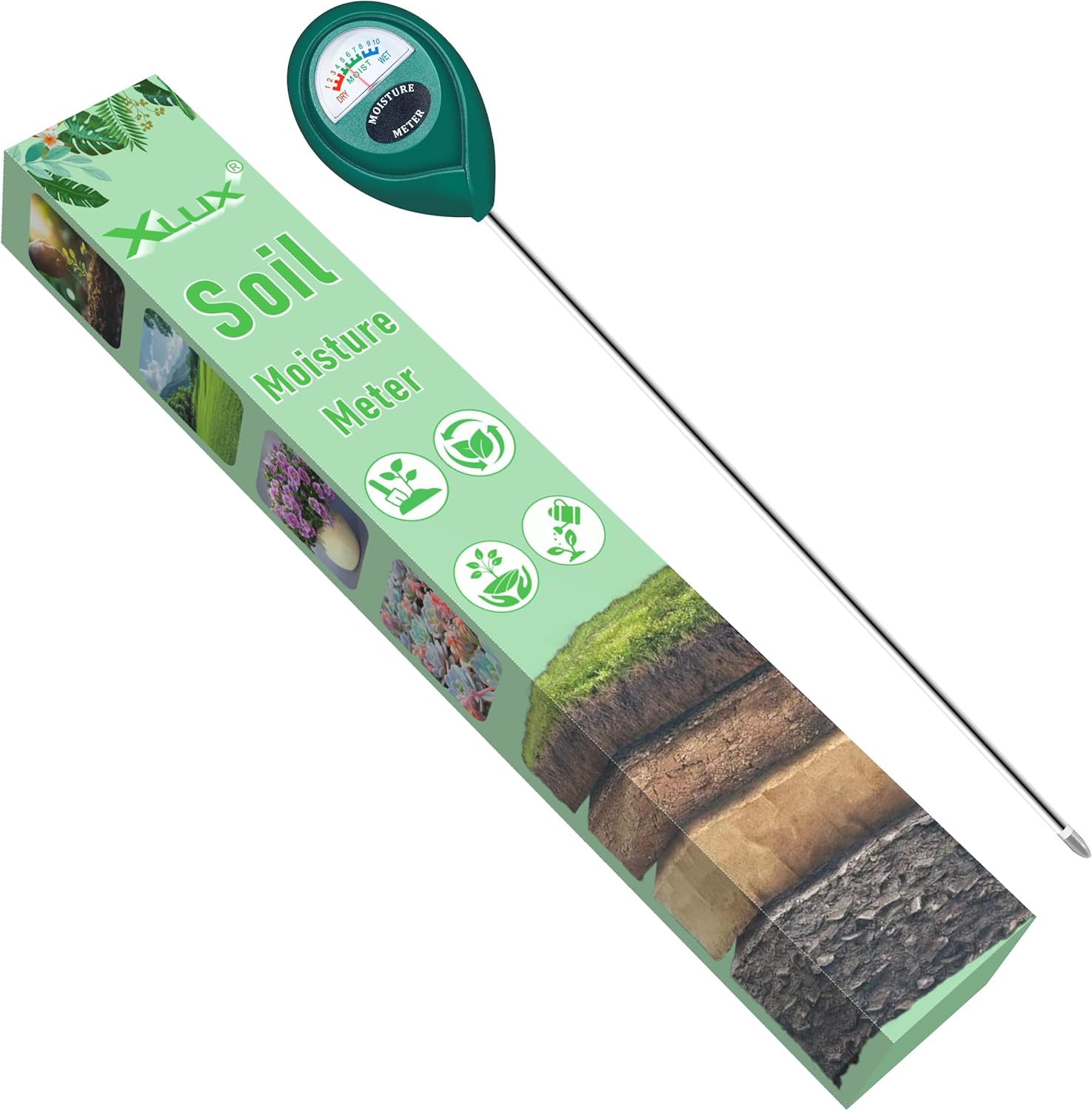
XLUX Long Probe Plant Soil Moisture Meter
A genuinely useful tool for exactly the failure mode described throughout this article: telling the difference between a sedum or lavender that needs water and one that's actually rotting from too much. The battery-free probe reads moisture below the surface where eyes and fingers can't tell, which matters most in the first establishment season when overwatering risk is highest.
Shop now
EZ Straw Seeding Mulch with Tack, 2.5 cu. ft. bale
A 2 to 3 inch mulch layer around new plantings reduces surface evaporation and moderates soil temperature swings, both of which shorten the establishment-watering window covered above. This tackified straw mulch stays put in wind and on slopes better than loose bark, useful on the sloped, fast-draining sites these plants actually prefer.
Shop nowNever miss an update — choose Garden Kindred as your preferred source on Google.
How it works: Tap the button below to open Google's settings page, then check the box next to Garden Kindred.
Tap the checkbox to turn it blue — that's how you know it's set.