7 Best Grass Seed Types for Fall Planting by Region for Cold Climates
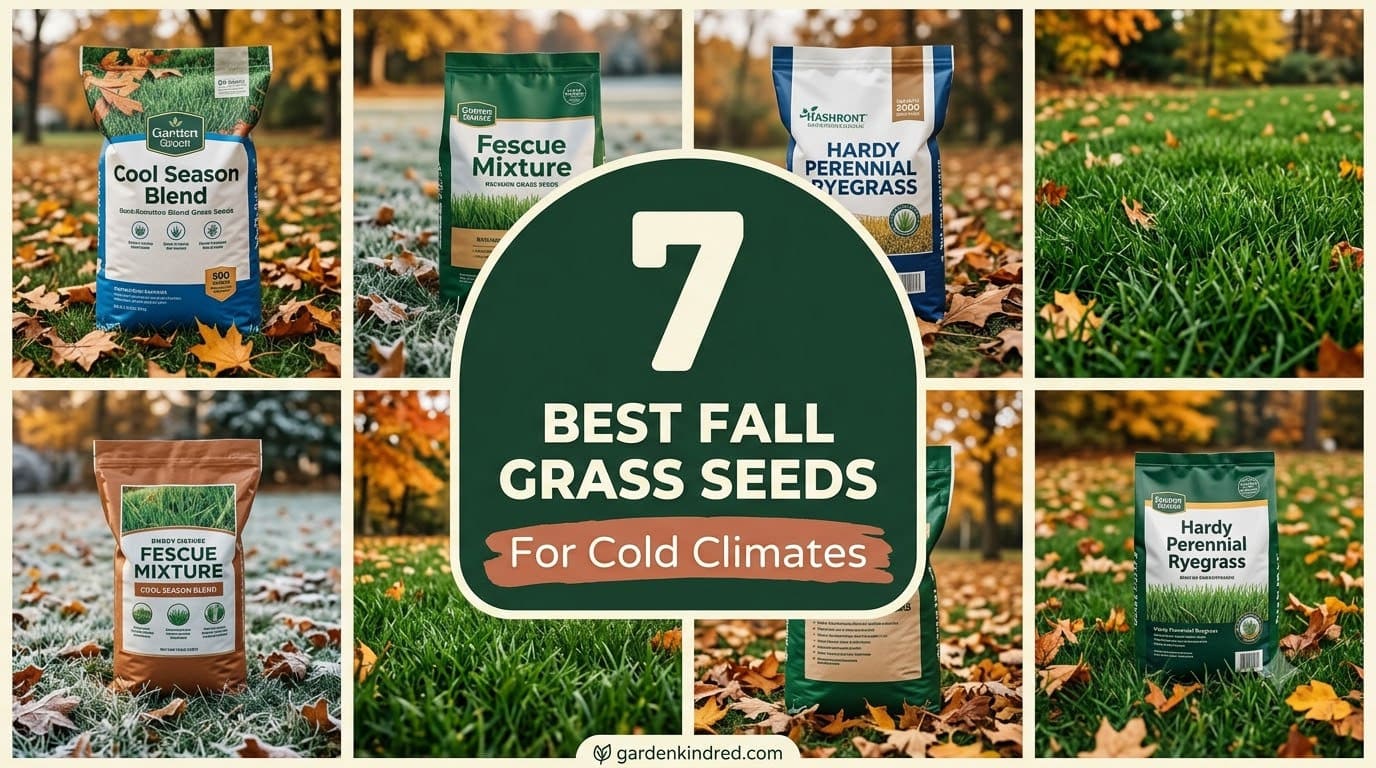
We compared 7 real fall grass seed products by species, USDA zone fit, and seeding rate so you can match the right bag to your actual yard instead of guessing at the store.
Never miss an update — choose Garden Kindred as your preferred source on Google.
How it works: Tap the button below to open Google’s settings page, then check the box next to Garden Kindred.
Tap the checkbox to turn it blue — that’s how you know it’s set.
Quick answer: for cold-climate lawns, cool-season grass seed (Kentucky bluegrass, tall fescue, perennial ryegrass, or fine fescue blends) should go down 6 to 8 weeks before your area’s average first frost date, when soil temperatures sit between 50°F and 65°F, according to Michigan State University Extension and Penn State Extension. Jonathan Green Black Beauty Ultra is the fastest-establishing pick here, germinating in 7 to 14 days, good for anyone seeding late in the window. For dense shade under mature trees, Scotts Turf Builder Dense Shade Mix grows with as little as 3 hours of sun. For a driveway strip or a dog run, Scotts Turf Builder High Traffic Mix is bred for wear recovery. Pure Kentucky bluegrass, like Jonathan Green Blue Panther, self-repairs via underground rhizomes but takes 21 to 28 days to germinate, so pair it with a straight fescue or a blend if you’re seeding after mid-September in zone 5 and colder.
Last September I overseeded a bare patch under our maple with a random all-purpose mix I grabbed at the hardware store on the way home. Half of it never came up. Turns out that particular blend needed way more sun than that spot ever gets, and honestly nobody at the store mentioned it, they just rang me up.
From what I’ve seen doing this roundup, the seed itself matters less than most people assume, matching the species to your actual sun hours and zone is the part that actually decides whether it comes up at all.
That’s the actual problem with grass seed shopping. The bags all say “premium” and “guaranteed,” but the species mix inside, and whether it fits your actual yard and zone, is buried in fine print most people never read before checkout.
This roundup breaks down 7 real fall grass seed products by species, region fit, and seeding rate, so you’re picking based on your yard’s shade, traffic, and zone instead of whichever bag has the nicest photo on the front.
Best Fall Grass Seed for Cold Climates




Why is fall the best time to plant grass seed?
Cool-season grasses (Kentucky bluegrass, tall fescue, perennial ryegrass, fine fescue) do their best growing in spring and fall, and fall has a real biological edge over spring for one reason: soil temperature stability.
Michigan State University Extension recommends seeding between August 15 and September 15 in Michigan, when soil temperatures hold between 50°F and 65°F and air temperatures run 60°F to 75°F. Warm soil plus cool nights is the exact combination that triggers fast germination and strong root growth, and MSU Extension notes that new grass seeded in fall gets the entire cool season to build a deep root system before facing its first summer.
Penn State Extension puts it plainly too: late summer to early fall is the optimum seeding window for most of Pennsylvania, and germination slows sharply once soil drops below 50°F, so seeding after mid-October isn’t recommended in most of the state.
And there’s a weed-competition angle most people miss. Crabgrass and other summer annual weeds germinate on a completely different soil-temperature trigger than cool-season turf, so by the time you’re seeding in September, most of that competition has already died back or gone dormant. Spring seeding doesn’t get that advantage, since your new grass seedlings are germinating at the exact same time as every weed seed in the soil.
How do USDA zones and climate region affect which grass seed to buy?
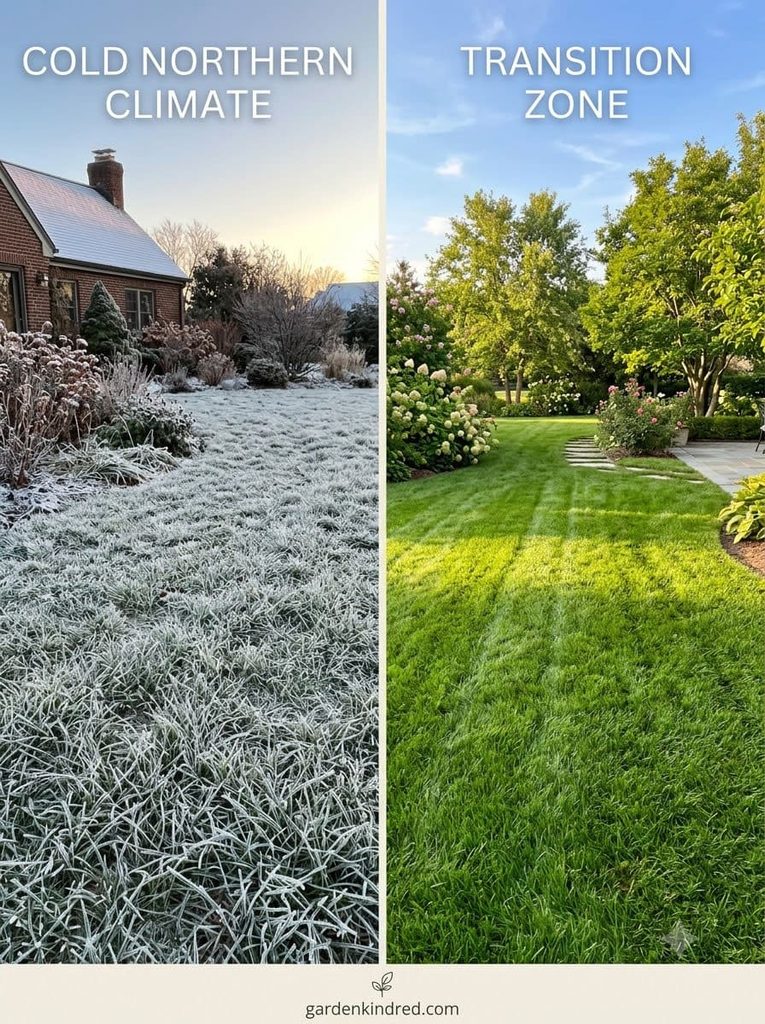
Cold-climate lawns generally fall into two practical buckets for seed selection, not the full 13-zone USDA map.
True northern zones (roughly zone 3 to zone 6) get cold enough, long enough, that cool-season grass is the only realistic option, and winter hardiness matters more than heat tolerance. Kentucky bluegrass thrives here because it actually prefers cold winters and handles hard freezes without dying back to the crown.
Upper transition zone (roughly zone 6 to zone 7) sees hot, humid summers on top of cold winters, which is a rough combination for grass. Tall fescue tends to win here because its root system can run 2 to 3 feet deep, deeper than Kentucky bluegrass, which helps it survive both the winter cold and the summer heat stress transition-zone lawns get hit with twice a year.
Perennial ryegrass and fine fescue show up as blend components across both buckets rather than as standalone lawns, since ryegrass germinates fast (5 to 10 days) but doesn’t have bluegrass’s rhizome self-repair, and fine fescue’s real strength is shade and low-fertility soil tolerance rather than open-lawn durability.
The 7 fall grass seeds, compared
| Product | Species/blend | Region fit | Seeding rate (per label) | Sun/shade | Rating/reviews |
|---|---|---|---|---|---|
| Scotts Dense Shade Mix | Fine fescue + shade-tolerant Kentucky bluegrass, plus starter fertilizer | Zone 3-7, shaded lawns | 5.6 lb covers 465 sq ft new lawn / 1,400 sq ft overseed | As little as 3 hrs sun | 4.3★ (2,015) |
| Scotts High Traffic Mix | Perennial ryegrass-forward blend, plus starter fertilizer | Zone 3-7, wear-prone areas | 5.6 lb covers up to 2,800 sq ft overseed | Full sun, light shade | 4.3★ (2,687) |
| Jonathan Green Black Beauty Tall Fescue | 100% turf-type tall fescue | Zone 5-7, transition zone | 15 lb covers 2,250 sq ft new lawn (~6.7 lb/1,000 sq ft) | Sun to partial shade | 4.3★ (1,150) |
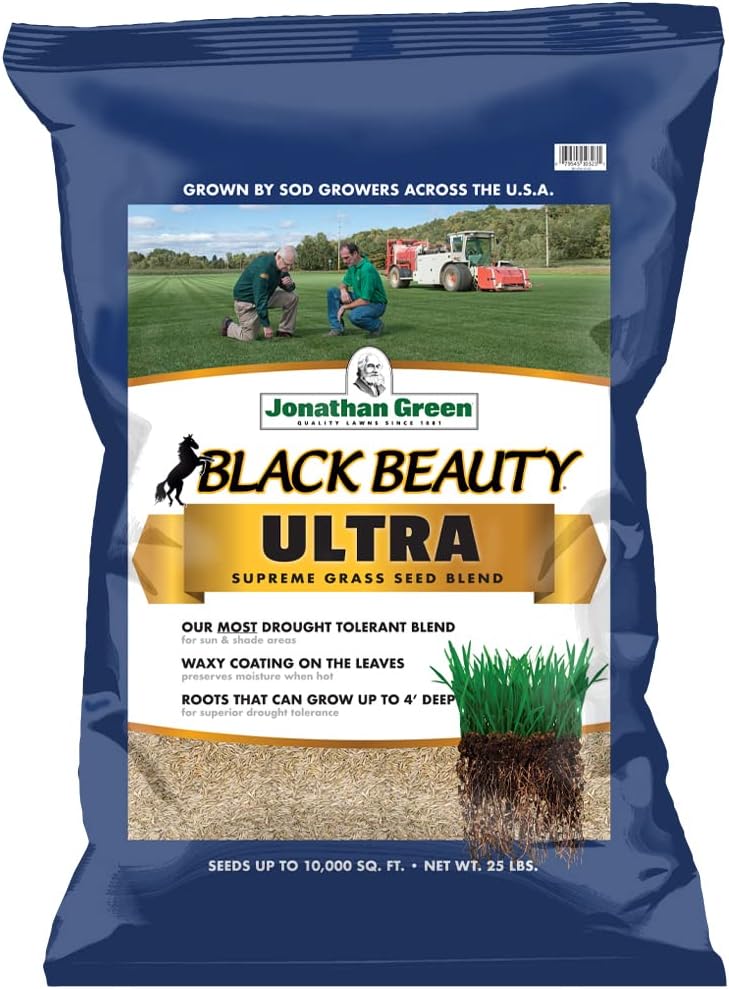
| Jonathan Green Black Beauty Ultra | Tall fescue + Kentucky bluegrass + perennial ryegrass | Zone 3-7, general purpose | Germinates in 7-14 days, ~6 lb/1,000 sq ft new lawn | Full sun, partial shade | 4.3★ (5,845) |
| Jonathan Green Blue Panther | 100% Kentucky bluegrass | Zone 3-6, true northern lawns | 25 lb covers 20,000 sq ft new lawn (~1.25 lb/1,000 sq ft, sod-density blend) | Full sun to partial shade | 4.3★ (292) |
| Scotts Fall Mix | Kentucky bluegrass + fine fescue blend, plus starter fertilizer | Zone 3-7, fall overseeding | 15 lb covers up to 12,120 sq ft overseed | Full sun, partial shade | 4.3★ (2,266) |
| Scotts Northeast Mix | Kentucky bluegrass + perennial ryegrass, plus starter fertilizer | Zone 4-6, Northeast/Upper Midwest | 5.6 lb covers 870 sq ft new lawn / 2,640 sq ft overseed | Full sun, partial shade | 4.2★ (607) |
Ratings and prices verified live via product pages on Amazon in August 2026. Re-check the exact price before ordering, since Amazon pricing shifts by week and region. Seed-plus-fertilizer combination products list total bag weight, not pure seed weight, so their per-1,000-sq-ft numbers reflect the manufacturer’s own coverage claim rather than a Purdue-style pure-seed rate.
Scotts Turf Builder Dense Shade Mix
- Grows with as little as 3 hours of direct sun per day, per the manufacturer's own claim, a real number instead of a vague "shade tolerant" label
- Amazon's Choice with 2,015 ratings at a 4.3★ average
- Root-Building Nutrition (bundled starter fertilizer) means no separate starter feed purchase for a new shaded patch
- Medium to high durability rating once established, so it's not just a shade specialist that falls apart under any foot traffic
- Combination seed-and-fertilizer weight means less actual seed per pound than a pure-seed product, so bag coverage runs lower than the sq ft number might suggest at a glance
- Best suited to zone 3-7, not built for anything beyond partial-shade tolerance, a true dense-canopy spot under multiple mature trees may still struggle
We earn a commission, at no additional cost to you.
Under a mature oak or maple, “sun and shade” mixes usually mean 4 to 6 hours of dappled light, not the 2 hours you’re actually getting. This one states its floor directly: 3 hours of sun, which is the specific number that matters if your bare patch sits under real canopy.
The fine fescue and shade-adapted Kentucky bluegrass varieties in the blend are doing the actual shade tolerance work here, and the bundled Root-Building Nutrition starter fertilizer saves a separate purchase and application step for a first-time seeding under a tree.
Scotts Turf Builder High Traffic Mix
- Bred for self-repair under wear, with 2,687 ratings at a 4.3★ average
- Perennial ryegrass-forward blend germinates and re-establishes faster than a bluegrass-heavy mix after real damage (dog paths, side-yard cut-throughs)
- Bundled Root-Building Nutrition starter fertilizer speeds early root development right when a wear-damaged patch needs it most
- Full sun to light shade range covers most high-traffic zones, since those spots are rarely under deep canopy
- Low drought resistance per the manufacturer's own spec, so a high-traffic strip in a dry exposed yard needs more consistent watering than the shade or fescue picks on this list
- Smaller bag sizes (2.4 lb, 5.6 lb) mean multiple bags for anything beyond a small wear patch
We earn a commission, at no additional cost to you.
A dog run or the diagonal shortcut across a corner lawn takes real, repeated abuse, and that’s a different problem than thin turf from shade. Perennial ryegrass germinates in 5 to 10 days per Purdue Extension’s germination data, genuinely fast compared to bluegrass’s 14 to 30 days, so a ryegrass-forward mix like this one gets a damaged patch covered again before the next round of foot traffic hits it.
The tradeoff is drought tolerance, since ryegrass doesn’t have the deep root reserve tall fescue or Kentucky bluegrass builds over a full season.
Jonathan Green Black Beauty Tall Fescue Grass Seed Blend
- 100% turf-type tall fescue with roots that grow up to 4 feet deep, per the manufacturer, real drought insurance for a transition-zone lawn
- 4.3★ across 1,150 ratings
- Thrives in both sun and shade per the listing, a genuinely dual-purpose fescue blend rather than a sun-only formula
- Waxy leaf coating helps the plant hold moisture through both winter cold snaps and summer heat stress, the two extremes a transition-zone lawn deals with in the same year
- Slower germination than a ryegrass-heavy blend (tall fescue runs 7 to 14 days per Purdue data), so it needs an earlier seeding date than the fast-establishment pick on this list
- Coarser blade texture than Kentucky bluegrass, a real aesthetic tradeoff if you want the classic fine-bladed northern lawn look
We earn a commission, at no additional cost to you.
If you’re in the upper transition zone (roughly zone 6 to 7), where winters still hit hard but summers bring real heat and humidity, this is the blend built for exactly that stress pattern.
The 4-foot root depth Jonathan Green cites is a genuine structural advantage over Kentucky bluegrass’s shallower root system, letting the plant reach moisture reserves deep in the soil profile during a dry August instead of going dormant early. Available in 3, 7, 15, 25, and 50 lb sizes, so it scales from a bare patch to a full acre lawn.
Jonathan Green Black Beauty Ultra Grass Seed
- Amazon's Choice, 4.3★ across 5,845 ratings, the largest review sample on this list by a wide margin
- Germinates in 7 to 14 days per the manufacturer, the fastest full-lawn blend here, genuinely useful if you're seeding later into the fall window
- Three-species blend (tall fescue, Kentucky bluegrass, perennial ryegrass) covers sun, shade, drought, and traffic tolerance in one bag instead of forcing a single-species tradeoff
- Withstands heavy foot traffic per the listing, so it doesn't sacrifice durability for its faster establishment speed
- A blended, multi-species product is a jack-of-all-trades, not the single best pick for a lawn with one dominant, extreme condition (deep shade or constant heavy wear specifically)
- Premium pricing relative to a straight single-species bag of the same weight
We earn a commission, at no additional cost to you.
This is the roundup’s top overall pick because it solves the actual problem most people are seeding for: a mixed-condition yard with some sun, some shade, some traffic, and a fall calendar that doesn’t leave room for a slow-germinating single species.
The 7-to-14-day germination window means you can seed into late September in a zone 5 or 6 yard and still have real root establishment before soil temperatures drop below the 50°F floor extension offices cite as the germination cutoff. I’d genuinely reach for this one first if I only had time to buy one bag before frost.
Jonathan Green Blue Panther Kentucky Bluegrass
- Amazon's Choice, 4.3★ across 292 ratings
- 100% Kentucky bluegrass sourced from sod-grower and golf-course stock, per the listing, genuinely premium seed quality
- Self-repairs via underground rhizomes, something no fescue or ryegrass product on this list can do, so small bare spots fill back in on their own over time
- Roots grow up to 4 feet deep and the finished lawn withstands high traffic once established
- Slowest germination on this list, 21 to 28 days per the listing, which is a real risk if you're seeding after early September in zone 5 and colder
- Full establishment takes a full season or more, this isn't the pick for anyone wanting quick visible results before winter
We earn a commission, at no additional cost to you.
For a true northern zone (3 to 5, sometimes 6) with cold, long winters and no real summer heat stress, straight Kentucky bluegrass is worth the slower germination tradeoff.
The rhizome self-repair mechanism is the real differentiator here. Bluegrass spreads laterally underground and fills in thin spots on its own over subsequent seasons, something none of the fescue or ryegrass blends on this list can do without reseeding.
The catch is timing: at 21 to 28 days to germinate, this needs to go down early in the fall window, ideally by early September in zone 5, or it risks not finishing germination before soil temperatures drop.
Scotts Turf Builder Fall Mix
- 4.3★ across 2,266 ratings
- Overseeding-focused formula built specifically to thicken and strengthen an existing lawn against winter, rather than a general-purpose new-lawn seed
- Establishes quickly to help a lawn recover from summer stress before frost, per the manufacturer
- Large bag options (up to 16 lb, covering up to 12,120 sq ft overseeding) make it practical for a full-yard fall overseed pass
- Marketed specifically for overseeding recovery rather than bare-dirt new lawn establishment, so check the new-lawn coverage number separately if that's your actual project
- Some smaller bag sizes showed limited seller availability at the time of verification, worth checking exact size in stock before planning quantity
We earn a commission, at no additional cost to you.
This is the pick built around fall’s actual seasonal job: recovering a lawn that took real damage over summer (heat stress, drought stress, grub or chinch bug pressure) before winter sets in. The formula leans into fast establishment specifically because an overseed pass needs to get new seedlings competitive against the existing turf and whatever weeds are still active, not start from bare soil.
It’s a genuinely different use case than the new-lawn blends elsewhere on this list, and worth picking specifically if your project is “thicken what’s already there” rather than “start from scratch.”
Scotts Turf Builder Northeast Mix
- Amazon's Choice, 4.2★ across 607 ratings
- Kentucky bluegrass plus perennial ryegrass blend, purpose-built for Northeast and Upper Midwest cold-climate conditions specifically, not a generic all-region formula
- Medium drought resistance with high durability per the manufacturer's spec, a solid middle-ground for a yard that isn't purely shade or purely high-traffic
- Bundled Root-Building Nutrition starter fertilizer for a first-season boost
- Smaller review sample (607) than the Black Beauty or Fall Mix products on this list, though the rating itself is solid
- Regional formula means it's specifically tuned for Northeast conditions, a genuinely poor fit if you're gardening in a drier or warmer climate outside its target region
We earn a commission, at no additional cost to you.
This is the pick for anyone who wants a formula actually tuned to their specific cold-climate region rather than a generic “northern” catch-all.
The Kentucky bluegrass and perennial ryegrass combination splits the difference between bluegrass’s cold-hardiness and rhizome self-repair and ryegrass’s faster germination, which is a genuinely sensible pairing for a region that gets both hard winters and a real fall seeding window to work with.
It’s a smaller review sample than some other picks here, but a 4.2★ average across 607 real ratings is still a trustworthy signal, not a thin one.
What should you look for in a fall grass seed product?
Four things actually determine whether a bag works for your yard, in order of importance.
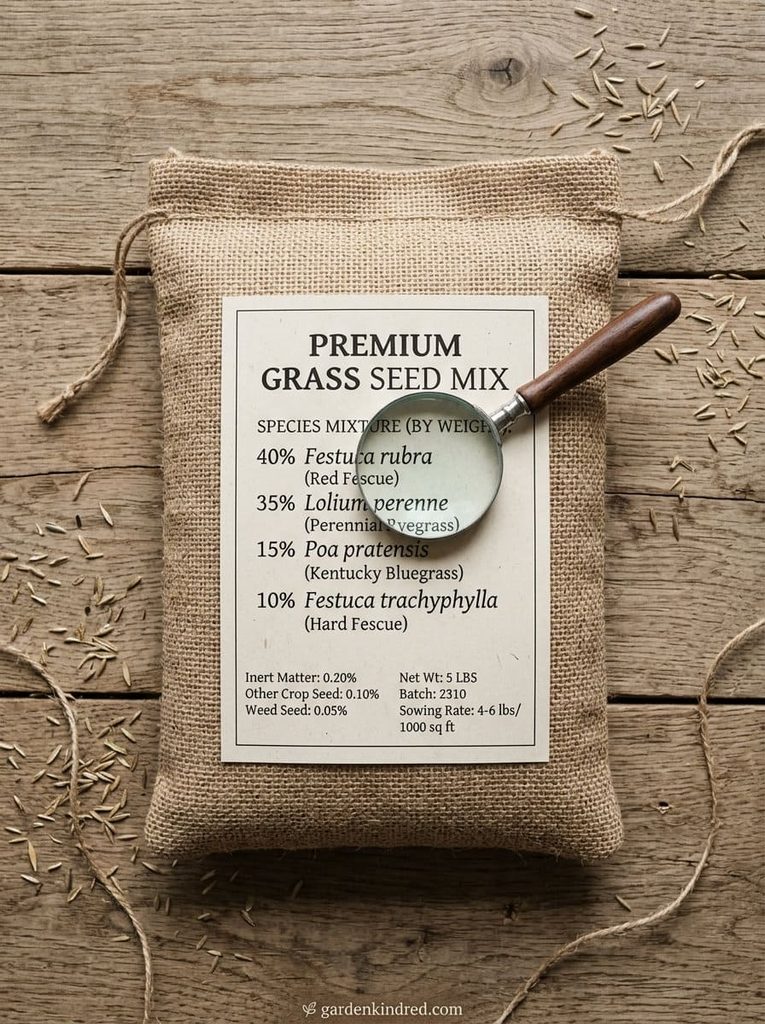
Species match to your actual site conditions, not the brand’s marketing claim. A bag labeled “sun and shade” usually means it tolerates moderate shade, roughly 4 to 6 hours of filtered light, not the 2 to 3 hours you get under a mature oak. Check the specific sun-hour claim on the label, not just the word “shade.”
Germination speed relative to your remaining season. Purdue Extension germination data shows perennial ryegrass sprouting in 5 to 10 days, tall fescue in 7 to 14 days, and Kentucky bluegrass in 14 to 30 days. If you’re seeding in early September in zone 5, straight Kentucky bluegrass is cutting it close before soil temperatures drop below the 50°F germination floor. A fescue-heavy blend or a ryegrass nurse-grass component buys you a faster-establishing head start.
Seeding rate matched to your square footage, not a rough guess. Overseeding an existing thin lawn uses roughly half the seed of a bare-dirt new lawn, since existing turf density is doing some of the coverage work already.
Whether it’s straight seed or a combination seed-plus-fertilizer product. Several of the picks below bundle starter fertilizer into the bag weight, which changes the effective seed density per pound compared to a 100% seed product, and matters if you’re trying to calculate exact coverage.
How do you choose the best fall grass seed for your yard?
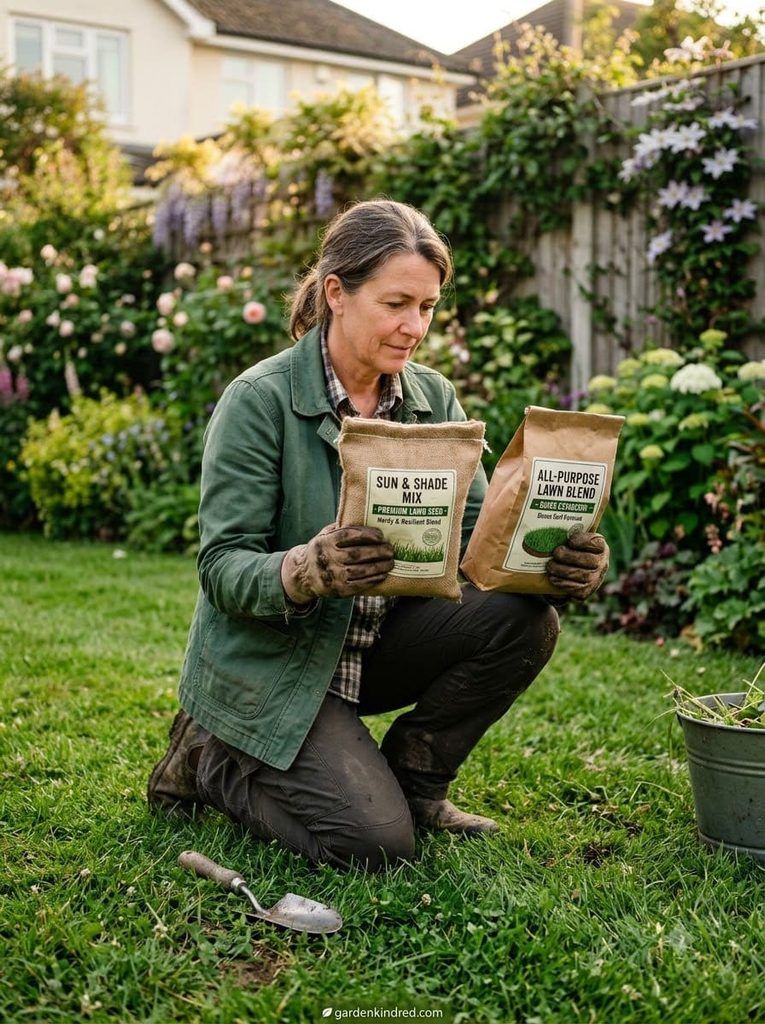
Start with the site condition that’s actually limiting your lawn right now, not the seed with the best star rating.
If your lawn is thinning under trees, prioritize a shade-rated blend with a real sun-hour claim on the bag, like the Scotts Dense Shade Mix below. Fine fescue and shade-tolerant Kentucky bluegrass varieties are doing the real work in these blends, not the marketing copy.
If the bare spot is a dog run, a side-yard cut-through, or anywhere that takes foot traffic, a high-traffic mix with a strong perennial ryegrass component recovers faster from wear than a pure bluegrass lawn, since ryegrass germinates and re-establishes quicker after damage.
If you’re in true zone 3 to zone 5 territory with long, cold winters and no real summer heat problem, Kentucky bluegrass earns its reputation. It self-repairs through underground rhizomes, something fescue can’t do, and it genuinely prefers the cold.
If you’re in the upper transition zone (zone 6 to 7, hot humid summers plus cold winters), lean tall fescue for the deeper root system, or a fescue-forward blend rather than 100% bluegrass.
If you’re seeding late in the fall window (past mid-September in zone 5 and north), pick a blend with fast-germinating ryegrass or fescue in the mix rather than straight bluegrass, since bluegrass alone might not finish germinating before soil temperatures drop.
How do you actually seed grass correctly in fall?
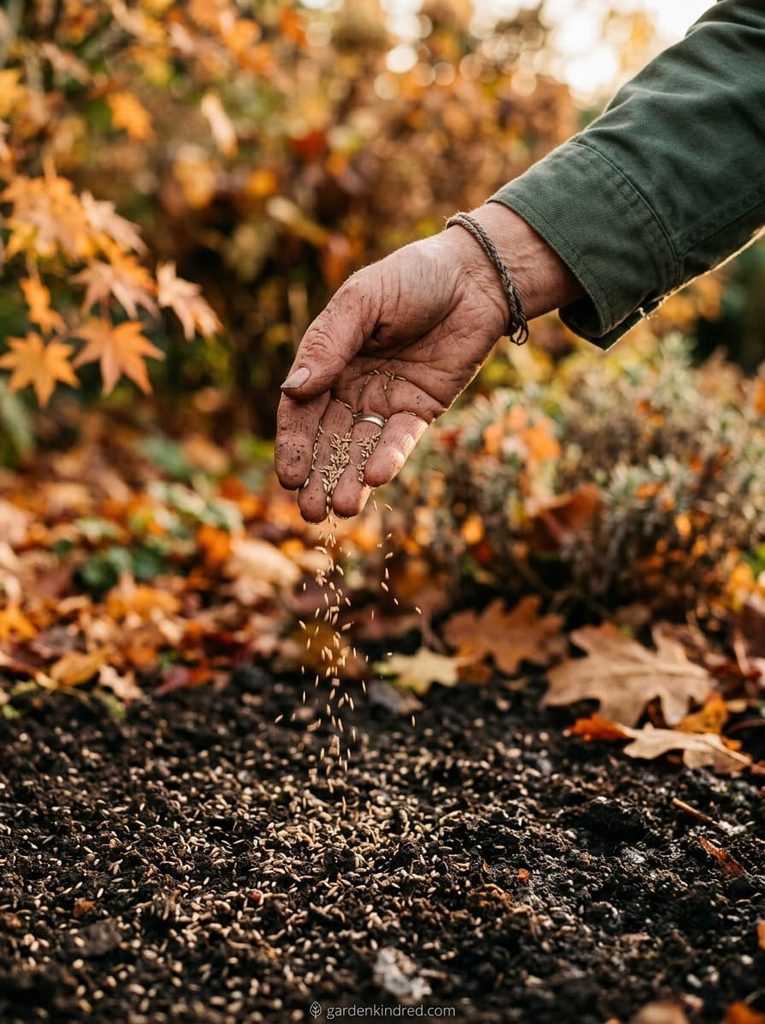
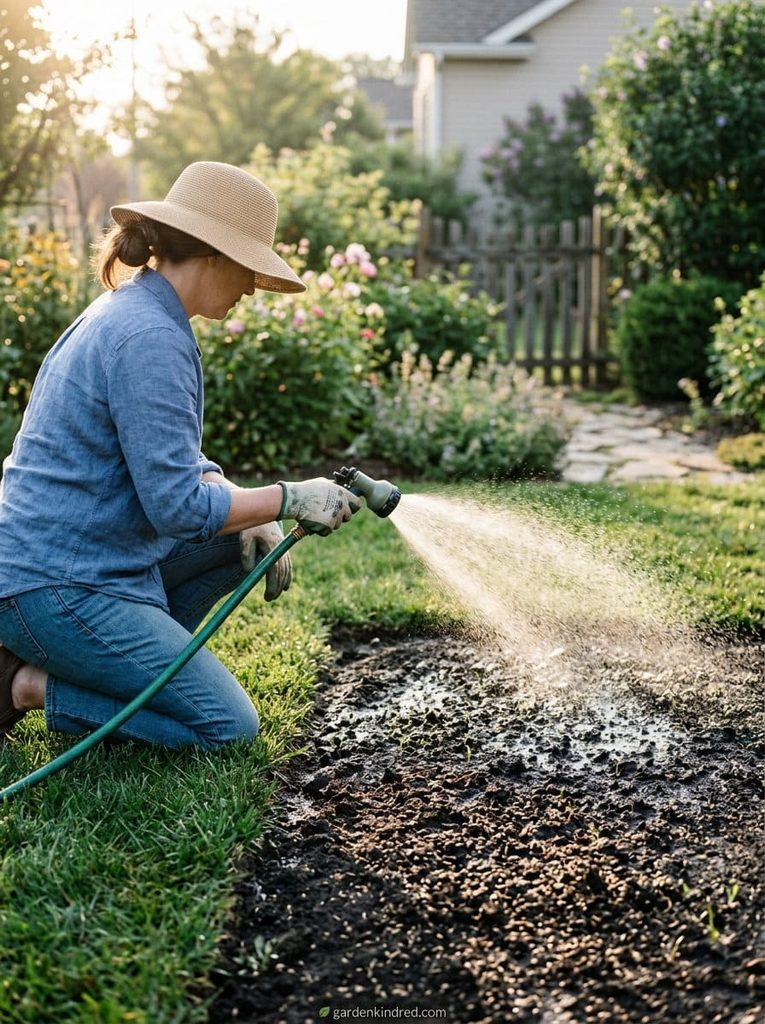
Prep matters as much as the seed you pick. Rake the area to loosen the top inch or two of soil and remove debris, since seed-to-soil contact is what actually triggers germination, not just scattering seed on top of thatch or compacted dirt.
Apply at the rate your specific bag recommends, using a drop or broadcast spreader for even coverage rather than hand-scattering, which tends to leave gaps and clumps.
Water immediately after seeding, then keep the top half-inch of soil consistently moist (often twice a day for the first 2 to 3 weeks) until germination is visible. Once seedlings are up, water less often but more deeply to push roots down instead of keeping them shallow.
Hold off on mowing until the new grass reaches about 3 to 3.5 inches, then mow it back down to your normal height. Cutting too early stresses seedlings that haven’t built a real root system yet.
Frequently asked questions
What is the best grass seed for cold climates?
For true northern zones (3 to 6) with cold winters and mild summers, Kentucky bluegrass is the strongest single-species pick for its cold-hardiness and rhizome self-repair. For the upper transition zone (6 to 7) with hot summers layered on top of cold winters, tall fescue’s deeper root system handles both stress periods better. A three-species blend like Black Beauty Ultra is the safer general-purpose choice if your yard has mixed sun, shade, and traffic conditions.
When should I plant grass seed in fall?
Six to eight weeks before your area’s average first frost date, per Penn State Extension and Michigan State University Extension guidance, so germination and early root growth finish before soil temperatures drop below the 50°F floor. For most zone 4-6 areas, that lands between mid-August and mid-September, with zone 7 stretching into early October.
Should I choose a single-species seed or a blend?
A blend hedges against uncertainty. If part of your yard gets more shade or traffic than you think, a multi-species mix has some component suited to it. A single species like straight Kentucky bluegrass or tall fescue is the right call once you actually know your site conditions well and want the specific strengths (self-repair for bluegrass, deep drought tolerance for fescue) that a blend dilutes.

Never miss an update — choose Garden Kindred as your preferred source on Google.
How it works: Tap the button below to open Google's settings page, then check the box next to Garden Kindred.
Tap the checkbox to turn it blue — that's how you know it's set.