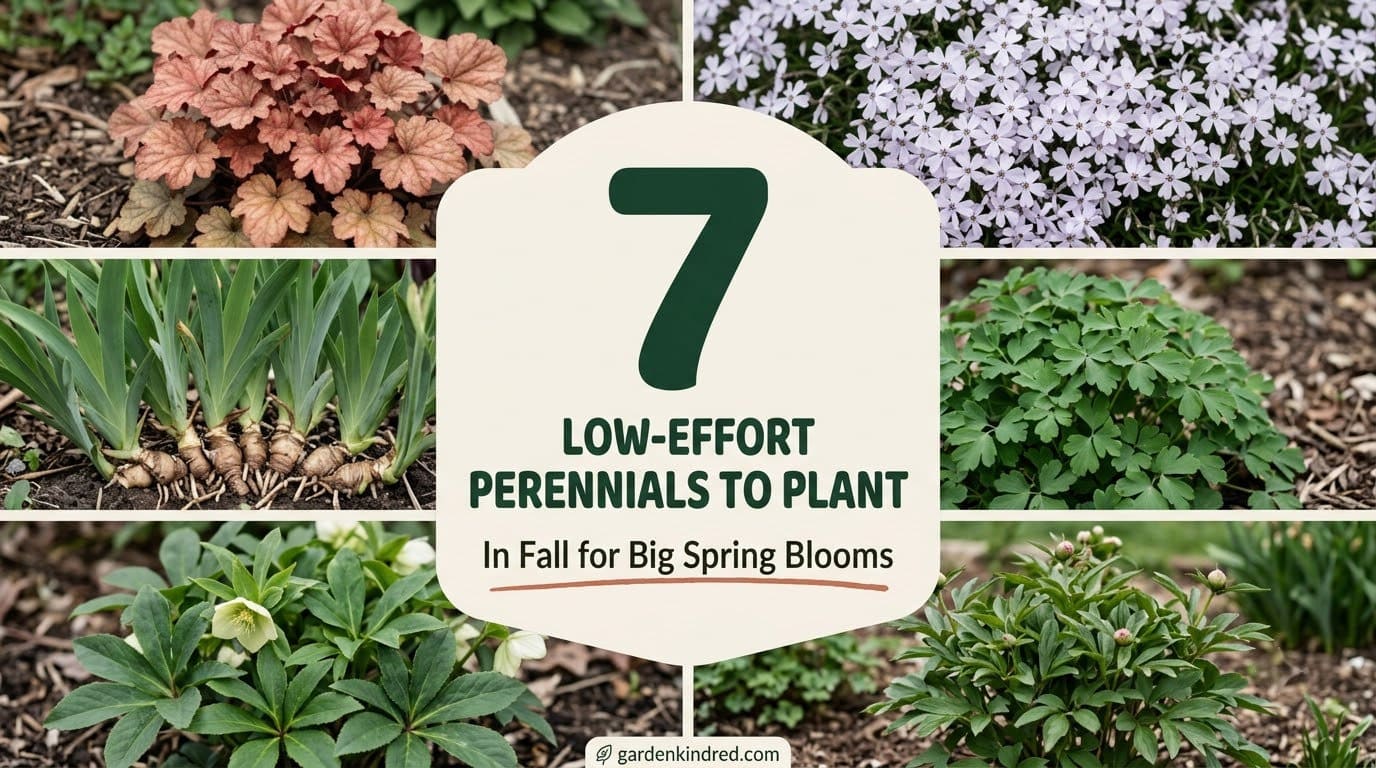
7 Real Perennials to Plant This Fall for Better Spring Blooms (Bloom-Timing Data Included)
One of these 7 won’t bloom at all without a real fall chill, not just a head start. See which one, and get the six-to-eight-week window for the rest.
Never miss an update — choose Garden Kindred as your preferred source on Google.
How it works: Tap the button below to open Google’s settings page, then check the box next to Garden Kindred.
Tap the checkbox to turn it blue — that’s how you know it’s set.
Fall-planted perennials bloom better the following spring because cooling soil lets roots grow for six to eight weeks without the plant also pushing top growth, and University of Vermont Extension and Illinois Extension both confirm roots keep growing at soil temperatures as low as 42-45°F. That head start means a fall-planted perennial usually blooms fuller and earlier than the same plant put in spring, which spends its first months building roots instead of flowers.
Seven reliable choices for this window are peony, bearded iris, coral bells, columbine, creeping phlox, Lenten rose, and Oriental poppy, each with a real bloom-timing and spacing number below.
A few, especially Lenten rose, also need a real cold period to trigger flowering at all, not just a head start, so skipping fall planting costs more than a few weeks. Plant six to eight weeks before your ground typically freezes, water consistently until it does, and mulch before the hard freeze, not after.
Why does fall planting actually produce better spring blooms than spring planting?
I put three bare-root peonies in the ground two Octobers ago, more out of impatience than any real plan, since the nursery discount hit right as I was closing up the vegetable beds for the season. They came back the following April looking better established than a peony I’d planted that same spring the year before, and it wasn’t luck.
Most perennial listicles tell you to “plant in fall” without explaining why that actually changes anything. The mechanism is root growth, not magic. University of Vermont Extension notes that fall soil holds onto summer heat longer than the air above it does, which is exactly the condition new roots need, and that roots keep growing at soil temperatures down to 42-45°F, slowing but not stopping until the ground actually freezes solid.

A perennial planted in spring is doing something completely different with its energy. It has to build both roots and top growth at the same time, right as it’s also expected to bloom, and Illinois Extension points out that a fall-planted perennial spends the whole dormant season quietly finishing that root system, so by the time soil warms in spring it can put nearly all its energy into flowers instead of splitting the job.
There’s a second piece nobody puts in the bulleted version of this advice. A newly planted perennial’s biggest threat isn’t the cold, it’s the first real heat wave of its first summer. A plant that went in during spring is still working on a thin root system exactly when July temperatures show up, and a shallow root system can’t pull enough water to keep it from stalling out or scorching at the leaf edges.
Skip that by planting in fall instead, and the same perennial faces its first summer with a root system that’s already had six months to establish.
Illinois Extension’s guidance is specific about the number that matters here, planting six to eight weeks before the ground typically freezes gives most perennials enough runway to build that root system before dormancy locks everything in place. Less than that and you’re gambling on a mild fall to make up the difference.
Which of these perennials need a fall chill period to bloom well, and which just benefit from a head start?
This is the distinction most “plant these in fall” roundups skip entirely, and it matters because the two failure modes look completely different.
Some perennials on this list, most notably Lenten rose, form their flower buds during a genuine chilling period, the same vernalization mechanism that makes tulips need a cold winter to bloom. Skip that chill window and you don’t just get a smaller bloom, you can get none at all that season.
Most of the rest of this list doesn’t have a strict chill requirement to flower, they’re simply better off with the extra root-development time fall gives them. Peony, coral bells, columbine, creeping phlox, and bearded iris all fall into this second group. Plant them in spring instead and they’ll still bloom eventually, usually just later, smaller, or a full season behind a fall-planted equivalent.
Oriental poppy sits in its own category and deserves the caveat every “just add poppy to the list” roundup skips: it grows from a single fleshy taproot with no natural division point, and per University of Illinois Extension’s Hort Answers, it also struggles in regions bordering zone 8 because summer heat and humidity, not cold, cause root rot in an unestablished plant. Fall planting gives it the cool root-development window it actually needs before that first hot, humid summer arrives.

This is the one exception to the "skip fertilizer at planting time" rule above, a mycorrhizae-enhanced starter formula mixed directly into the backfill soil at planting, not a nitrogen feed applied afterward. It's built specifically for the root-establishment window this entire article is about, which is a different job than the nitrogen fertilizer the aftercare section says to avoid.
Shop NowThis post contains affiliate links. We may earn a commission on qualifying purchases at no extra cost to you.
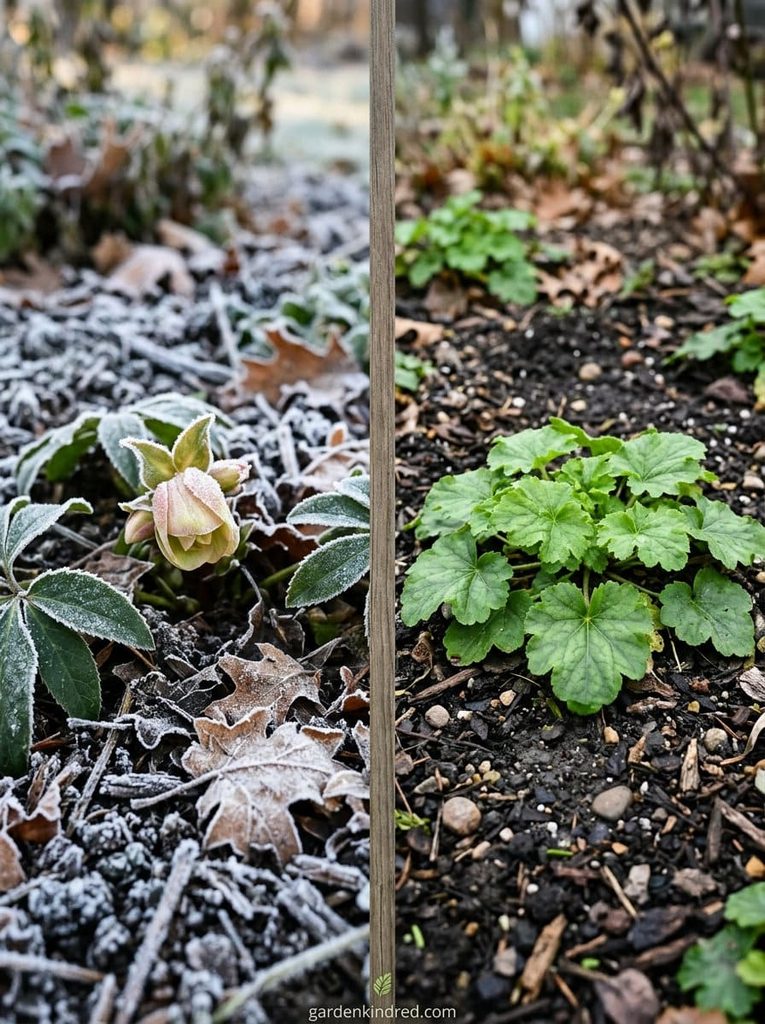
1. Peony: the fall-only bloomer that takes patience
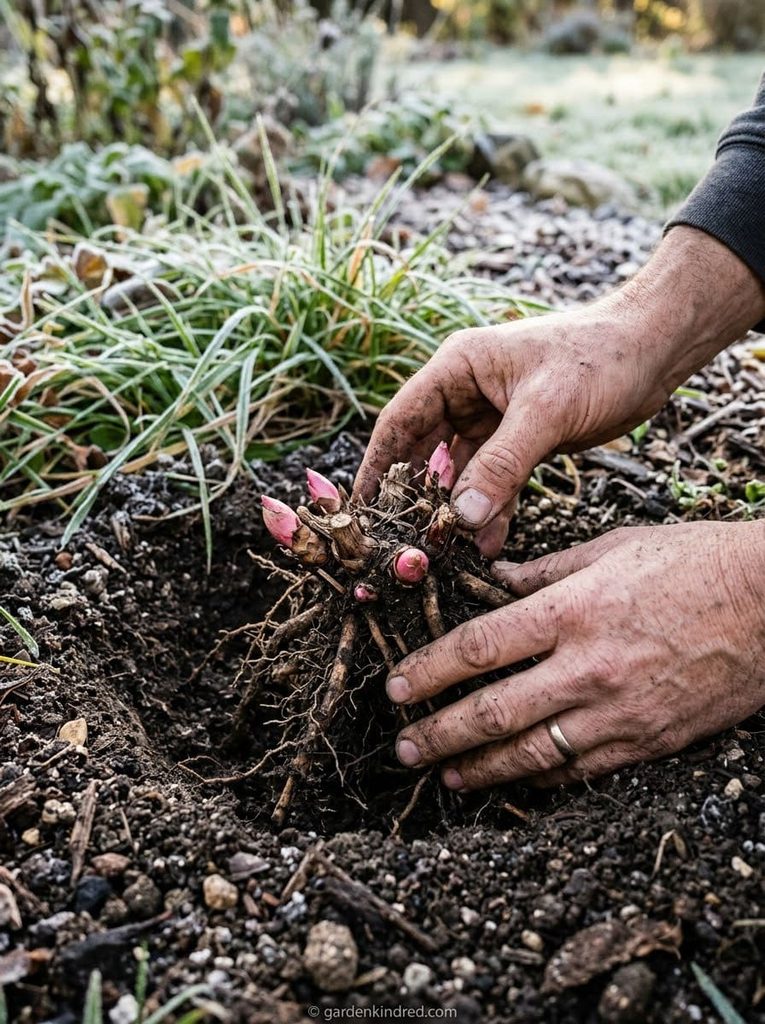
Peonies are the clearest case for fall planting on this entire list, because next year’s flower buds are set on the crown almost immediately after this year’s growth finishes, the same mechanism that makes fall the only real division window for an existing plant.
A newly planted bare-root peony typically produces a light bloom or none at all its first spring, then builds toward a full display by year two or three as the root system matures. That’s not a failure, it’s how the plant works. Rushing a peony with heavy fertilizer the first year doesn’t speed this up, and can actually push weak, floppy growth instead.
Plant in October through mid-November, per fall-planting guidance summarized by Iowa State University Extension, with the eyes covered by no more than one to two inches of soil in colder zones, shallower still in mild-winter areas. Bury the eyes too deep and the plant may survive for years without ever setting a real bloom, the single most common reason a peony disappoints.
Space new peonies three to four feet apart. They’re not fast plants, and crowding one into a tight bed now means a division project in five years that could have been avoided.
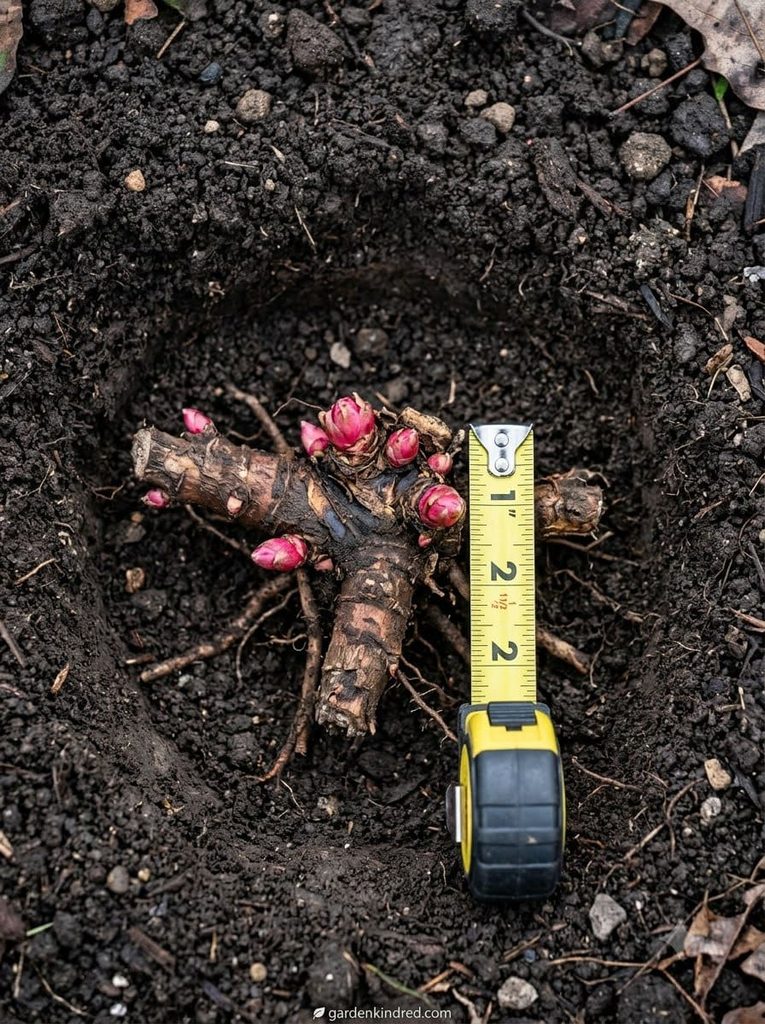
2. Bearded iris: plant the rhizome shallow, not the mistake everyone makes
Bearded iris grows from a rhizome, not a root ball, and the single most common new-planting mistake is burying it like a bulb.
Illinois Extension’s bearded iris guidance is specific: the rhizome should sit at or just barely below the soil surface, with the top still visible after planting, not buried. In very hot climates or light sandy soil, up to one inch of covering soil is fine, but going deeper invites rot and, per that same guidance, measurably reduces flowering.
New iris planted in fall typically produces its first real bloom the following spring, sometimes a partial one, with a full, mature display by the second year once the rhizome fan has filled out.
Space rhizomes 12 to 24 inches apart. Tighter spacing looks fuller sooner but forces an earlier division, since crowded iris rhizomes stop blooming well within just a few years.
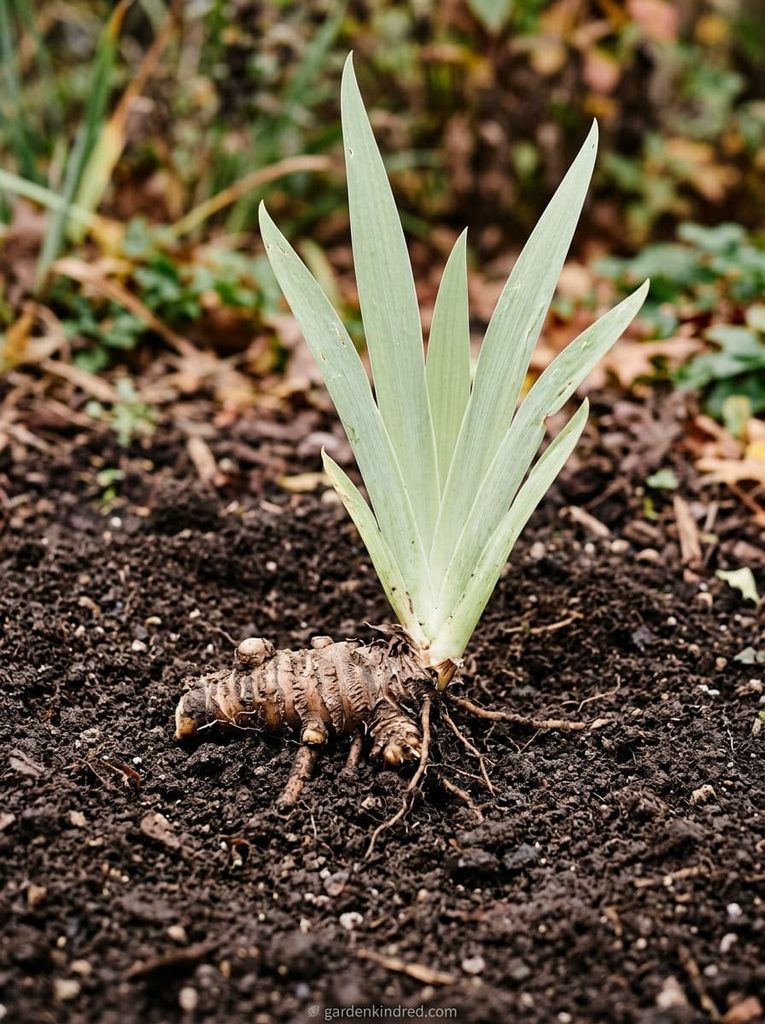
3. Oriental poppy: worth planting new, never worth dividing
Oriental poppy earns its spot here with one important asterisk: this is a new-plant entry, not a division candidate. Its single fleshy taproot has no natural split point, so an established Oriental poppy should be left alone rather than divided, that’s a job for the perennials in our guide to dividing perennials in fall instead.
As new nursery stock, though, fall planting genuinely suits this plant. It needs a real cool period to establish that taproot, per the growing conditions Illinois Extension’s Hort Answers describes, before facing the heat and humidity that cause root rot in an unestablished plant in warmer zones.
Plant bareroot poppies with two to three inches of soil covering the crown, in a hole deep enough for the full taproot, often ten to twelve inches. Shallow planting is the most common reason a new Oriental poppy fails outright.
Expect bloom the first full spring after fall planting in zones 3-7, with flowers arriving in May and June once the plant is established. Space plants 18 to 24 inches apart, they die back completely after flowering and go dormant through summer, so don’t panic when the foliage disappears.
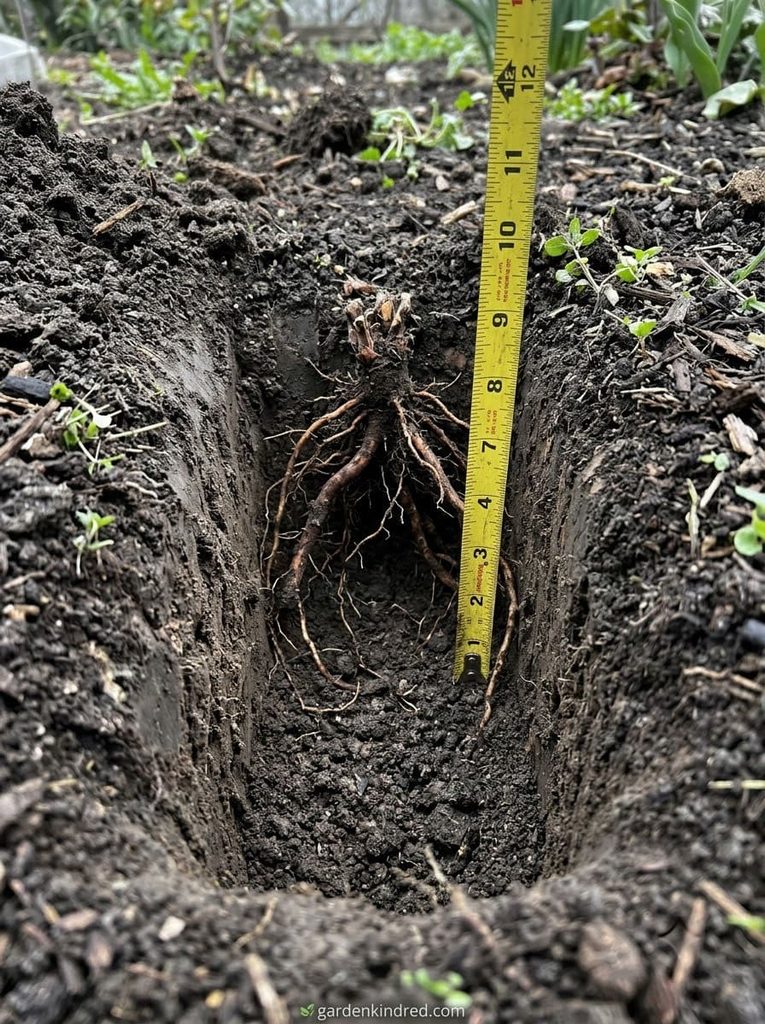
4. Coral bells (heuchera): fall planting for foliage you’ll actually see all winter
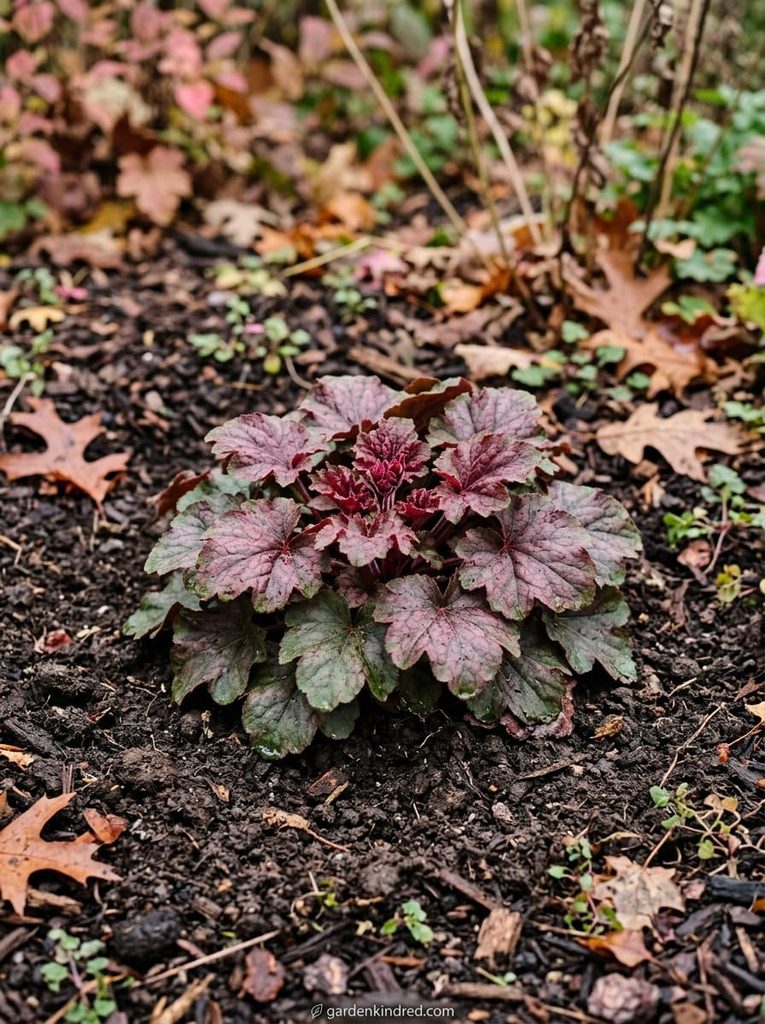
Coral bells earn a spot on a “spring blooms” list a little differently than the others, the foliage itself stays evergreen to semi-evergreen through a mild winter in many zones, so a fall-planted heuchera is doing visible work in the garden well before its actual flower spikes show up.
University of Vermont Extension describes heuchera as hardy across a wide range, generally zones 4-9, with named cultivars pushing the cold end down to zone 3. Plant it at least six weeks before the ground freezes so the crown has time to root in before winter.
Mature size runs 8 to 18 inches wide and 6 to 16 inches tall for the foliage mound, with flower spikes reaching 12 to 36 inches when they appear in late spring. Space new plants 15 to 24 inches apart based on the cultivar’s mature width.
A fall-planted coral bells typically produces its first flower spikes the following late spring or early summer, with fuller bloom by year two as the rosette fills in.
5. Columbine: the reseeding perennial that rewards an early fall start
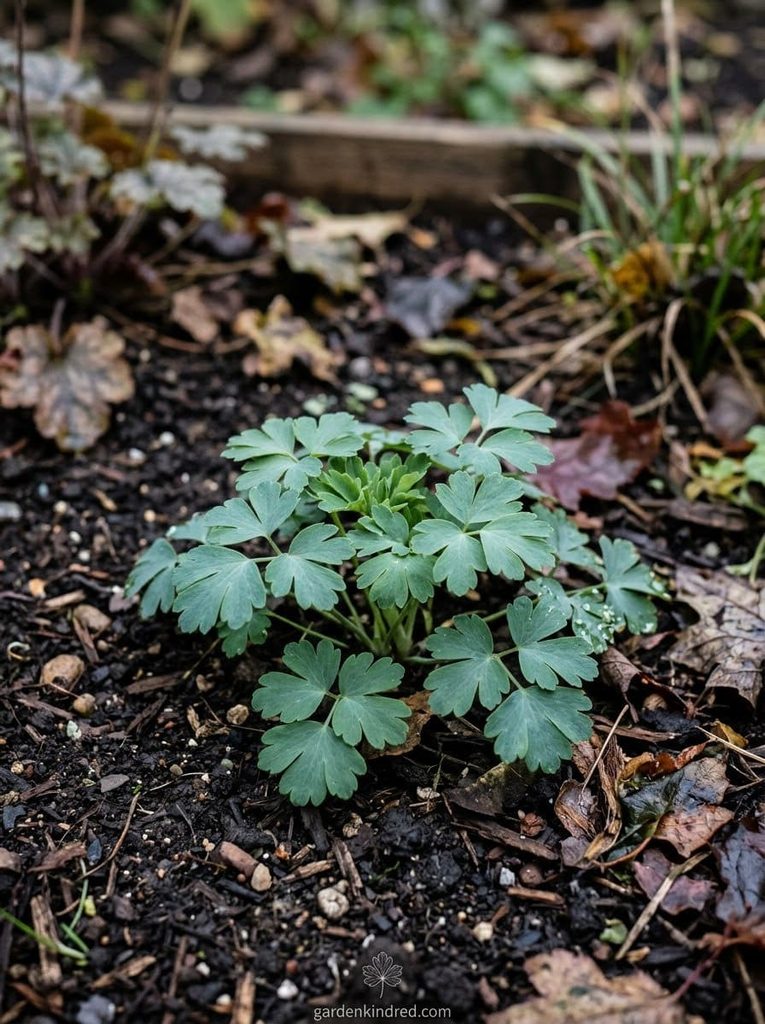
Columbine (Aquilegia) is one of the few perennials on this list that genuinely benefits from getting a full growing season’s head start before it has to compete with its own seedlings, since established plants self-sow readily once they’re happy.
Per the North Carolina State Extension Gardener Plant Toolbox, columbine is broadly hardy across USDA zones 3-8 and prefers cooler root zones, which fall planting delivers directly, since the plant is establishing while soil is cooling rather than heating up.
An established fall-planted columbine typically blooms the following spring, usually April through June depending on region, and stays in bloom for roughly a month. Plants grown from seed instead often skip flowering entirely their first year, one more reason nursery-grown fall stock has a real advantage over starting from seed in this specific case.
Mature size runs one to three feet tall with a spread of about one to one and a half feet. Space new plants 12 to 18 inches apart to give the crown room before self-sown seedlings start filling in the gaps on their own.
6. Creeping phlox: the groundcover that needs a full season before it earns its name
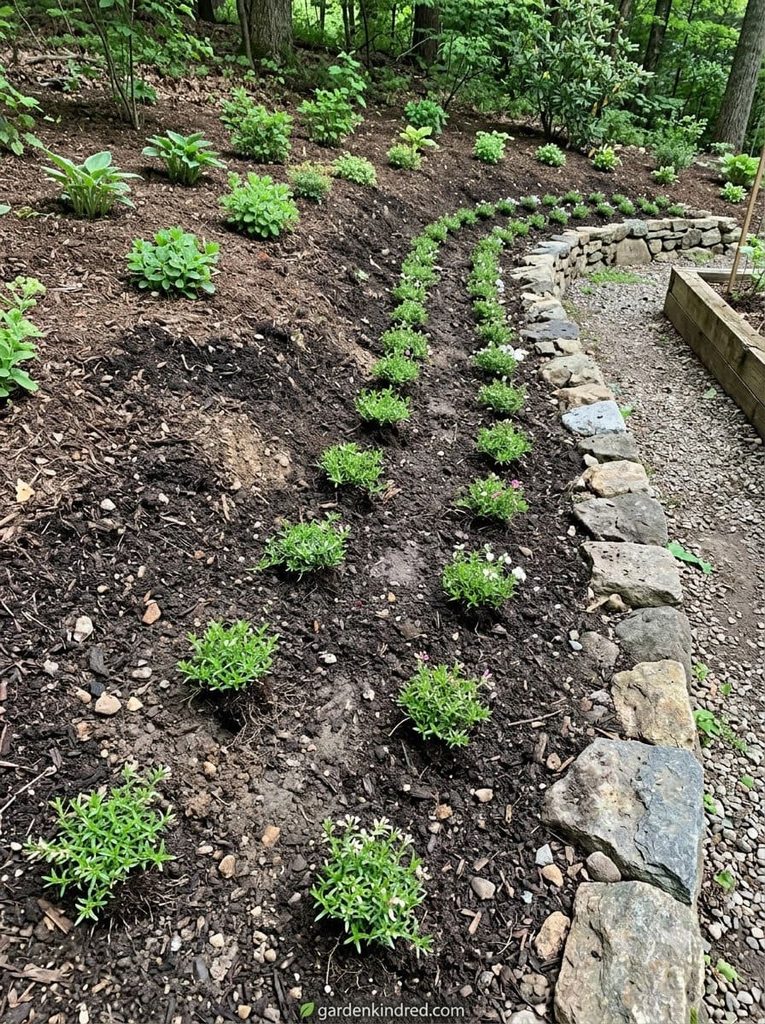
Creeping phlox is sold on the promise of a solid sheet of spring color, and that promise depends entirely on how much time the mat has had to actually spread before its first real bloom season.
University of Georgia Extension’s guidance on Emerald Blue phlox notes it should be planted at least six weeks before the first hard freeze, the standard fall-establishment window that applies across most of this list.
At maturity, expect a mat 6 to 12 inches tall spreading 9 to 18 inches wide per plant, eventually merging into a continuous carpet as neighboring plants grow together over a few seasons. Space individual plants 12 to 18 inches apart for that eventual merge, spacing wider if you’re patient and buying fewer plants, tighter if you want faster coverage.
A fall-planted creeping phlox typically shows a modest bloom the first spring, with the fuller “sheet of color” look most people picture arriving by the second or third spring once the mat has actually filled in.
7. Lenten rose (hellebore): the one on this list that truly needs the cold
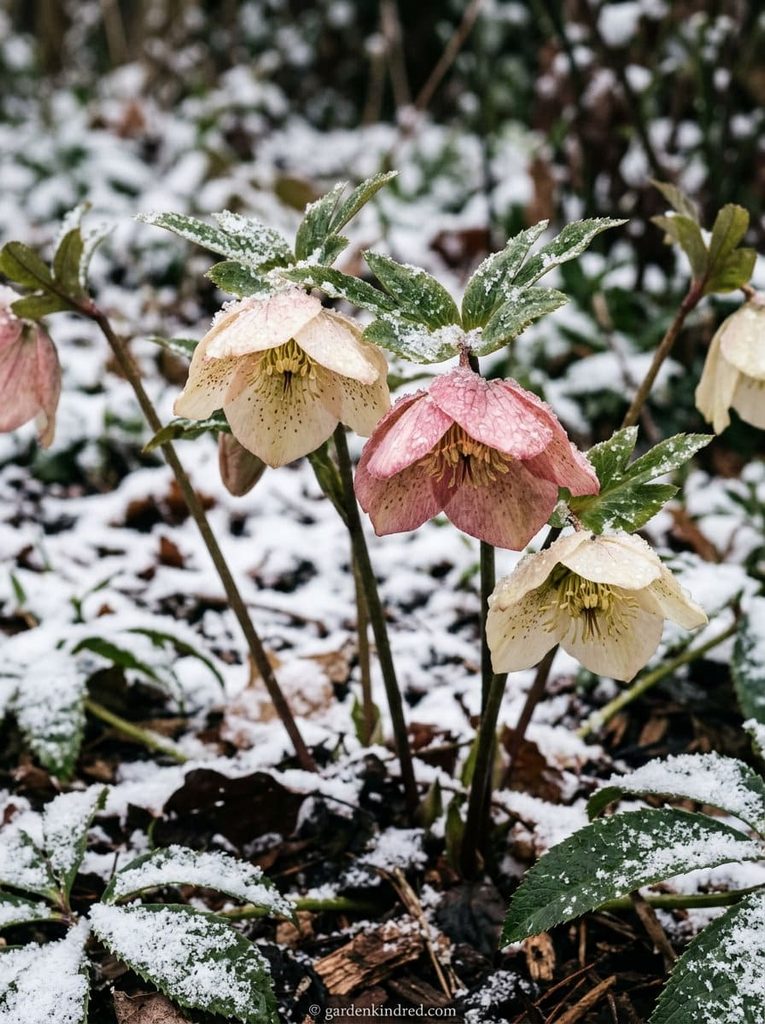
Lenten rose is the perennial where “plant it in fall” stops being a head-start suggestion and becomes closer to a requirement, because its flower buds form through an actual vernalization process, not just general seasonal timing.
Per the University of Wisconsin-Madison Division of Extension’s horticulture program, flower buds form during the prior summer and the flower spikes emerge in late winter, timed to open alongside daffodils and tulips, both of which share that same cold-triggered flowering mechanism. A hellebore planted too late to properly root in and go through a real winter often produces a thin first bloom, the buds are there, but the plant hasn’t stored enough energy through its first winter to push them fully.
Mature plants reach 18 to 24 inches tall and 24 to 30 inches wide, considerably larger than their compact nursery-pot size suggests, so give new plants real room, 18 to 24 inches of spacing, rather than crowding them for an instant-full look.
Hardy from zone 5 to 9 per that same Wisconsin Extension guidance, with mulch or reliable snow cover extending that range colder. Bloom typically arrives in late winter to early spring, often pushing up through the last of the snow, which is exactly the payoff that makes this one worth the fall-only planting window.
Which of these 7 perennials fits your zone, and how do they compare?
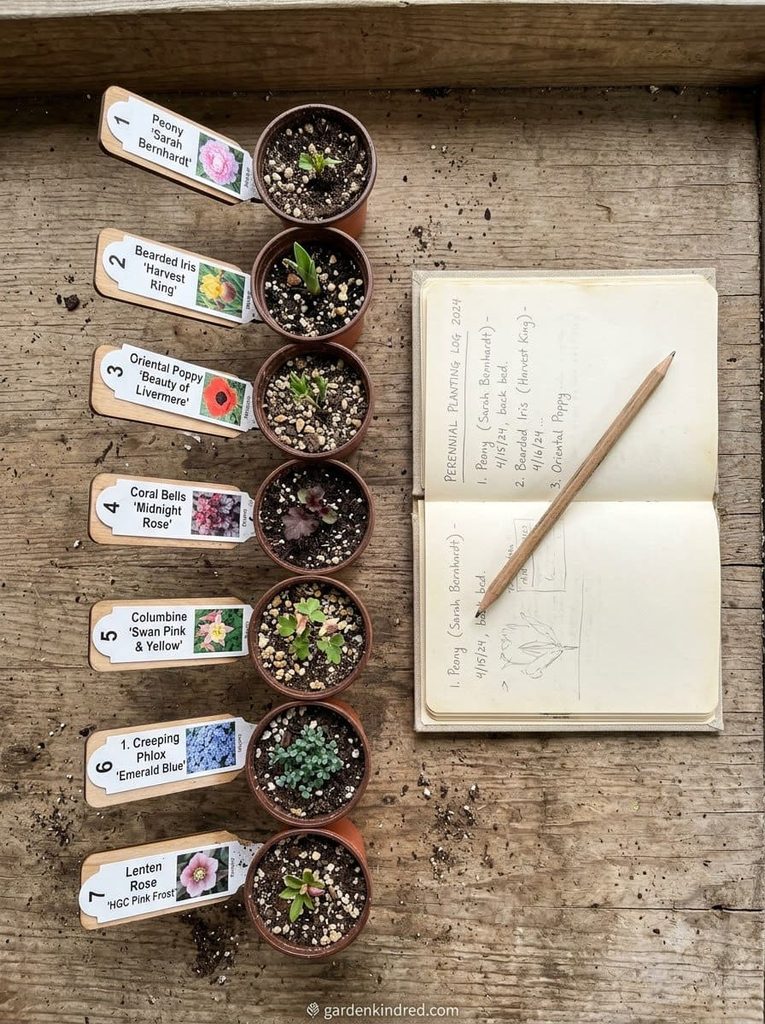
| Perennial | Zone fit | First real bloom after fall planting | Mature size | Spacing |
|---|---|---|---|---|
| Peony | 3-8 | Light/none year 1, full by year 2-3 | 2-3 ft tall and wide | 3-4 ft apart |
| Bearded iris | 3-9 | Partial year 1, full year 2 | 2-3 ft tall in bloom | 12-24 in apart |
| Oriental poppy | 3-7 | First full spring (May-June) | 2-3 ft tall in bloom | 18-24 in apart |
| Coral bells (heuchera) | 3/4-9 | Late spring/early summer, year 1 | 8-18 in wide, 6-16 in tall | 15-24 in apart |
| Columbine | 3-8 | First spring, April-June | 1-3 ft tall, 1-1.5 ft wide | 12-18 in apart |
| Creeping phlox | 4-9 (per USDA cultivar range) | Modest year 1, full mat by year 2-3 | 6-12 in tall, 9-18 in wide | 12-18 in apart |
| Lenten rose (hellebore) | 5-9 | Late winter/early spring, year 1 | 18-24 in tall, 24-30 in wide | 18-24 in apart |
How far ahead of your first frost should you actually plant?
The number that matters across every plant on this list is the same one Illinois Extension and University of Vermont Extension both point to: six to eight weeks before your soil typically freezes, not before the air turns cold, before the ground itself locks up.
A worked example, zone 6, one peony: planted in early October, roughly six to seven weeks ahead of a typical mid-to-late November ground freeze in that zone. The root system spends October and early November establishing new feeder roots while topsoil is still workable, then goes fully dormant once the ground freezes hard. The crown sits through winter with a real, if still-developing, root system in place, and by the following spring it has enough of a foundation to push a light bloom, with a full display arriving by year two or three as the mechanism above describes.
Plant that same peony in late November instead, two weeks before the freeze, and the root system barely gets started before dormancy, leaving it more exposed to frost heave and slower to establish once spring arrives.
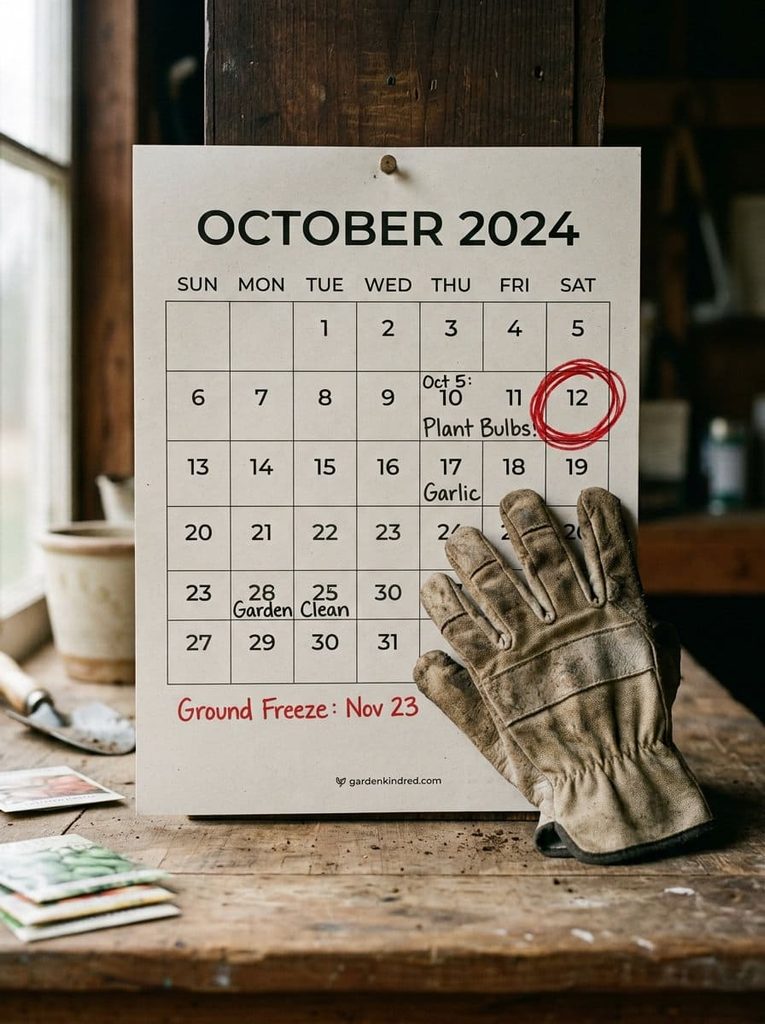
Your exact window depends on your zone’s real ground-freeze date, not a fixed calendar week. For the specific week-by-week breakdown by USDA zone, see our September flower planting calendar by zone, which covers the same root-establishment math applied to bulbs and division timing across zones 3 through 10.
How do you care for a fall-planted perennial through its first winter?
Water consistently until the ground actually freezes. A new perennial’s undeveloped root system can’t reach moisture the way an established plant can, and per the fall-planting guidance from University of Vermont Extension, keeping soil consistently moist (not soggy) through the whole establishment window matters more than any other single aftercare step.
Skip fertilizer at planting time. A newly planted root system can’t take up nutrients efficiently yet, and pushing nitrogen encourages top growth the plant can’t sustain right before winter. Wait for spring, once new growth confirms the plant has actually rooted in.
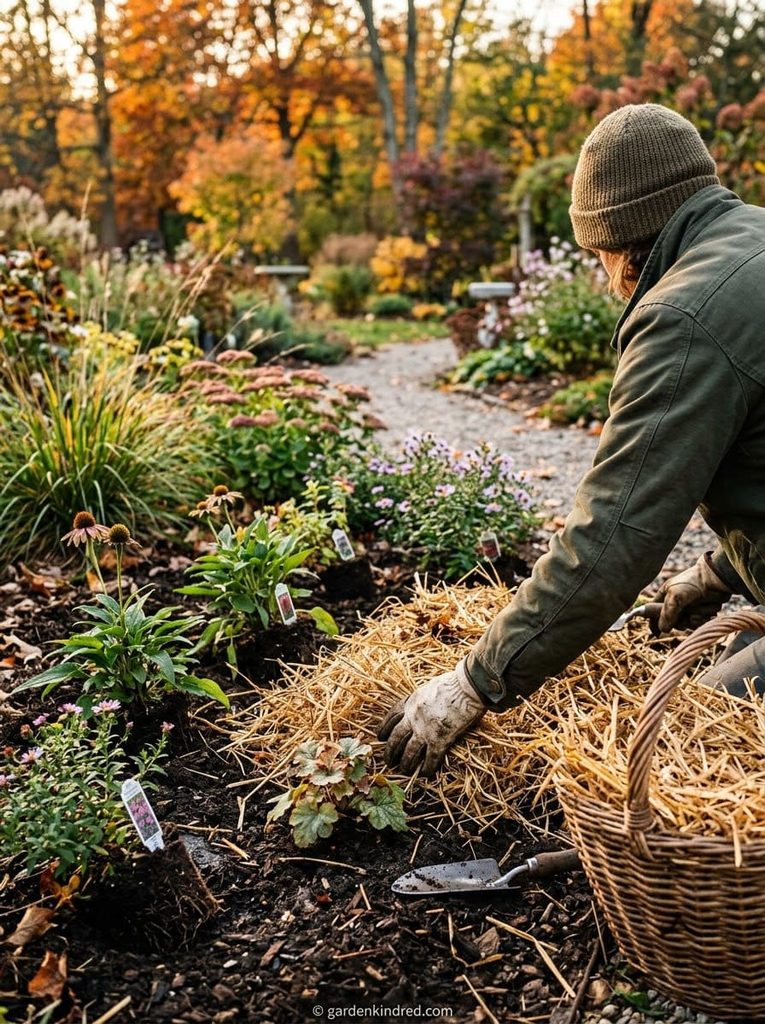
Mulch before the hard freeze, not after. A three to four inch layer insulates the soil and slows the freeze-thaw cycling that can heave a shallow-rooted new planting partway out of the ground over winter. This matters most for the shallow crowns on this list, bearded iris and hellebore especially.
Check for frost heave after the first hard freeze-thaw cycle. If a crown has visibly lifted, press it gently back into place and add mulch rather than replanting. Disturbing the roots again this late in the season usually does more damage than the heaving itself.
This checklist task matters here too. Mulching beds before the first hard frost is task #8 on our Fall Garden Checklist, right alongside planting the perennials in this guide. Grab the free checklist for the other 11 tasks to do before the first frost.
What are the most common mistakes people make planting perennials in fall?
Planting too close to the ground freezing. Six to eight weeks of root-establishment time isn’t a padding buffer, it’s the actual mechanism this whole list depends on. A perennial planted two weeks before a hard freeze doesn’t get the benefit any of the sections above describe.
Burying a peony eye or an iris rhizome too deep. These are the two plants on this list where depth is the single biggest failure point, a peony eye buried past two inches or an iris rhizome fully covered can go years without a real bloom even though the plant otherwise looks healthy.
Fertilizing at planting time. It feels productive, but pushing nitrogen into a plant that’s trying to build roots, not leaves, before winter works against the exact mechanism that makes fall planting worth doing.
Confusing “plant new” with “divide existing” for Oriental poppy. New Oriental poppy stock does well planted in fall. An established clump should never be divided, the single taproot has no natural split point, and cutting into one usually kills both halves rather than creating two plants.
Frequently asked questions
Can I still plant perennials in fall if I’m in a warmer zone?
Yes, and in zones 8-9 fall planting is often the better call specifically because it avoids the summer heat and humidity stress that can hit an unestablished root system, Oriental poppy and Lenten rose are the two plants on this list where that matters most.
Do all 7 of these perennials need a cold period to bloom?
No. Only Lenten rose has a genuine vernalization requirement behind its flowering. The rest simply benefit from the extra root-development time fall provides, they’ll still bloom if planted in spring, usually just smaller or a season behind.
What happens if I plant one of these too late in fall?
The plant may still survive if your ground freeze is mild that year, but with less root development behind it. Expect a weaker, later first bloom and a longer wait before the plant reaches the mature size and bloom numbers in the table above.
Is buying new perennial stock in fall different from dividing what I already have?
Yes. This guide covers purchasing and planting new nursery or bare-root stock. If you already have overcrowded, established perennials in your beds, our guide to dividing perennials in fall covers splitting those into free additional plants instead, a different technique with its own timing rules.
Products We Recommend
This post contains affiliate links. We may earn a commission on qualifying purchases at no extra cost to you.
Espoma Organic Bio-tone Starter Plus 4-3-3, 25 lb. Bag
This is the one exception to the "skip fertilizer at planting time" rule above, a mycorrhizae-enhanced starter formula mixed directly into the backfill soil at planting, not a nitrogen feed applied afterward. It's built specifically for the root-establishment window this entire article is about, which is a different job than the nitrogen fertilizer the aftercare section says to avoid.
Shop Now
Fiskars Ergo Garden Trowel, Cast Aluminum Head
The right tool for the specific depth work this article keeps coming back to, one to two inches for a peony eye, at-or-just-below-surface for an iris rhizome, ten to twelve inches for an Oriental poppy's taproot. The cast aluminum head handles the range of soil types across all seven entries without bending.
Shop now
Taylor Soil Testing Thermometer, 4-Inch Stem
Useful for confirming your soil has actually cooled enough for fall planting rather than going by the calendar alone, the same soil-temperature logic that governs bulb planting timing in our September flower calendar. The 2-inch-deep reading matches where new perennial roots are actually working.
Shop nowNever miss an update — choose Garden Kindred as your preferred source on Google.
How it works: Tap the button below to open Google's settings page, then check the box next to Garden Kindred.
Tap the checkbox to turn it blue — that's how you know it's set.