7 Real Fall-Blooming Flowers That Keep Pollinators Fed Before Winter (Bloom-Window Data Included)
A lone bumblebee queen has one shot at surviving winter, and it hinges on what’s blooming in your yard this October. Here’s the fall lineup that keeps her fed, plus the goldenrod myth worth retiring.
Never miss an update — choose Garden Kindred as your preferred source on Google.
How it works: Tap the button below to open Google’s settings page, then check the box next to Garden Kindred.
Tap the checkbox to turn it blue — that’s how you know it’s set.
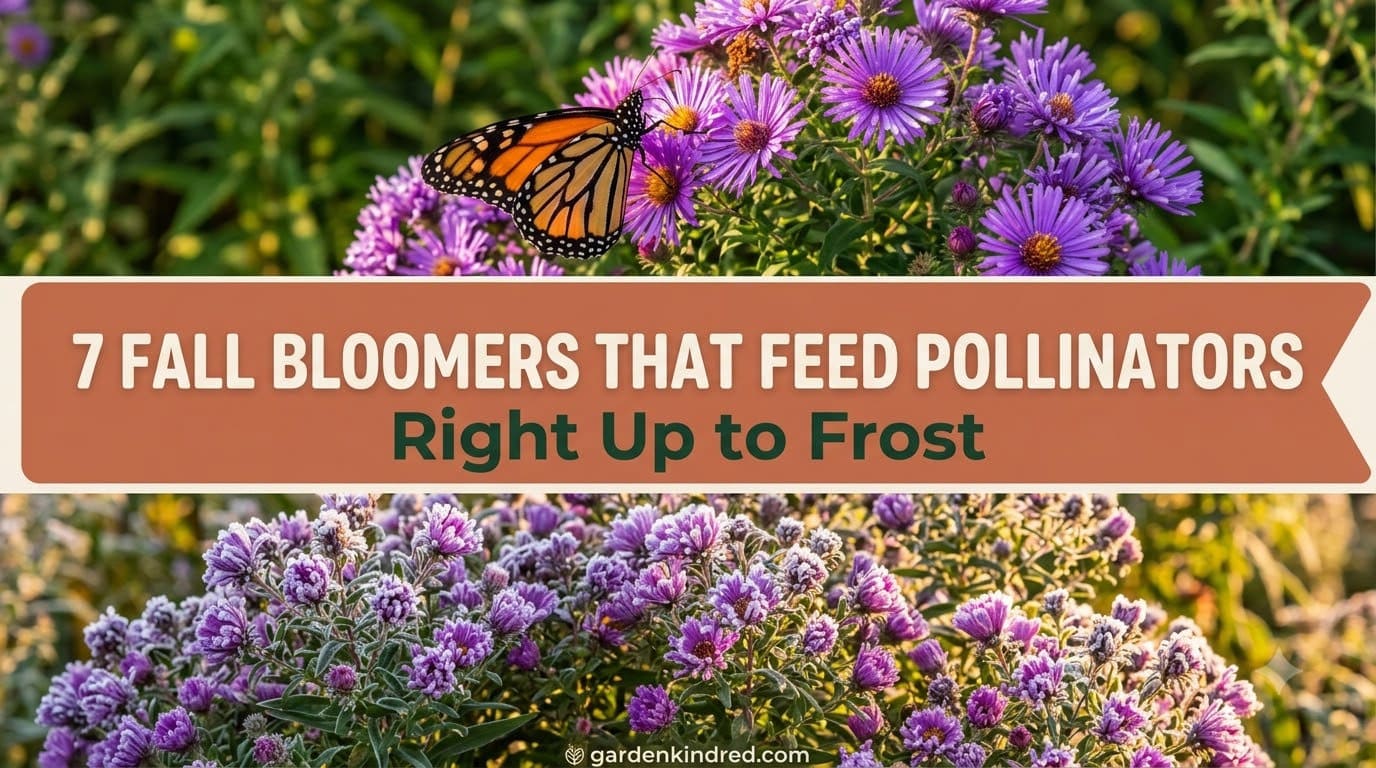
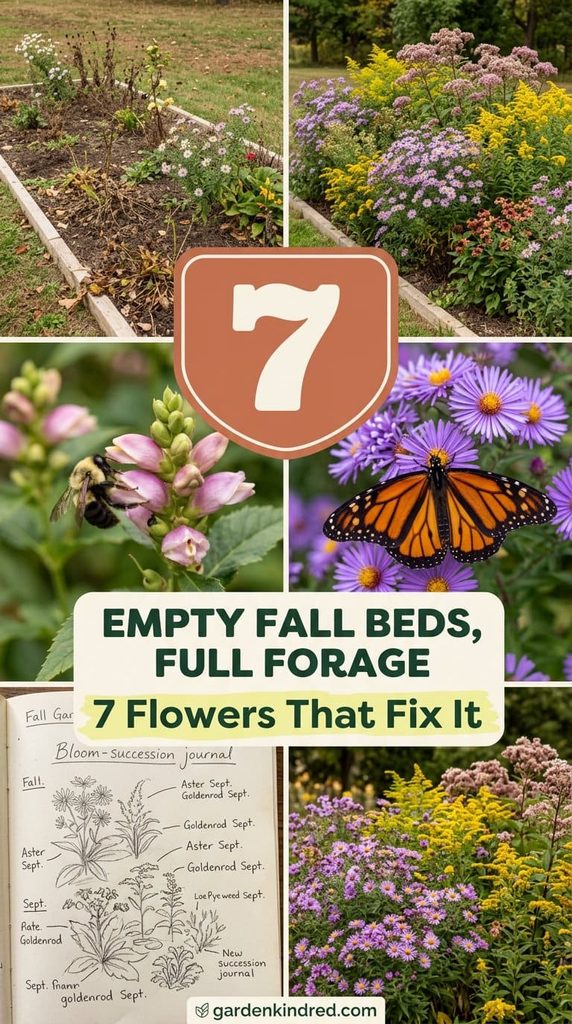
Late-season blooms matter more than most fall flower guides admit. Newly mated bumblebee queens spend September and October building the fat reserves that are their only shot at surviving winter, since the rest of the colony dies off. Monarch butterflies fuel a flight to Mexico that can run 3,000 miles on the same nectar. Seven flowers reliably deliver that forage: New England aster, goldenrod, Joe Pye weed, anise hyssop, sedum ‘Autumn Joy,’ Russian sage, and turtlehead, each with a real August-to-October bloom window below. Straight species usually outperform heavily bred cultivars here. Oregon State University research found some cultivars carry as little as 20% of the nectar of the wild plant they were bred from.
Goldenrod gets blamed for hay fever it does not cause, that’s ragweed, a wind-pollinated plant blooming at the same time. Stagger these seven and a fall bed keeps working right up to frost instead of going quiet in September.
This is task #7 on our Fall Garden Checklist. Deciding whether to cut back dead perennial foliage or leave it standing for pollinators is one of the trickiest fall calls to get right. Grab the free checklist for the other 11 tasks to do before the first frost.
Why does late-season bloom matter more than a typical “plant more flowers” tip?
I let a patch of goldenrod take over the back corner of a bed two Septembers ago, mostly because pulling it looked like more work than it was worth that week. By October it was loaded with bumblebees every sunny afternoon, more activity than I’d seen on that bed all summer.
That’s not a coincidence, and it’s not just “flowers are good.” Most pollinator content treats fall bloom as a nice bonus on top of a spring and summer garden. The actual biology says the opposite, fall is a hard deadline.
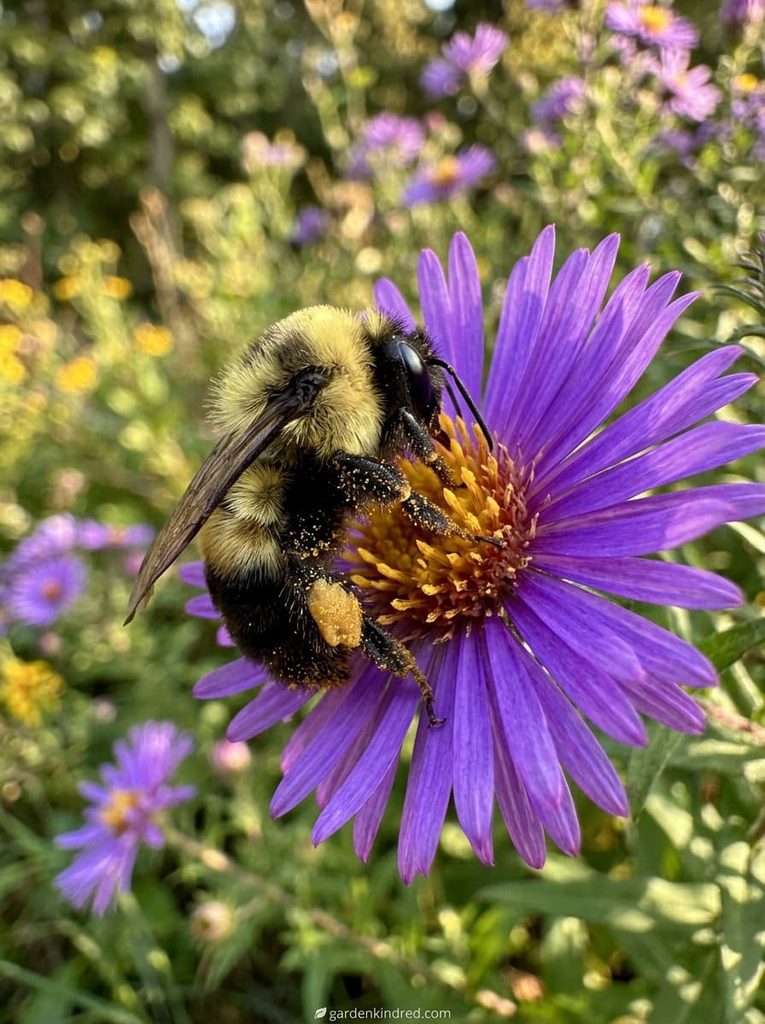
A bumblebee colony does not overwinter as a colony. According to the Xerces Society, only newly mated queens survive winter, and they do it alone, underground, living entirely off fat reserves built before the ground gets cold. Every other bee in that colony, workers included, dies off with the first hard frost.
That means a queen’s September and October foraging is not optional extra feeding, it’s the entire margin between surviving to found a colony next spring and not making it. A garden with nothing blooming after Labor Day is a garden that queen has to fly past.
Monarch butterflies run on the same clock with a different problem to solve. Per University of Wisconsin-Madison Extension, the migratory generation builds fat reserves from fall nectar to power a flight that can run close to 3,000 miles to overwintering sites in central Mexico. Goldenrod and aster are the two plants doing most of that work, according to the same Extension guidance, precisely because they’re still blooming when nearly everything else has finished.
Honeybee colonies face a version of the same math, just measured in stored honey instead of body fat. A hive that goes into winter light on stores from a thin fall bloom season starts spring depleted, sometimes fatally so. Late bloom is not decorative, it’s the last deposit into three different survival accounts before winter closes the account entirely.
Do straight species really out-perform “improved” cultivars, or is that just native-plant purism?
This is the part most fall pollinator roundups skip, and it’s a real, measurable gap, not a preference.
Plant breeders select ornamental cultivars for traits gardeners notice, bigger blooms, tighter clumps, unusual color, longer vase life. None of those selection criteria track nectar volume, pollen protein content, or flower accessibility, and sometimes actively work against them.
Oregon State University Extension’s research on Pacific Northwest natives and their cultivars found real, measurable differences. Some cultivars carried noticeably less nectar or different pollen nutrition than the wild species they came from, changes the researchers describe as unintended side effects of breeding for looks rather than deliberate.
The Piedmont Master Gardeners, a Virginia Cooperative Extension-affiliated volunteer program, summarize the pattern bluntly: about half of tested cultivars performed comparably to their native parent, and about half performed worse. One extreme case in the underlying research showed a cultivar producing only 20% of the nectar of the species it was derived from.

A mix of open-pollinated annual and perennial species built to fill exactly the kind of bloom-succession gaps the section above describes, useful for a gardener who wants to fill in around the 7 named flowers here rather than plant a full bed of nursery starts.
Shop NowThis post contains affiliate links. We may earn a commission on qualifying purchases at no extra cost to you.
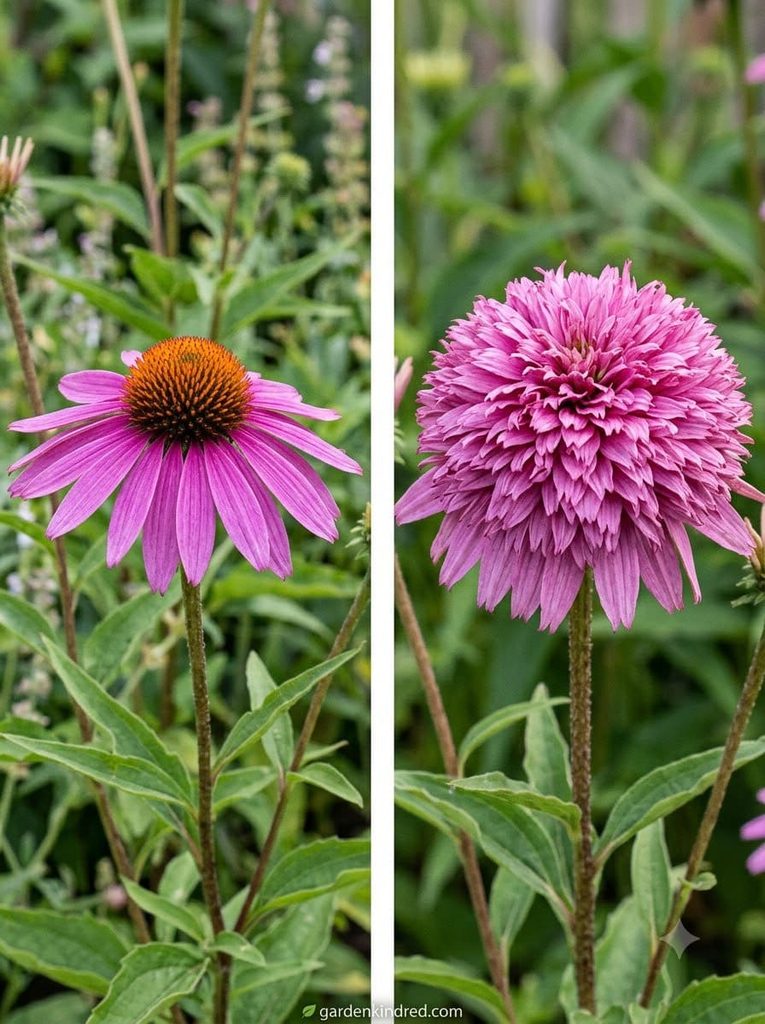
Double-flowered cultivars are the clearest failure mode mechanically. Breeding extra petal layers, common in ornamental sedum, coneflower, and aster varieties, often does it by converting the flower’s reproductive parts, the same structures that produce nectar and pollen, into more petals. A double bloom can look more impressive in a nursery pot while offering a pollinator close to nothing to actually eat.
That doesn’t make every cultivar useless. The research is explicit that results vary case by case, and some cultivars perform as well as the species. But “native” and “cultivar of a native plant” are not interchangeable claims, and a fall pollinator bed built entirely from double-flowered “improved” varieties can look full while functioning nearly empty.
How do you avoid a bloom gap between summer’s last flowers and the first hard frost?
A garden can have plenty of flowers overall and still starve pollinators for two or three weeks in September, if everything blooming happens to be summer varieties finishing at once.
The Xerces Society’s climate resiliency guidance defines a bloom gap in concrete terms, a stretch of two weeks or more where less than 10% of a planting area has anything actually flowering. That’s a real, measurable failure state, not a vague sense that a bed looks a little bare.
Their fix is specific. Pick at least three different bloom-time-appropriate plants for each of three windows, spring, summer, and fall, so a minimum of nine species keeps something open across the whole season. More is better, but nine is the floor, not a stretch goal.
The seven flowers below are chosen specifically because they don’t all peak at once. Anise hyssop and Russian sage start as early as July and carry into fall. Joe Pye weed and turtlehead hit their stride in August. Aster, goldenrod, and sedum ‘Autumn Joy’ close the season out into October, sometimes past the first light frost.
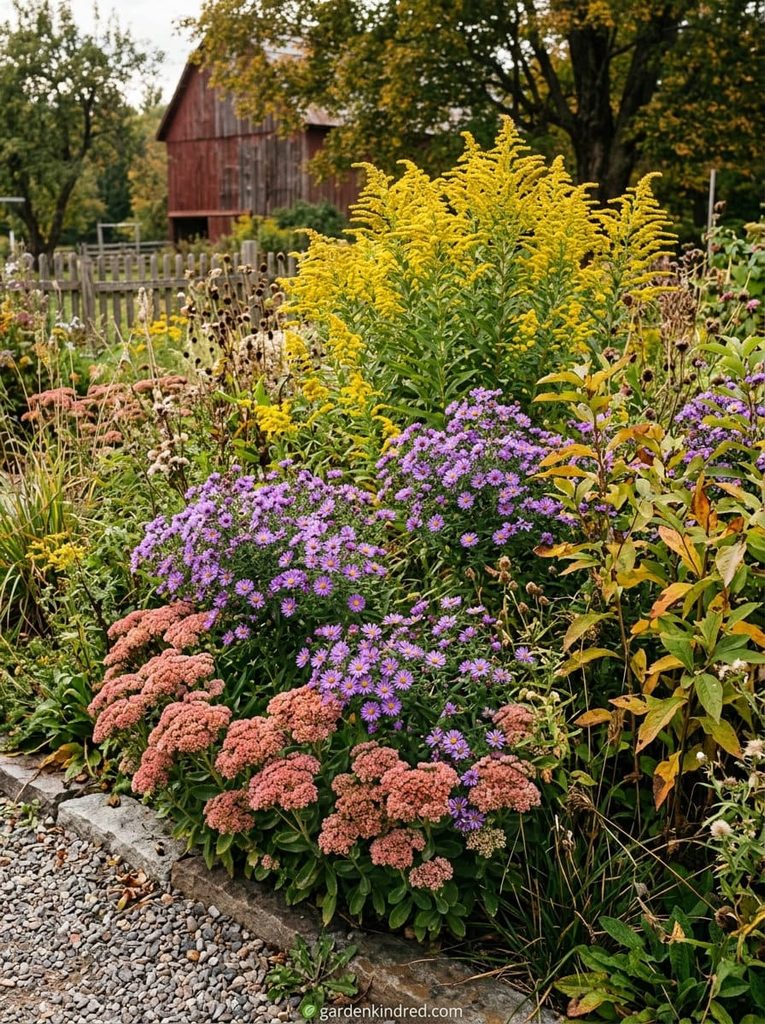
Planting all seven doesn’t guarantee zero gaps everywhere, local frost timing and microclimate still matter. But layering bloom windows this way, instead of picking seven flowers that all peak in the same three-week stretch, is the actual mechanism behind “extending the season,” not just a nice-sounding phrase.
1. New England aster: the last real nectar stop before monarchs commit to migration
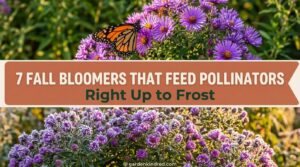
New England aster (Symphyotrichum novae-angliae) is one of the two plants doing the heaviest lifting for fall pollinators, alongside goldenrod below, and it’s the one most gardeners already half-recognize from roadside stands of purple.
Bloom runs from late August through October, per Prairie Moon Nursery’s growing guide, peaking through September in most regions. That’s a genuinely late window, one that often overlaps the season’s first light frosts in colder zones.
Its pollinator value is specific, not generic. The nectar is a documented late-season food source for monarchs pushing south, and the plant carries a special-value designation for native bees and bumblebees from multiple state extension and native-plant programs, not just a “bees like it” blanket claim.
Mature clumps reach 3 to 6 feet tall and 3 to 4 feet across, so give it real room, 18 to 24 inches of spacing from neighbors, or plan on staking in rich soil where it tends to flop. It’s native across most of the eastern and central United States and hardy zones 4-8.
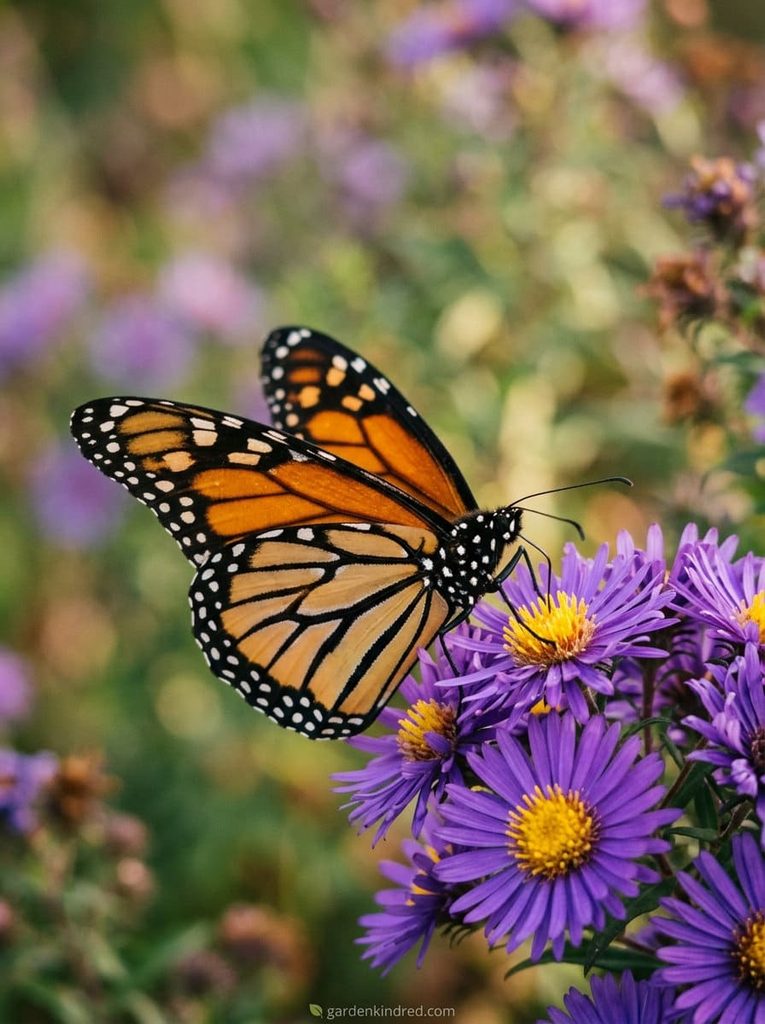
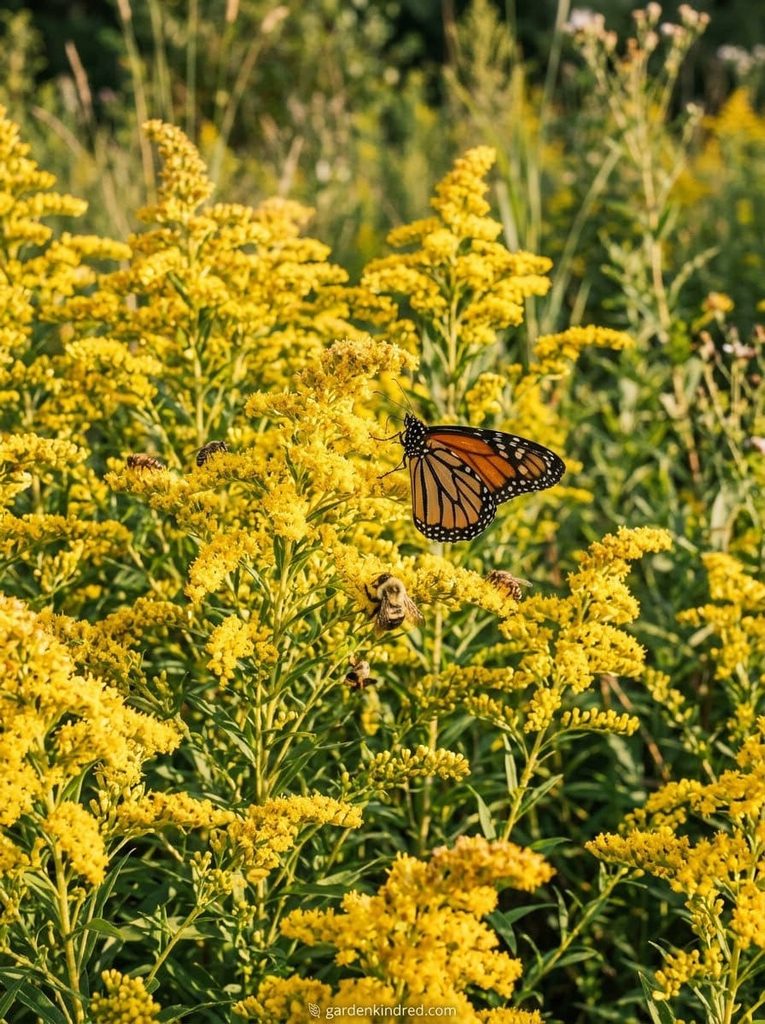
2. Goldenrod: the plant wrongly blamed for hay fever that ragweed actually causes
Goldenrod (Solidago species) carries a reputation problem that costs it a spot in a lot of home gardens, and the mechanism behind why that reputation is wrong is worth actually explaining rather than just asserting.
Goldenrod pollen is large, heavy, and sticky, built to cling to an insect’s body for transport, not to blow through the air. According to Illinois Extension’s Good Growing program, that pollen structure means it essentially never becomes airborne in quantities that reach human sinuses.
Ragweed is the actual culprit, and it blooms at the same time in the same habitats, which is where the confusion comes from. Ragweed is wind-pollinated, so it produces enormous volumes of microscopic, lightweight pollen specifically built to travel on air currents, the exact opposite strategy from goldenrod’s.
That difference in pollination strategy is also exactly why goldenrod is a pollinator powerhouse. A plant that needs insects to move its pollen has to make that pollen and its nectar worth the trip, and per guidance summarized by Pollinator Pathway, goldenrod is one of the two most important late-season nectar sources for migrating monarchs, alongside aster, and supports a documented set of specialist bee species that depend on it specifically.
Bloom runs roughly August through October depending on species, with most garden varieties reaching 2 to 4 feet tall and spreading readily by rhizome, so give it a spot where spreading is welcome, not a tight border bed. It’s native through most of North America and hardy zones 3-9 depending on species.
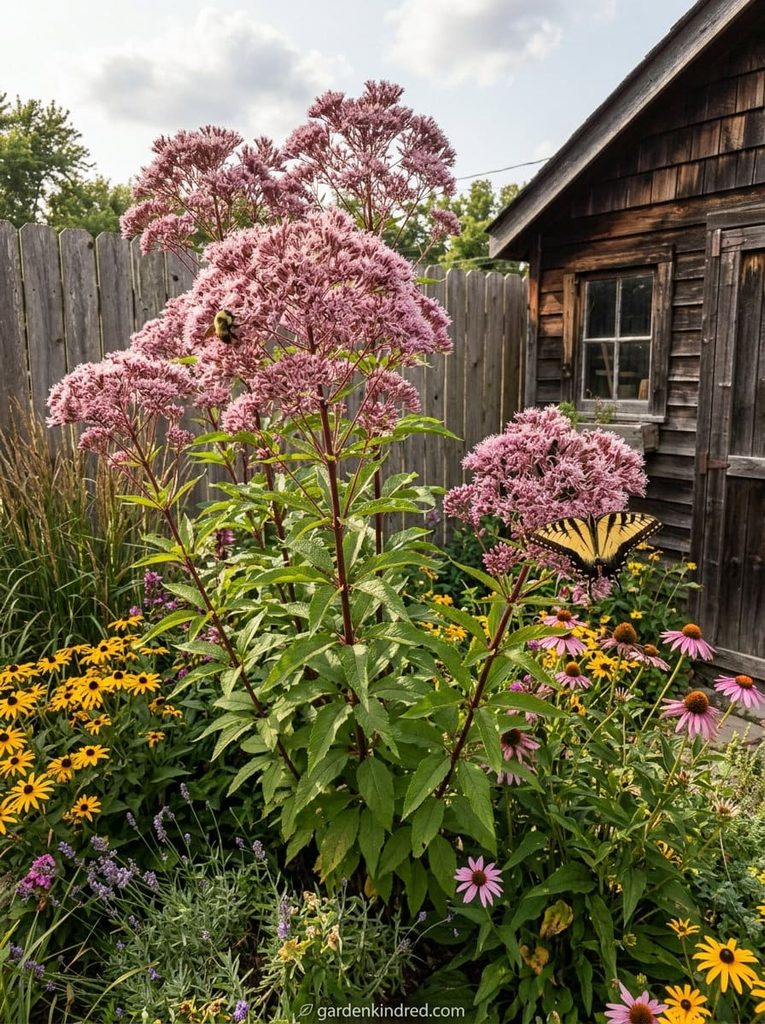
3. Joe Pye weed: the tall native that runs a full late-summer-into-fall bloom window
Joe Pye weed (Eutrochium purpureum or Eutrochium fistulosum, depending on region) solves a problem most fall pollinator lists ignore entirely, height. A bed of low, mounding fall bloomers looks flat, and Joe Pye weed is the vertical anchor that fills that gap while still doing real pollinator work.
Bloom begins in late July and runs through September, per Prairie Moon Nursery, which puts most of its window ahead of the peak aster-and-goldenrod finale but overlapping it at the tail end, exactly the kind of succession planning the section above describes.
The pollinator draw is broad rather than narrow. It attracts bumblebees, butterflies, skippers, and moths in real numbers, and its dusty mauve-pink flower clusters are large and open enough for a wide range of tongue lengths to access the nectar easily, unlike some tubular flowers that only work for certain species.
Mature size runs large, E. purpureum typically reaches 4 to 7 feet, with E. fistulosum capable of 5 to 7 feet or taller in ideal conditions. Give it 3 to 4 feet of spacing and plan on it as a back-of-border or focal plant, not something for a small front bed. It’s native to most of eastern and central North America and hardy zones 4-8.
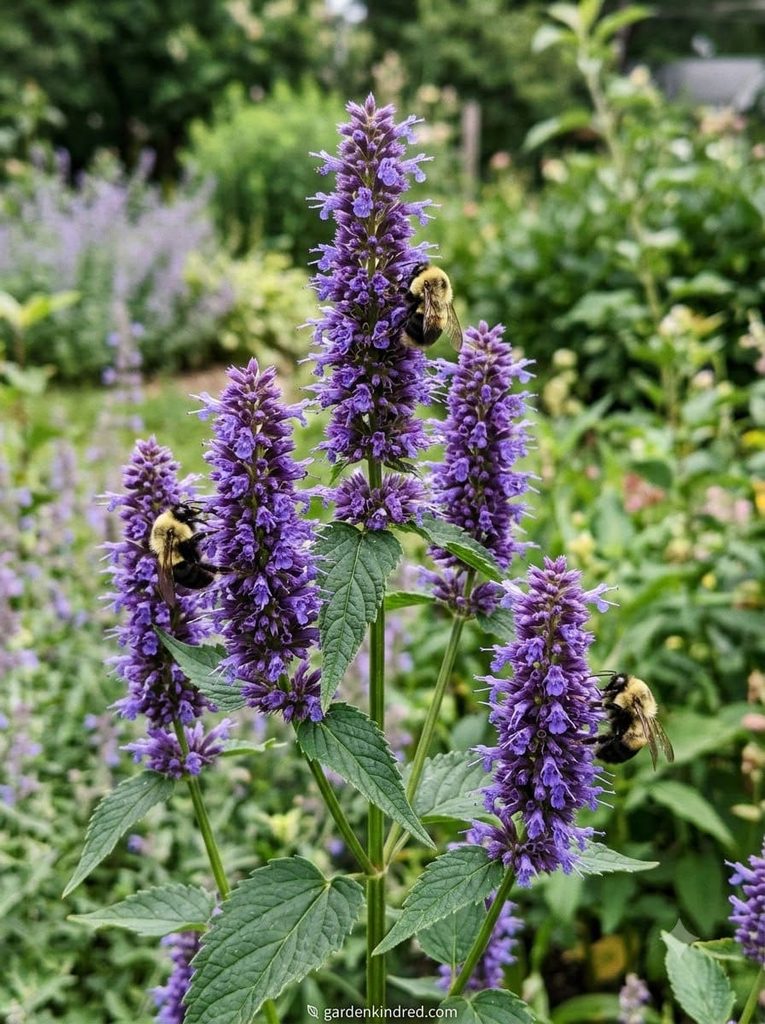
4. Anise hyssop: the earliest-starting flower on this list, still going strong into fall
Anise hyssop (Agastache foeniculum) is the outlier on this list in one specific way, it starts blooming well before “fall” begins, which makes it the plant that actually closes the bloom-succession gap between summer and the true fall bloomers above.
Per Clemson Cooperative Extension, bloom typically starts in June and can run into September, and deadheading spent flower spikes pushes that window even later into fall in many gardens. That’s a genuinely long bloom period compared to most of this list’s late-starting specialists.
The pollinator numbers here are unusually well documented for a garden perennial. Research cited by regional extension and native-plant programs has recorded more than 30 bee species and over a dozen butterfly and moth species visiting anise hyssop, a real breadth of visitors rather than a plant that just draws one or two generalist species.
Mature plants reach 2 to 4 feet tall and 1 to 3 feet wide, upright and clump-forming rather than spreading aggressively. It’s native to the upper Midwest and parts of Canada and hardy zones 4-8, tolerant of drier soil once established, which makes it a genuine option for a lower-water fall pollinator bed.
5. Sedum ‘Autumn Joy’: the reliable filler with one real caveat about doubled blooms
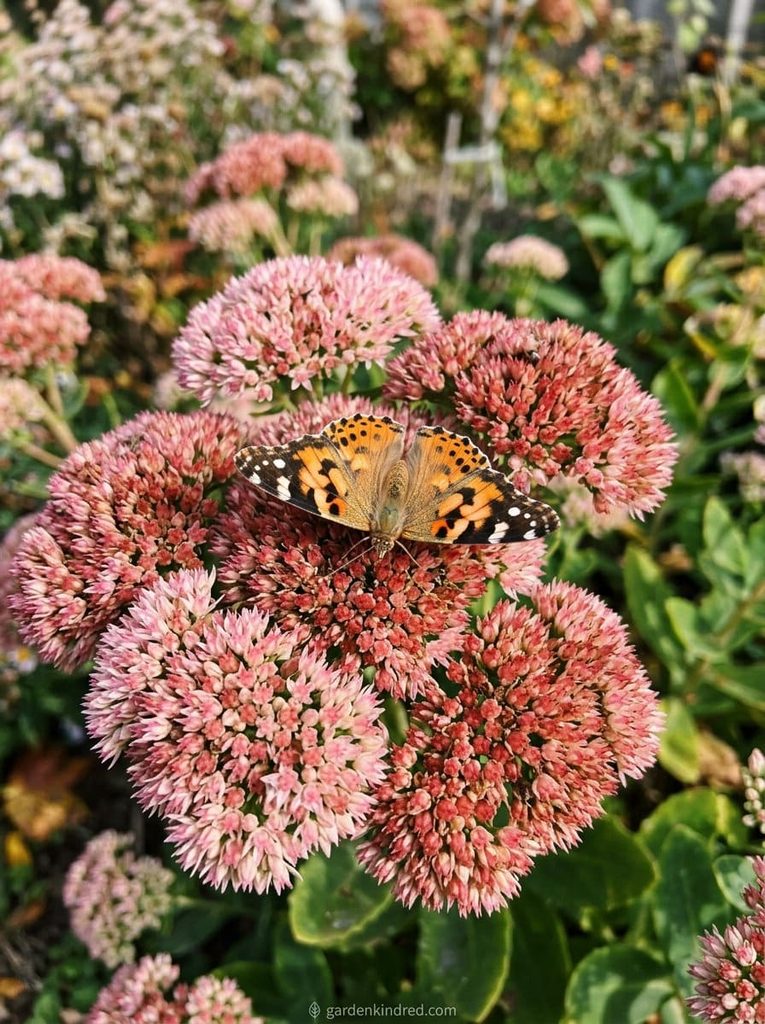
Sedum ‘Autumn Joy’ (Hylotelephium ‘Herbstfreude’, also sold under the older name Sedum spectabile ‘Autumn Joy’) earns its spot for a practical reason as much as a pollinator one, it’s genuinely low-maintenance and its flat flower clusters are wide open, easy-access landing pads for a huge range of pollinator species.
Bloom runs from late August through October, per the North Carolina State Extension Gardener Plant Toolbox, which places it squarely in the same critical late window as aster and goldenrod. On a warm fall afternoon a single mature clump can host dozens of bees and butterflies working it at once.
This is also the plant where the cultivar-versus-species caveat from the section above matters most directly, worth flagging honestly. ‘Autumn Joy’ is itself a hybrid, not a wild species, so it doesn’t have a true native “straight species” alternative the way aster or goldenrod does. Its flat, open flower structure has stayed close to its wild sedum ancestors rather than doubling up, which is why it still performs well despite being a bred selection, but it’s a reminder to check flower structure on any sedum cultivar before assuming it’s pollinator-friendly, since double-flowered sedum varieties do exist and perform worse.
Mature size runs 18 to 24 inches tall and wide, tidy enough for a front-of-border spot. Hardy zones 3-9, and not native to North America (it’s derived from Asian Hylotelephium species), so pair it with the native entries on this list rather than relying on it alone.
6. Russian sage: the drought-tolerant option that runs nearly the whole growing season
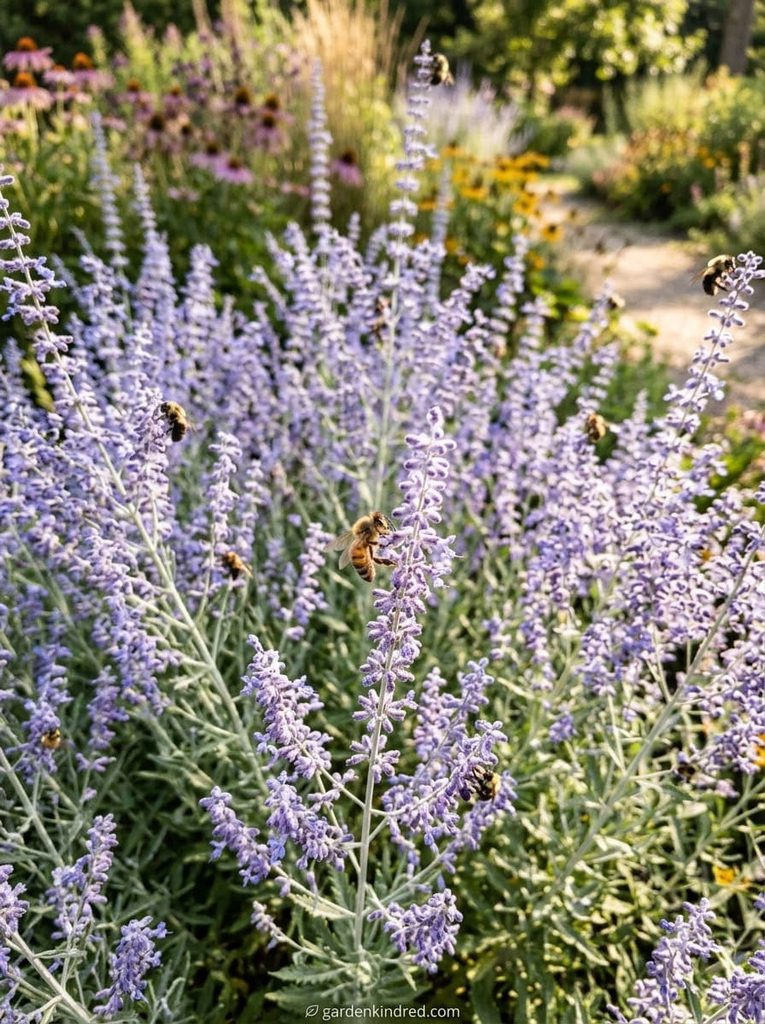
Russian sage (Salvia yangii, formerly classified as Perovskia atriplicifolia) is the pick for a genuinely dry, hot bed where most of this list’s moisture-loving natives would struggle.
Per Wisconsin Horticulture Extension, bloom runs from July into October, one of the longest windows on this list, with its airy lavender-blue flower spikes staying productive right through the fall pollinator crunch rather than fading by Labor Day.
It’s a genuine pollinator magnet for bees in particular, though it’s worth being direct about what it isn’t, it’s not a North American native (its origin is Central Asia), and it doesn’t carry the specialist-bee or monarch-migration significance that aster and goldenrod do. It earns its place here on drought tolerance and sheer bloom duration, not ecological rarity.
Mature size runs 3 to 4 feet tall and 2 to 3 feet wide, with a loose, airy habit that works well threaded through a bed rather than planted as a solid block. Hardy zones 4-9, genuinely low-water once established, which makes it a practical fit for xeriscape-adjacent fall pollinator plantings where irrigation is limited.
7. Turtlehead: the shade-tolerant native built specifically for a queen bumblebee’s weight
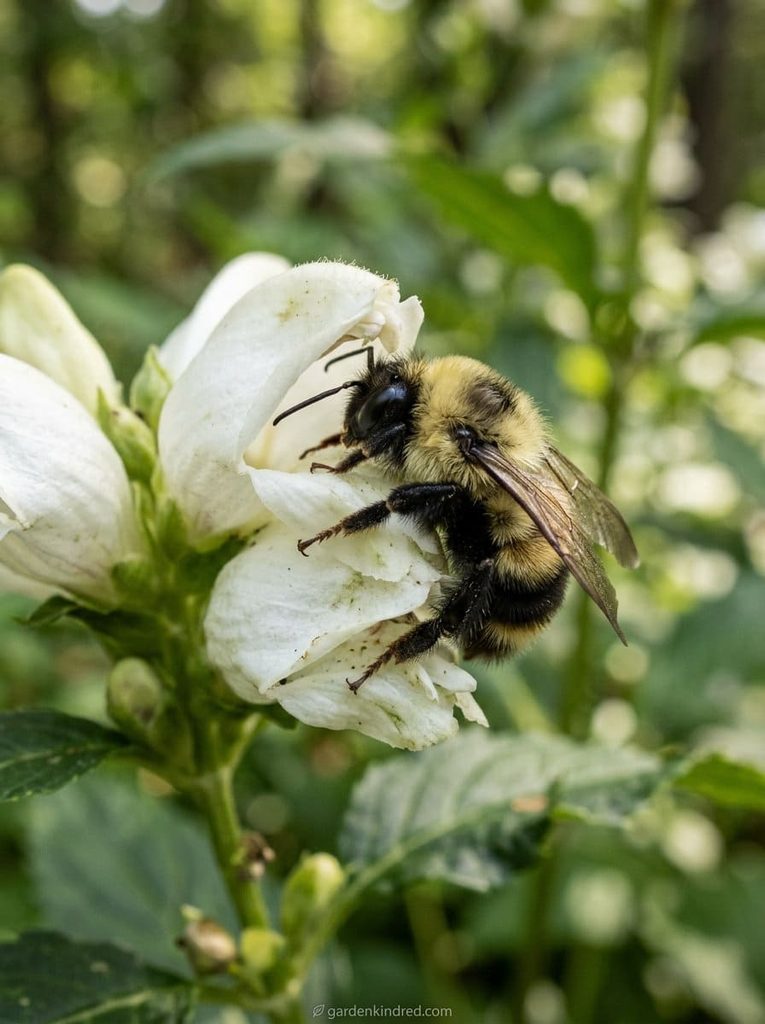
Turtlehead (Chelone glabra) is the most mechanically interesting entry on this list, because its flower shape isn’t a general-purpose pollinator magnet, it’s built around one specific visitor.
The flower’s tightly closed, hinged lips require real strength to pry open, and per plant-conservation guidance summarized by PlantNative’s pollinator profile, the primary pollinator is the queen bumblebee specifically, large and strong enough to force the bloom open where smaller bees and most other insects simply can’t get in.
That’s a real, specific mechanism, not a coincidence of timing. Bloom runs August through September, exactly the window when queens are doing their fat-reserve building described earlier in this article, so turtlehead isn’t just available at the right time, its flower structure is functionally matched to the exact pollinator that needs it most right then.
Mature size runs 2 to 3 feet tall (occasionally taller in ideal conditions) and 1 to 2 feet wide, forming a modest clump rather than spreading aggressively. It’s one of the few entries on this list that tolerates part shade and moist soil well, per multiple native-plant nursery growing guides, which makes it the option for a woodland-edge or streamside spot where full-sun bloomers like Russian sage or aster won’t thrive. Native to much of eastern North America and hardy zones 3-8.
How do these 7 flowers compare on bloom window, pollinator value, and size?
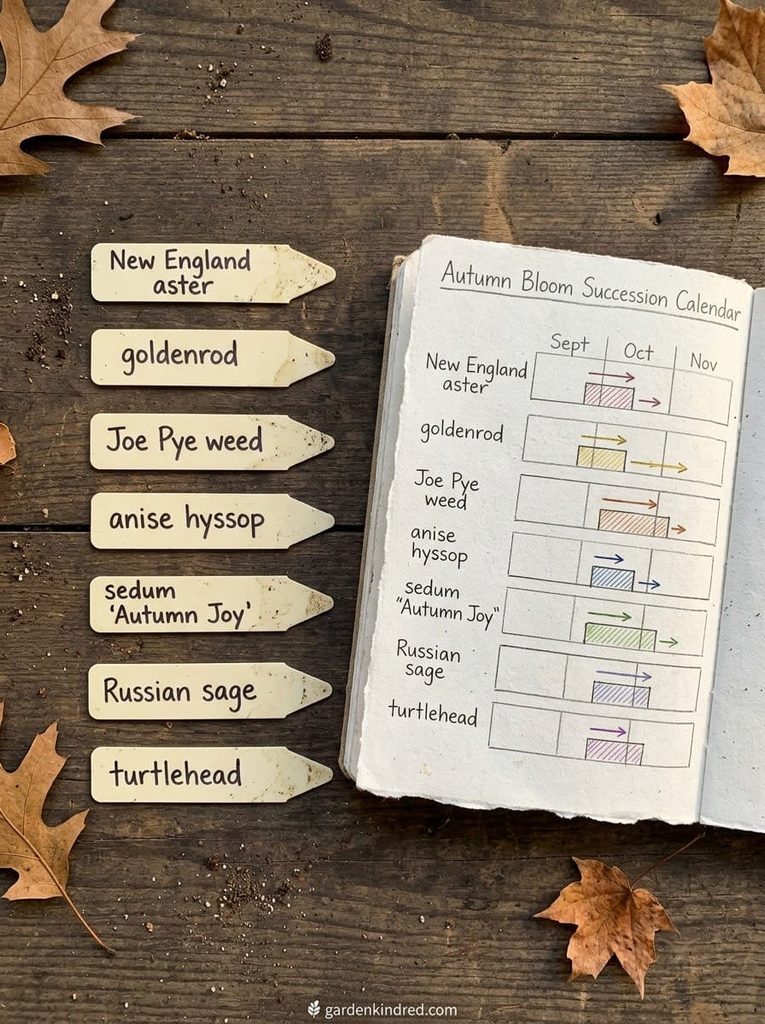
| Flower | Bloom window | Pollinators supported | Mature size | Native |
|---|---|---|---|---|
| New England aster | Late Aug-Oct | Monarchs (migration fuel), native bees, bumblebees | 3-6 ft tall, 3-4 ft wide | Yes |
| Goldenrod | Aug-Oct | Monarchs, specialist bees, native bees | 2-4 ft tall, spreading | Yes |
| Joe Pye weed | Late July-Sept | Bumblebees, butterflies, skippers, moths | 4-7 ft tall, 3-4 ft wide | Yes |
| Anise hyssop | June-Sept (later with deadheading) | 30+ bee species, 12+ butterfly/moth species | 2-4 ft tall, 1-3 ft wide | Yes (Upper Midwest) |
| Sedum ‘Autumn Joy’ | Late Aug-Oct | Broad range, bees and butterflies | 18-24 in tall and wide | No (hybrid) |
| Russian sage | July-Oct | Bees, especially bumblebees | 3-4 ft tall, 2-3 ft wide | No (Central Asia native) |
| Turtlehead | Aug-Sept | Queen bumblebees specifically | 2-3 ft tall, 1-2 ft wide | Yes |
What are the most common mistakes gardeners make trying to feed pollinators in fall?
Cutting everything back the moment it stops looking tidy. Deadheading anise hyssop extends its bloom, but hacking down aster or goldenrod in early September because it looks “done” for the season removes active forage a queen bumblebee or migrating monarch is still using. Wait until the plant has genuinely finished, not until it looks slightly ragged.
Buying whatever cultivar the nursery has in stock without checking flower structure. A double-flowered aster or sedum can look fuller in a pot while offering close to nothing in usable nectar or pollen, per the research cited above. Check whether a cultivar’s petals look layered or congested before assuming “more flowers” means more pollinator value.
Planting only one bloom window. A bed that’s all June-blooming perennials, or all September bloomers, leaves a real gap the rest of the year. The succession-planning section above lays out the actual fix, at least three species per season.
Assuming goldenrod causes allergies and skipping it. That’s ragweed, and skipping goldenrod on that basis means cutting one of the two most important late-season nectar sources for migrating monarchs out of a garden for no real reason.
Frequently asked questions
Do I need all 7 of these flowers to make a real difference for pollinators?
No. Even two or three from this list, chosen to overlap different parts of the August-to-October window, meaningfully extends a garden’s forage season. The Xerces Society’s minimum recommendation is three species per bloom season, not seven.
Is it true that “improved” cultivars are always worse for pollinators than the wild species?
No, and that’s an overstatement of the real research. Roughly half of tested cultivars in the cited studies performed comparably to their native parent. The safest check is flower structure, avoid heavily doubled blooms, since that’s the specific breeding trait most consistently linked to reduced nectar and pollen access.
Why does goldenrod get blamed for hay fever if ragweed is the actual cause?
The two plants bloom at the same time in overlapping habitats, and people notice goldenrod’s obvious yellow color while ragweed’s small green flowers go unnoticed. Goldenrod’s heavy, insect-carried pollen essentially never becomes airborne, while ragweed’s is specifically built to travel on wind.
Can I plant these in a garden that already gets full afternoon sun and dry soil?
Russian sage and anise hyssop both tolerate dry, sunny conditions well once established. Turtlehead is the one exception on this list, it wants part shade and consistent moisture, so it’s the better fit for a shadier or damper spot rather than the driest part of a yard.
Products We Recommend
This post contains affiliate links. We may earn a commission on qualifying purchases at no extra cost to you.
SWEET YARDS Wildflower Seeds Butterfly and Hummingbird Mix, 1 Ounce Packet, 23 Open-Pollinated Species
A mix of open-pollinated annual and perennial species built to fill exactly the kind of bloom-succession gaps the section above describes, useful for a gardener who wants to fill in around the 7 named flowers here rather than plant a full bed of nursery starts.
Shop Now
Fiskars Bypass Pruning Shears, 5/8" Cut Capacity
The right tool for the selective deadheading anise hyssop needs to extend its bloom window, and for the careful cutback timing the checklist above flags for pollinator-supporting perennials like aster and turtlehead, since cutting too early removes forage a queen bumblebee is still using.
Shop now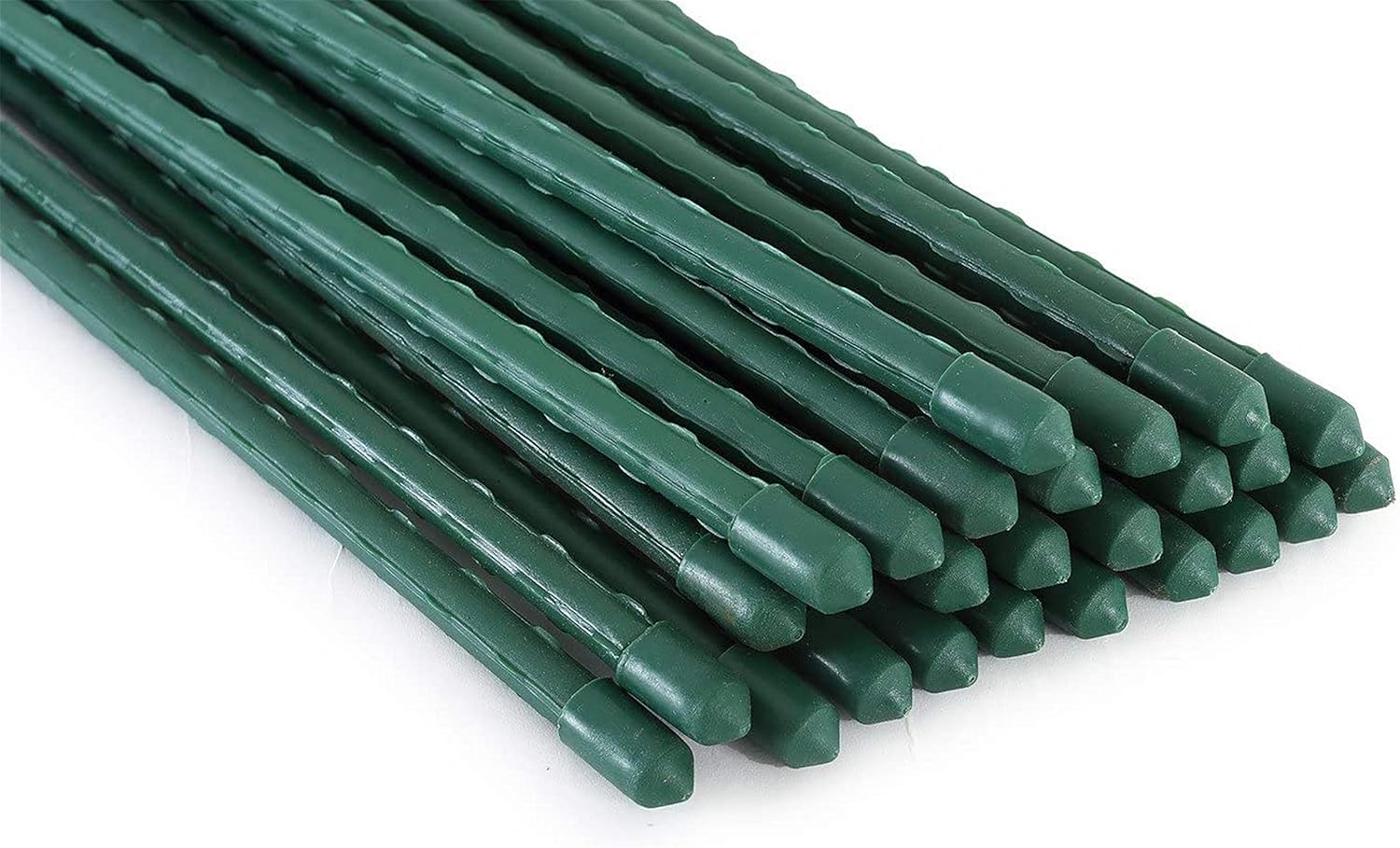
TINGYUAN Garden Stakes, 30-Inch Steel Plant Stakes, Pack of 25
Joe Pye weed and New England aster both reach several feet tall and can flop in rich soil or after fall rain, exactly the two entries on this list tall enough to need real support to keep blooming upright through their full window instead of collapsing early.
Shop nowNever miss an update — choose Garden Kindred as your preferred source on Google.
How it works: Tap the button below to open Google's settings page, then check the box next to Garden Kindred.
Tap the checkbox to turn it blue — that's how you know it's set.