9 Cover Crops to Plant This Fall for Better Spring Soil
Skip the bagged fertilizer next spring. These 9 fall cover crops build your soil for free while you’re not even looking, and most take one afternoon to sow.
Never miss an update — choose Garden Kindred as your preferred source on Google.
How it works: Tap the button below to open Google’s settings page, then check the box next to Garden Kindred.
Tap the checkbox to turn it blue — that’s how you know it’s set.
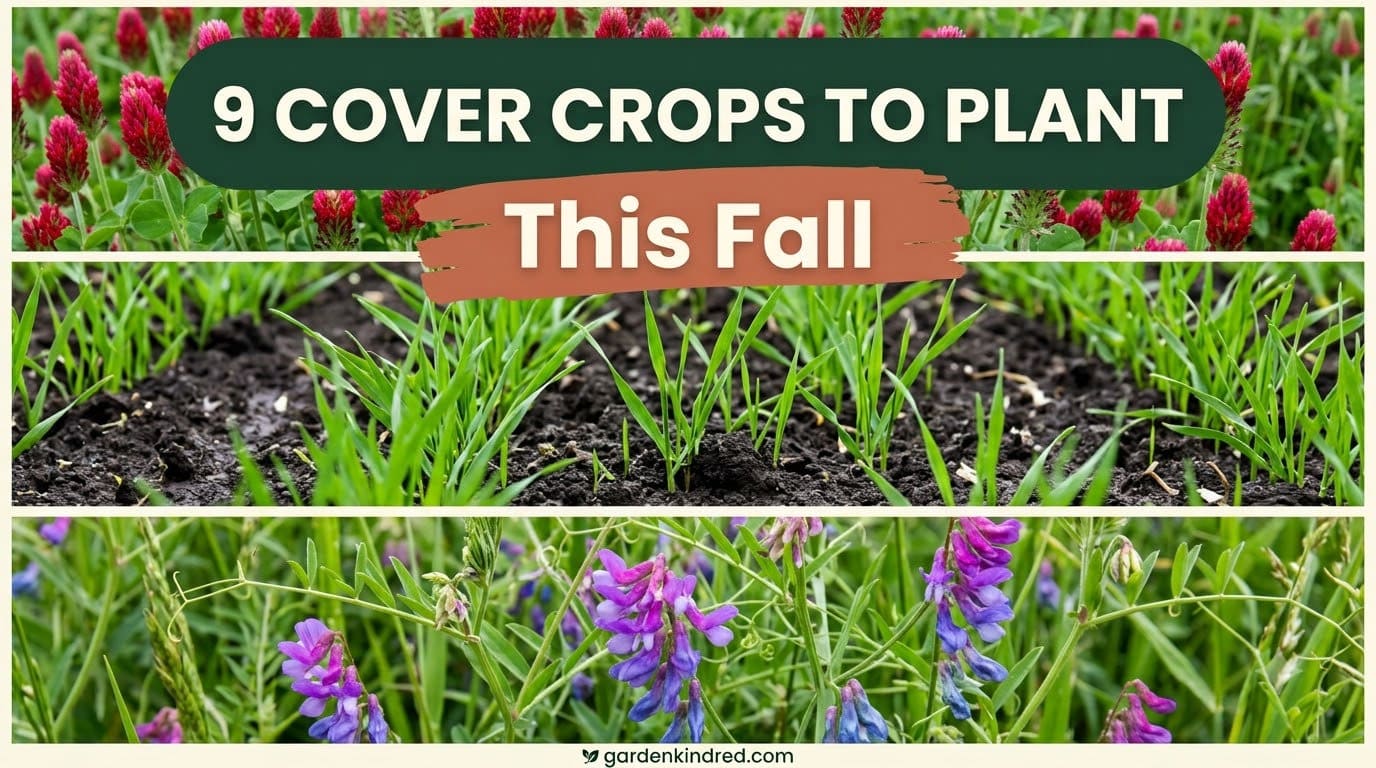
Plant a fall cover crop 4 to 8 weeks before your area’s average first frost date so roots establish before the ground freezes. Crimson clover, hairy vetch, and Austrian winter peas fix nitrogen for the next crop, while winter rye, oats, and daikon radish break up compacted soil and add organic matter. Winterkilled species like oats, buckwheat, and daikon radish die back on their own and need no spring removal at all.
Overwintering species like winter rye, hairy vetch, and crimson clover need to be mowed or tilled under 2 to 4 weeks before spring planting, before they flower fully and set seed. Seeding rates for a home garden run roughly 0.25 to 5 pounds per 1,000 square feet depending on species, far less than the per-acre rates published for field-scale farms.
The USDA NRCS and land-grant university extension offices publish the exact rates, zone hardiness, and termination windows used in the comparison table below.
Why Plant a Cover Crop This Fall?
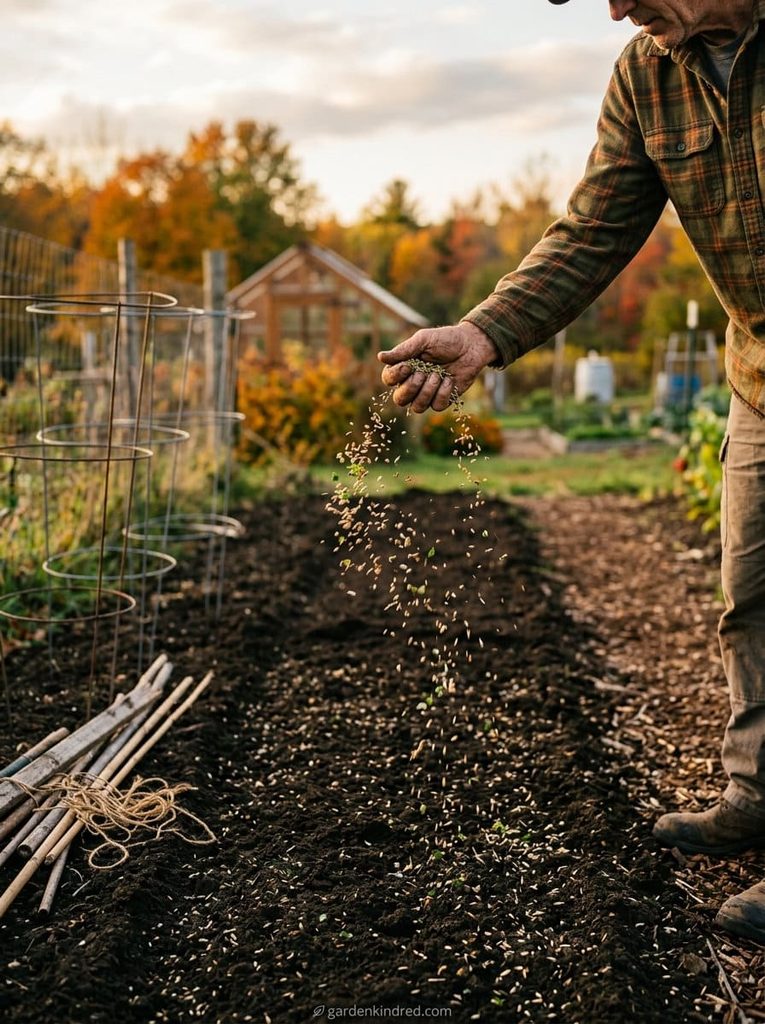
A bare garden bed over winter loses nitrogen to rain, loses topsoil to wind, and comes back in spring compacted and low on organic matter. That’s not a guess, it’s what happens when soil sits exposed with no living roots holding it together.
A fall-sown cover crop fixes three problems at once. Living roots hold soil particles in place through winter rain and freeze-thaw cycles, which is the same erosion-control mechanism the USDA NRCS Cover Crop Conservation Practice Standard (Code 340) is built around. Deep-rooted species like winter rye and daikon radish physically fracture compacted layers that a shovel can’t reach. And legumes like crimson clover, hairy vetch, and Austrian winter peas pull nitrogen from the air and store it in root nodules, feeding next year’s vegetables for free.
Purdue Extension’s home garden cover crop guide puts a number on the erosion piece: bare soil loses far more topsoil to winter runoff than soil held by even a thin cover crop stand, because roots slow water infiltration both above and below the surface. That’s the mechanism, not just the claim.
I used to just till my beds under in November and call it done. Turns out that’s the exact window when a Midwest winter does the most damage to unprotected soil, so I switched to seeding a cover crop the same week I pull the last tomatoes.
9 Fall Cover Crops Compared at a Glance
Before picking a species, decide what you actually need: nitrogen for next year’s heavy feeders, structure for compacted clay, or just fast, cheap winter cover. The table below uses seeding rates converted to a 1,000 square foot home garden bed from the per-acre rates published by SARE’s Managing Cover Crops Profitably and Purdue Extension’s HO-324 home garden guide.
| Cover Crop | Seeding Rate (per 1,000 sq ft) | USDA Zones (fall sowing) | Nitrogen-Fixing? | Winterkills? | Termination Method |
|---|---|---|---|---|---|
| Crimson clover | 0.6-1.2 lb | 6-10 | Yes | Sometimes (hardy to ~0°F) | Mow or till after full bloom, spring |
| Winter (cereal) rye | 2-4 lb | 3-8 | No | No, reliably overwinters | Mow, till, or crimp before 18-20 in. tall |
| Hairy vetch | 2-4 lb | 4-8 | Yes | No, overwinters | Mow or till post-bloom, spring |
| Austrian winter peas | 2-4 lb | 6-9 | Yes | Sometimes (hardy to ~10°F) | Mow or till, spring |
| Oats | 3-5 lb | 3-9 (as winterkill crop) | No | Yes, reliably | None needed, till dead residue in spring |
| Buckwheat | 1.2-1.4 lb | 3-9 (as fast fall cover) | No | Yes, frost-tender | None needed, residue easy to till or no-till |
| Daikon radish | 0.25-0.5 lb | 3-9 | No | Yes (hardy to ~10°F) | None needed, taproot rots by spring |
| Mustard | 0.25-0.5 lb | 3-9 | No | Varies by variety | Winterkill, till, or mow depending on variety |
| White clover | 0.25-0.5 lb | 3-9 | Yes | No, overwinters | Mow or till, or keep as living mulch |
Sources: SARE Managing Cover Crops Profitably, Purdue Extension HO-324, University of Maryland Extension.
1. Crimson Clover
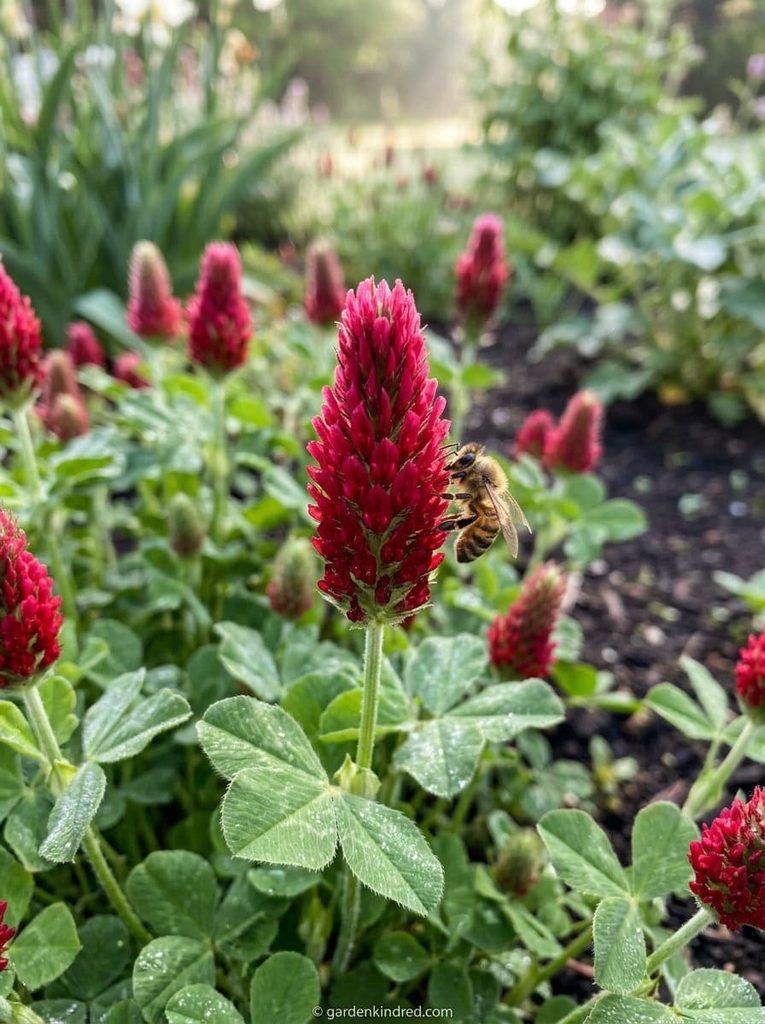
Crimson clover is the cover crop most gardeners reach for first because it does two jobs at once: it fixes real nitrogen and it looks good doing it, with a deep red flower spike that pollinators show up for in early spring before most perennials bloom.
Seeding rate: 1 to 2 ounces per 100 square feet drilled, or roughly 0.6-1.2 lb per 1,000 square feet, per Purdue Extension’s HO-324 guide.
When to sow: Mid-August through late September in most zones, at least 6 weeks before your first hard frost so plants can establish 4 to 6 true leaves before growth slows.
Zone notes: Reliably winter-hardy through zone 6, and Purdue rates it cold-hardy to about 0°F, but in zone 5 and colder it can winterkill in a bad year, which isn’t a failure, the dead residue still protects soil.

A broadcast spreader is the fastest way to get an even stand from any seed on the comparison table above, since hand-scattering by fistful tends to leave gaps that winter weeds fill in first. It holds up to 1,500 sq ft of seed per fill, which covers a typical backyard vegetable garden in one or two passes. Exact price changes often and by region, so re-check at purchase time.
Shop NowThis post contains affiliate links. We may earn a commission on qualifying purchases at no extra cost to you.
Nitrogen mechanism: Like all legumes on this list, crimson clover forms a partnership with Rhizobium bacteria in root nodules that convert atmospheric nitrogen into a plant-usable form. Inoculating the seed before sowing (a powder sold alongside cover crop seed) measurably improves nodulation and nitrogen capture, per University of Maryland Extension.
Termination: Mow or till under after full bloom in spring, ideally 2 to 4 weeks before you plant into that bed, so residue has time to start breaking down.
2. Winter Rye (Cereal Rye)
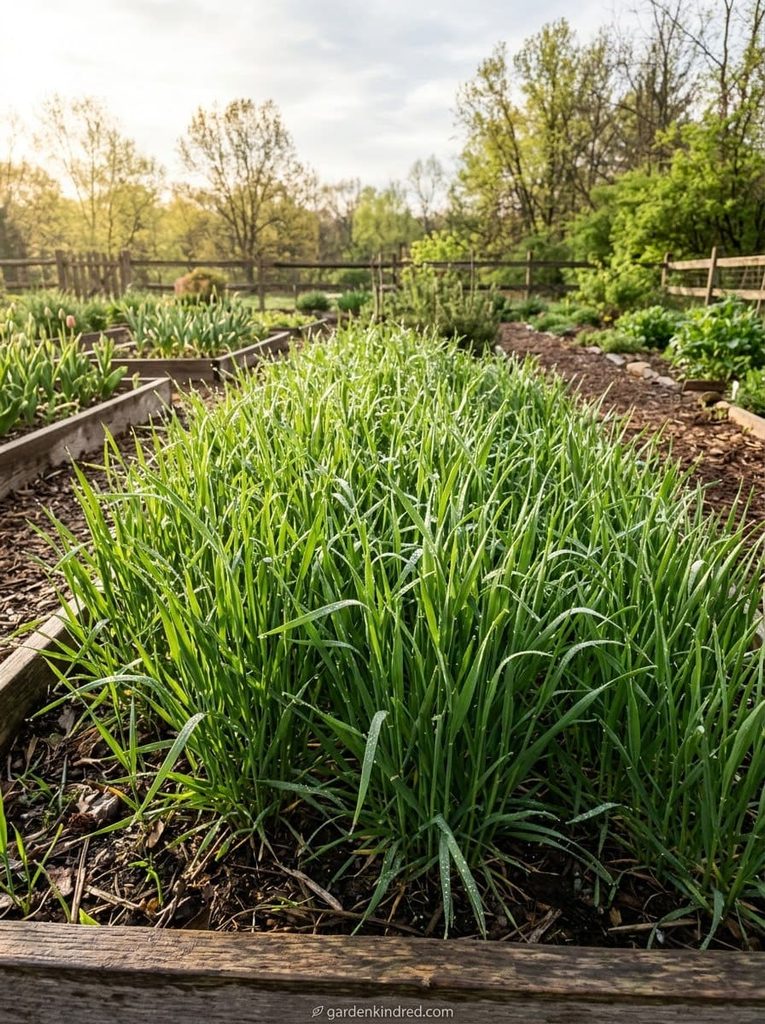
Winter rye is the workhorse of this list. It germinates in cooler soil than almost anything else on this table, it survives colder winters than any other species here, and its fibrous root system does more to fix compacted soil structure than any tool you’d buy for the job.
Seeding rate: 3 to 4 ounces per 100 square feet, or roughly 2-4 lb per 1,000 square feet, per Purdue Extension. At field scale, SARE puts drilled rates at 60-120 lb per acre, which scales down to about the same home garden number.
When to sow: This is the latest-planting option on the list. Rye will germinate at soil temperatures as low as 34°F, so you can seed it into late October or even November in many zones and still get a stand, per SARE.
Zone notes: Reliable through zone 3, and it’s the standard choice anywhere winters are too harsh for legumes to survive.
Structure mechanism: Rye’s roots can scavenge and hold 25 to 50 lb of nitrogen per acre that would otherwise leach out of the soil over winter, according to a Maryland field study cited by SARE, and its dense fibrous root mass is what breaks up compacted clay that a fork can’t touch.
Termination: Mow, till, or crimp before rye reaches 18-20 inches, and terminate at least 2 to 3 weeks before spring planting. Rye releases natural weed-suppressing compounds into the soil as it breaks down, and SARE notes this allelopathic effect can also slow germination of small direct-seeded crops like carrots and lettuce for roughly 3 to 4 weeks, so transplants (tomatoes, peppers, broccoli starts) are the safer follow-up crop in a rye bed.
3. Hairy Vetch
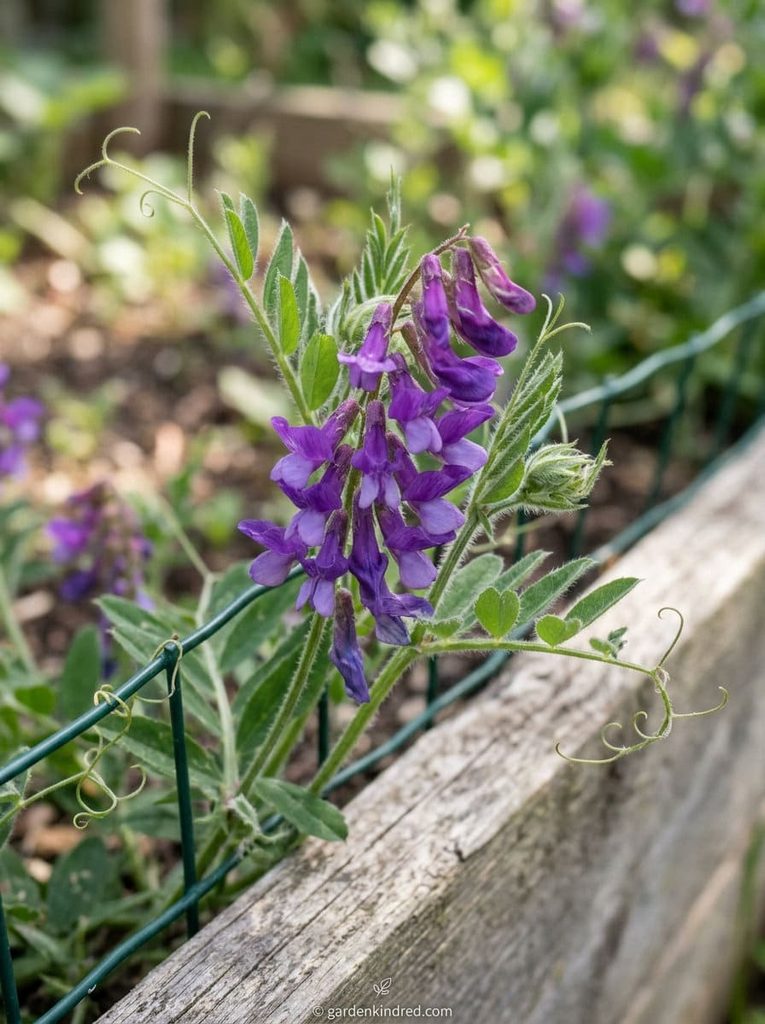
Hairy vetch fixes more nitrogen per acre than almost any other cover crop legume grown in home gardens, which makes it the top pick if next year’s bed is going to a nitrogen-hungry crop like corn, squash, or heavy-feeding brassicas.
Seeding rate: 3 to 4 ounces per 100 square feet, or roughly 2-4 lb per 1,000 square feet, per Purdue Extension. SARE’s field-scale range is 20-40 lb per acre.
When to sow: Mid-July through late September, earlier than most legumes on this list because vetch needs a longer fall establishment period to build the root mass that carries it through winter.
Zone notes: Overwinters reliably through zone 4, no winterkill expected in a typical year.
A real tradeoff: Vetch produces abundant seed if you let it flower too long into spring, and Purdue’s guide flags it directly as a plant that can become a weed problem in later seasons if termination is delayed past bloom. Cut that risk by terminating at first bloom, not full bloom.
Termination: Mow or till post-bloom in spring. Because vetch vines sprawl and climb, mowing first before tilling makes incorporation much easier than trying to till standing vines directly.
4. Austrian Winter Peas
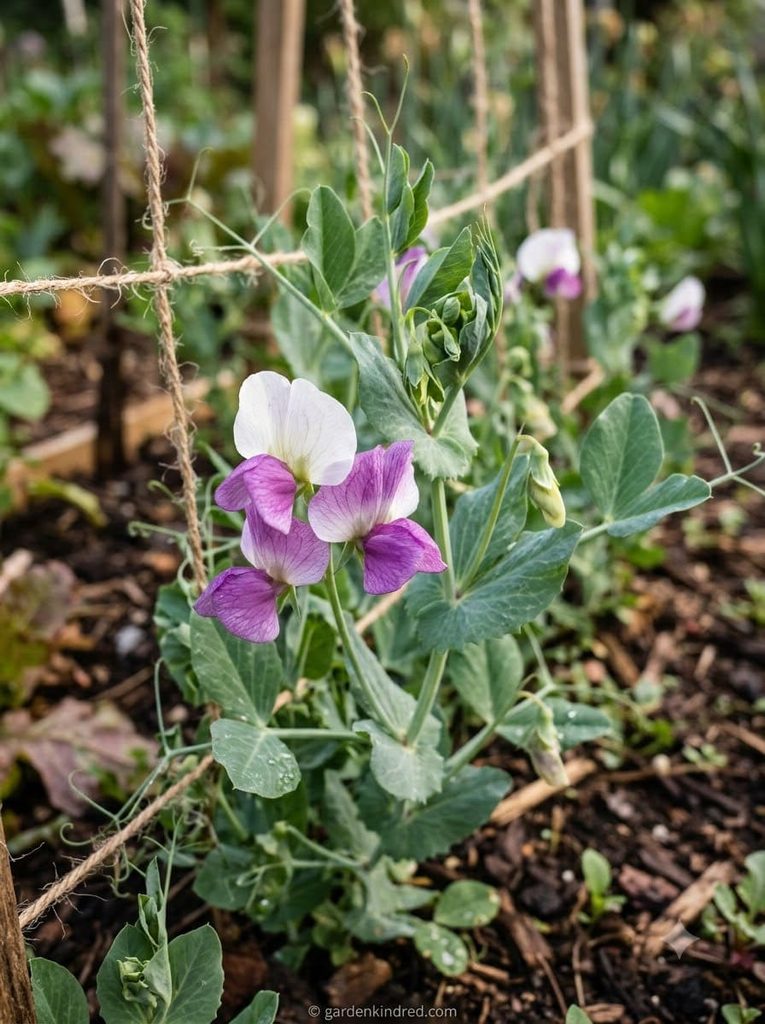
Austrian winter peas are the legume to reach for when you want strong nitrogen fixation but don’t want vetch’s aggressive reseeding habit. They’re also edible as a cooked green in early growth stages, which is a nice bonus most cover crops don’t offer.
Seeding rate: 3 to 4 ounces per 100 square feet, or roughly 2-4 lb per 1,000 square feet, per Purdue Extension. SARE’s field range runs 60-90 lb per acre drilled.
When to sow: Early August through late September, giving the crop enough fall growth to develop a strong root system before cold weather.
Zone notes: Hardy to about 10°F per Purdue, which means it winterkills in colder zones (roughly zone 5 and below) but overwinters reliably from zone 6 south.
Nitrogen mechanism: Same rhizobial nodulation process as clover and vetch, but Purdue rates winter peas as an even stronger nitrogen fixer than crimson clover in their comparison table, making it a strong pairing when drilled alongside a grass like winter rye that needs the nitrogen boost to offset its own carbon-heavy residue.
Termination: Mow or till in spring before pods form. If it winterkills in your zone, no action is needed, just till the dead residue under when you’re ready to plant.
5. Oats
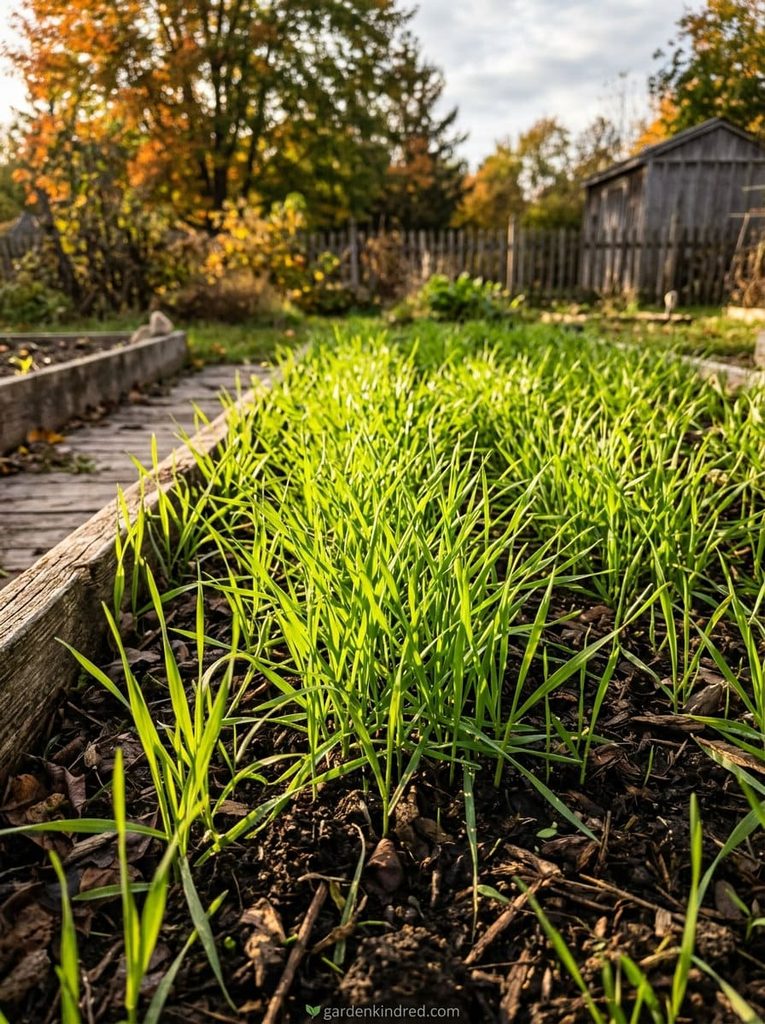
Oats are the lowest-effort cover crop on this list because they winterkill reliably and leave a dead, weed-suppressing mat by spring that needs zero mowing, tilling timing, or spring-crimping decisions.
Seeding rate: 4 to 5 ounces per 100 square feet, or roughly 3-5 lb per 1,000 square feet, per Purdue Extension.
When to sow: Late summer through mid-September, early enough to get 6 to 8 inches of growth before a hard freeze kills the plant.
Zone notes: Reliable winterkill in zone 6 and colder once temperatures drop into the low 20s°F. In zone 7 and warmer, oats can survive a mild winter and behave more like an overwintering crop, so check a local mild-winter forecast before counting on winterkill there.
Why it’s the beginner pick: There’s no termination timing to get wrong. The plant dies on its own from cold, and by the time you’re ready to plant in spring, the residue has already started breaking down into the top few inches of soil. Purdue Extension specifically flags this as a low-management option for gardeners who don’t want to track a spring termination window.
Termination: None needed. Rake off heavy mats if they’re slowing spring soil warming, or just till the dead residue in directly.
6. Buckwheat
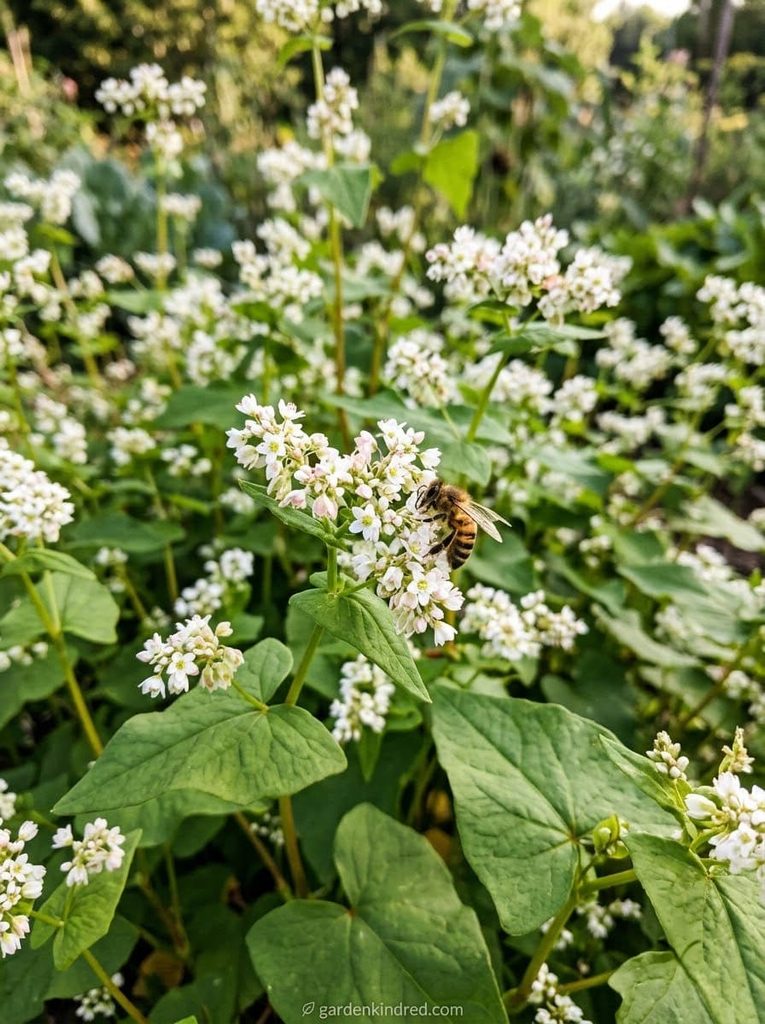
Buckwheat isn’t technically a fall species, it’s frost-tender and dies at the first light freeze, but it earns a spot on this list because it’s the fastest way to smother weeds and add organic matter in the gap between summer harvest and true fall cover crop planting.
Seeding rate: Drilled at 50-60 lb per acre or hand-broadcast at 60 lb per acre per SARE, which converts to roughly 1.2-1.4 lb per 1,000 square feet for a home bed.
When to sow: Any time from late spring through late summer, as a short-term cover after you pull an early crop (garlic, spring greens, spent peas) but before your true fall cover crop window opens. It’s not meant to carry a bed through winter.
Growth speed: SARE notes buckwheat germinates in 3-5 days and flowers within about 3 weeks, which is what makes it useful as a 4 to 6 week gap-filler rather than a season-long cover.
Weed suppression mechanism: A thick buckwheat stand shades the soil surface fast enough to smother most annual weed seedlings before they establish, which works through simple light competition, not any chemical effect.
Termination: Frost kills it automatically. Mow or till the dead residue under, then follow immediately with a true winter cover crop like rye or clover if there’s still time before your hard frost, or leave the residue as mulch if not.
7. Daikon Radish (Forage Radish)
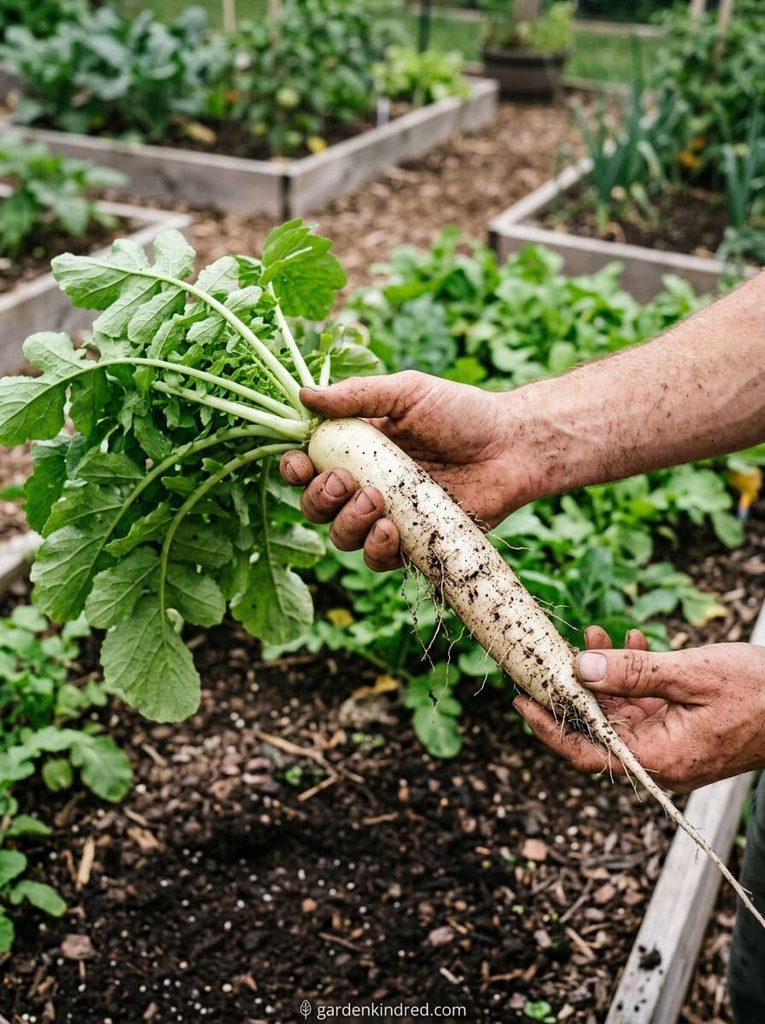
Daikon radish, sold as “forage radish” or “tillage radish” for cover crop use, does one job better than anything else on this list: it drills a taproot 1 to 3 feet straight down through compacted soil that a broadfork struggles with.
Seeding rate: Drilled at 8-10 lb per acre or broadcast at 12-14 lb per acre per SARE, which scales to roughly 0.25-0.5 lb per 1,000 square feet.
When to sow: Early August through late September. Daikon needs 60 to 90 days of fall growth to build a taproot with real diameter, so it’s not a crop to plant late.
Zone notes: Hardy to about 10°F, so it winterkills reliably in zone 6 and colder. In warmer zones it may survive and bolt to seed the following spring, which is a problem since bolted radish can become a weed.
Compaction mechanism: The taproot physically forces its way through compacted layers, and when it winterkills and rots in place, it leaves a vertical channel in the soil that improves water infiltration and gives next year’s roots an established path downward. This is the specific mechanism Purdue Extension points to when recommending it for clay soil.
Termination: None needed in zones where it winterkills. The rotted taproot channel is the whole point, don’t till so early that you erase it before spring planting.
8. Mustard
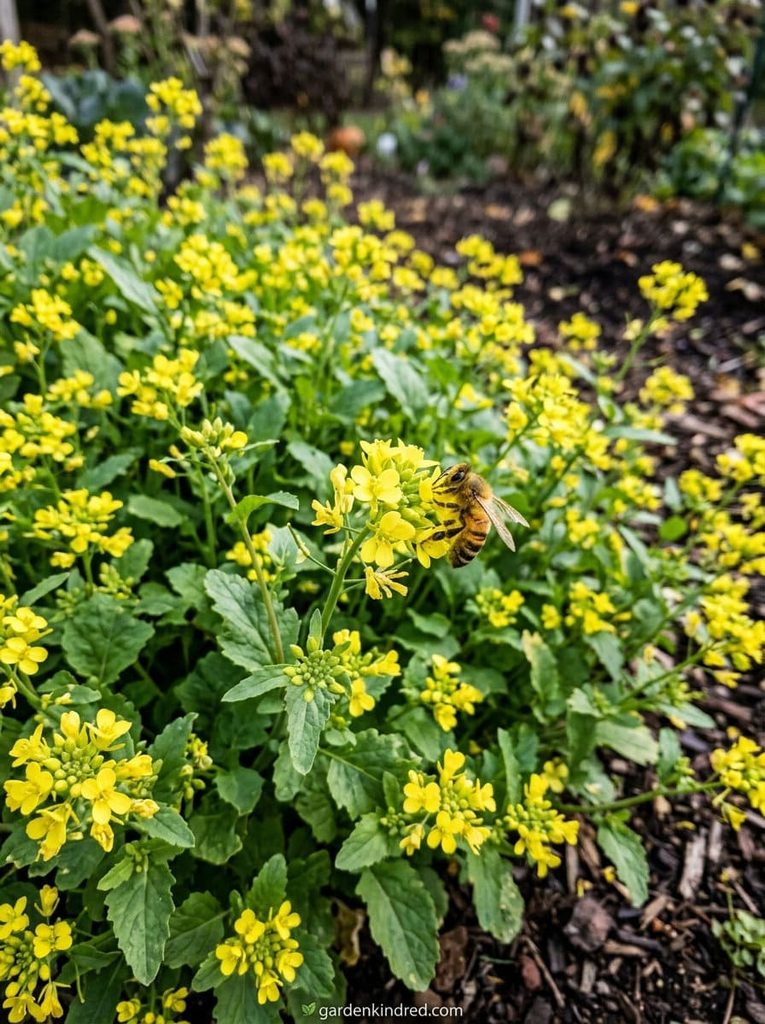
Mustard’s real value isn’t nitrogen or structure, it’s pest and disease suppression. When mustard tissue breaks down in the soil, it releases natural compounds (glucosinolates) that suppress certain soil-borne pathogens and some nematode populations, a process researchers call biofumigation.
Seeding rate: Drilled at 5-12 lb per acre or broadcast at 10-15 lb per acre, converting to roughly 0.25-0.5 lb per 1,000 square feet.
When to sow: Mid-July through mid-October, one of the widest planting windows on this list.
Zone notes: Winterkill behavior varies by variety, some brassica mustards die at the first hard freeze while others survive light frosts, so check the specific variety’s cold tolerance before assuming it’ll be gone by spring.
Biofumigation mechanism: The suppression effect is strongest when the plant is chopped or mowed at flowering and incorporated into soil quickly, ideally tilled in within a day of mowing, so the released compounds stay in contact with soil pathogens rather than off-gassing into the air.
Termination: Mow at flowering and till in immediately for the biofumigation benefit, or let it winterkill naturally if that’s the goal for your variety and zone.
9. White Clover
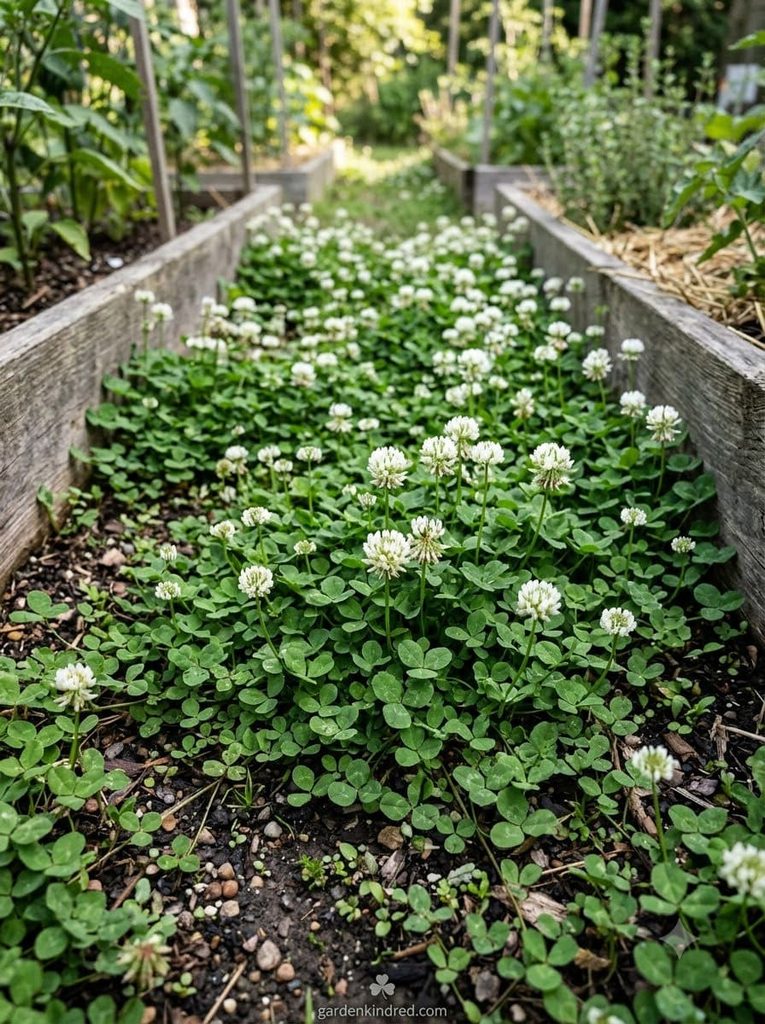
White clover is the one cover crop on this list that doesn’t have to be a cover crop at all, it can stay as a permanent living mulch between rows or pathways if you’d rather not till it under every year.
Seeding rate: 1 to 2 ounces per 100 square feet, or roughly 0.25-0.5 lb per 1,000 square feet, per Purdue Extension.
When to sow: Late summer through mid-September for a fall start, though white clover also establishes well in early spring if you miss the fall window.
Zone notes: Overwinters reliably through zone 3, one of the most cold-hardy legumes on this list.
Living mulch mechanism: Left unmowed between crop rows, white clover forms a low dense mat that suppresses weeds, fixes nitrogen continuously through the growing season, and holds soil moisture, functioning more like permanent groundcover than a one-season cover crop. Purdue Extension specifically lists this as its recommended use case, distinct from the till-under cycle used for the other legumes on this list.
Termination: Mow or till under if you want the bed clear for spring planting, or simply mow it low and plant directly into gaps if you’re keeping it as permanent living mulch.
How to Sow Your Fall Cover Crop the Right Way
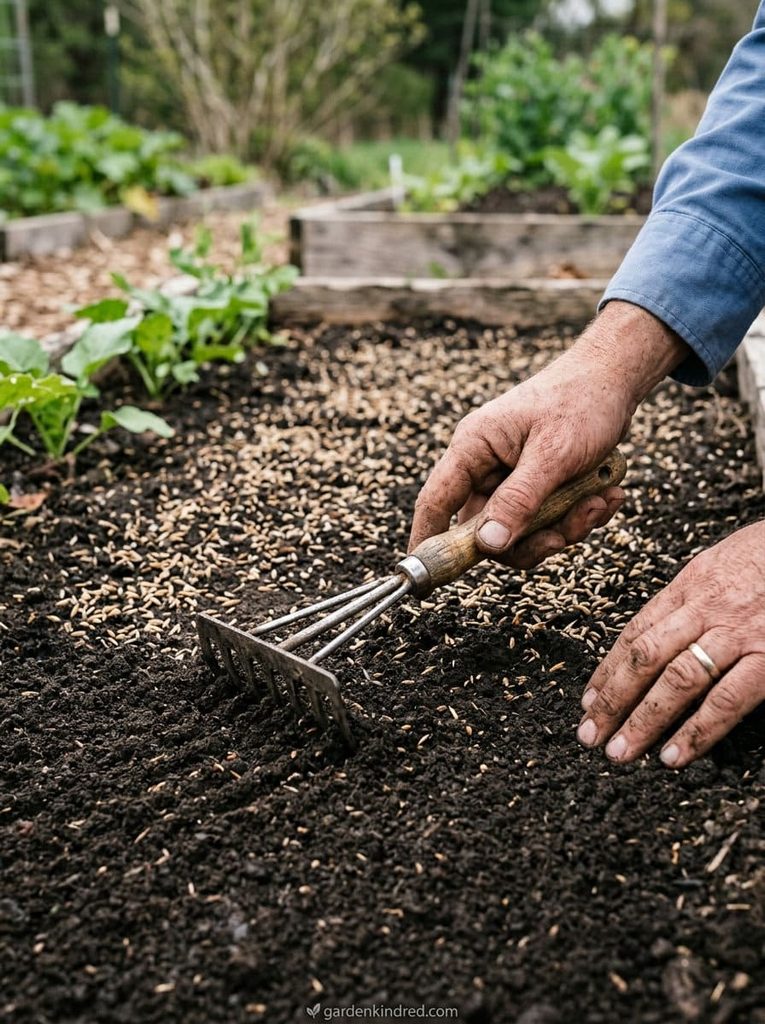
Getting a fall cover crop to actually establish comes down to three things: timing, seed-to-soil contact, and not seeding too thick.
Timing: Count backward from your area’s average first frost date, which you can find at your local NOAA weather station or extension office, not just your USDA hardiness zone (zone tells you winter cold, not fall frost timing). Most species on this list need 4 to 8 weeks of fall growth before frost to establish a root system that survives winter.
Seed-to-soil contact: Broadcast seed by hand over lightly raked soil, then rake again lightly to cover seed to roughly the depth listed on the seed packet (usually 0.25 to 0.5 inch for small seed like clover, up to 1 inch for rye and peas). Water immediately after seeding if rain isn’t forecast within 2 days, since germination stalls without consistent moisture.
Seeding rate matters more than gardeners expect: Seeding too thin leaves gaps that winter weeds fill instead. Seeding too thick wastes seed and can actually reduce total biomass because plants compete for light and nutrients. Stick to the rates in the comparison table above rather than eyeballing a heavier rate “to be safe.”
Mixes: Pairing a grass (rye or oats) with a legume (clover, vetch, or peas) is a common and effective combination, since the grass scavenges nitrogen that would otherwise leach out while the legume fixes new nitrogen, and the mixed root structure improves soil aggregation more than either species alone. When mixing, reduce each species to roughly 60% of its single-species rate, per Purdue Extension’s mixing guidance.
When and How to Terminate Cover Crops in Spring
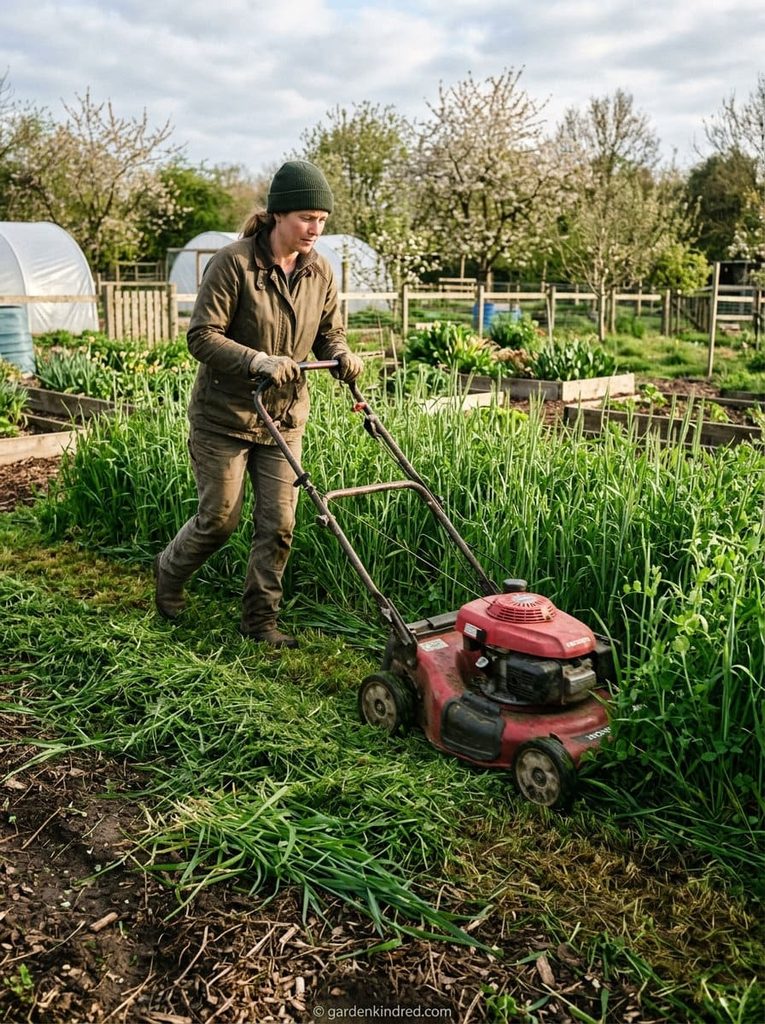
The species that winterkill (oats, buckwheat, daikon radish, and some mustard varieties) need no termination at all, the residue just gets tilled or raked in when you’re ready to plant. The overwintering species (winter rye, hairy vetch, crimson clover, Austrian winter peas, white clover) need to be actively terminated before they set seed, or you’ve traded one weed problem for another.
General timing rule: Terminate 2 to 4 weeks before your intended spring planting date. This gives residue time to start breaking down so it doesn’t tie up soil nitrogen right when new seedlings need it, a real risk with high-carbon residue like mature rye, per Purdue Extension’s nitrogen tie-up warning.
Method 1, mowing: Cut at or just after flowering (for legumes) or before seed heads fully form (for rye), using a string trimmer or push mower for small garden beds. This is the lowest-effort option and works for every overwintering species on this list.
Method 2, tilling: Till mowed residue into the top 4 to 6 inches of soil. Tilling standing (unmowed) rye or vetch is much harder since the fibrous roots and vines resist the tiller blades, so mow first, then till a few days later.
Method 3, tarping or smothering: Lay a silage tarp or heavy black plastic over the mowed cover crop for 2 to 3 weeks. This kills remaining growth without a tiller pass, which also preserves more soil structure than tillage does, a tradeoff worth considering on beds where you’re trying to build, not disturb, soil aggregation.
The mistake to avoid: Letting an overwintering legume flower fully and go to seed before termination. Hairy vetch in particular reseeds aggressively once pods form, and Purdue’s guide flags this directly as the most common way a beneficial cover crop turns into next year’s weed problem.
Products We Recommend
This post contains affiliate links. We may earn a commission on qualifying purchases at no extra cost to you.
Scotts Whirl Hand-Powered Spreader
A broadcast spreader is the fastest way to get an even stand from any seed on the comparison table above, since hand-scattering by fistful tends to leave gaps that winter weeds fill in first. It holds up to 1,500 sq ft of seed per fill, which covers a typical backyard vegetable garden in one or two passes. Exact price changes often and by region, so re-check at purchase time.
Shop Now
Park Seed Nature's Aid Garden Soil Inoculant
This is the exact granular rhizobia inoculant referenced in the crimson clover, hairy vetch, and Austrian winter pea sections above, formulated for beans, peas, and vetch specifically. Sprinkling it in with the seed at sowing measurably improves nodulation, which is what turns "planted a legume" into "actually fixed nitrogen." Exact price changes often and by region, so re-check at purchase time.
Shop now
Japanese Weeding Sickle by MASAKIYO
This is a real hand tool for the mow-before-till termination method described above for rye, vetch, clover, and winter peas, small and sharp enough to cut a garden-bed-sized stand close to the ground before working residue into the soil. It's also the tool SARE's own termination guidance points to for small plots where a mower or sickle bar isn't practical. Exact price changes often and by region, so re-check at purchase time.
Shop nowNever miss an update — choose Garden Kindred as your preferred source on Google.
How it works: Tap the button below to open Google's settings page, then check the box next to Garden Kindred.
Tap the checkbox to turn it blue — that's how you know it's set.