7 Smart Fall-Planting Fruit Trees for Zone 5-8 Yards (Root-Competition Data Included)
My pepper row lost a third of its harvest to a tree planted “far enough” away. Here’s the root-competition math nobody tells you before you dig the hole.
Never miss an update — choose Garden Kindred as your preferred source on Google.
How it works: Tap the button below to open Google’s settings page, then check the box next to Garden Kindred.
Tap the checkbox to turn it blue — that’s how you know it’s set.
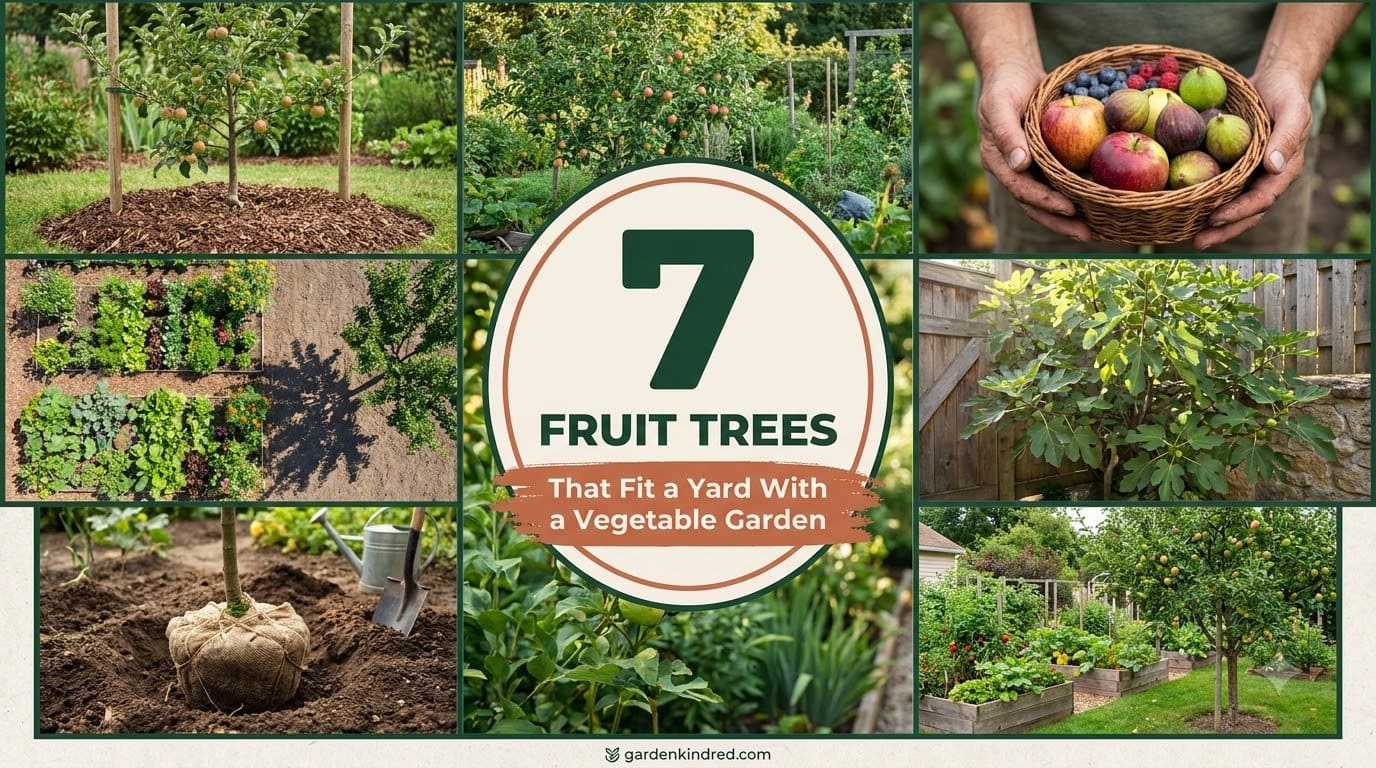
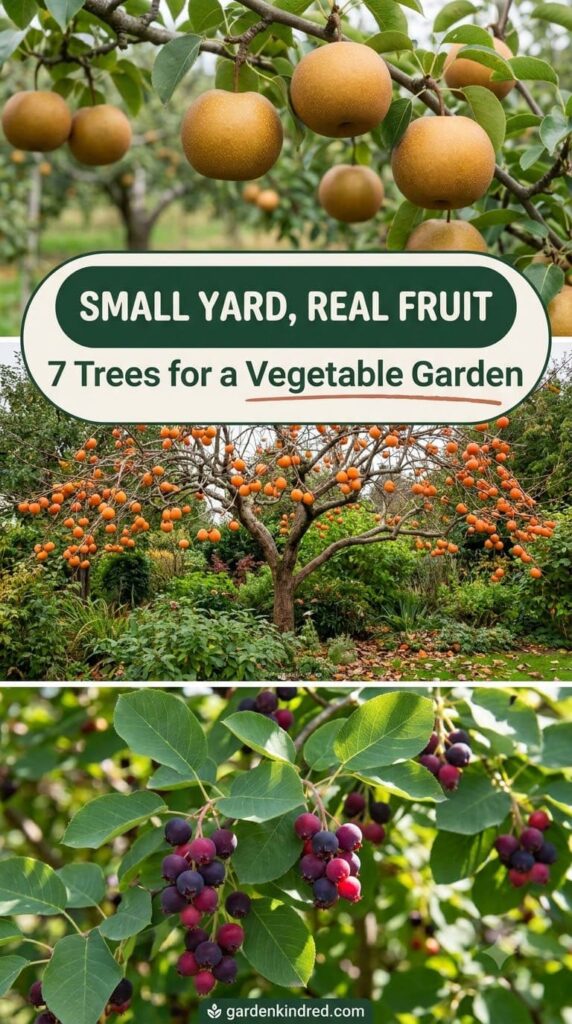
Fall is the best time to plant fruit trees in USDA zones 5 through 8 because warm soil and cool air let roots establish before winter dormancy, without the stress of summer heat. For a yard that already has (or will have) a vegetable garden, the trees that work best are ones with manageable mature size and roots that don’t compete hard for water and light near your beds. Semi-dwarf apple, tart cherry, Asian pear, American persimmon, pawpaw, serviceberry, and cold-hardy fig all fit zones 5-8, and each has a different root behavior and light footprint. Persimmon and pawpaw send down a deep taproot instead of spreading wide, so they can sit closer to a bed than a maple ever could. Keep any fruit tree’s dripline at least 10 to 15 feet from your main vegetable rows, and put the tree on the north side of the garden so it doesn’t cast afternoon shade on sun-hungry crops like tomatoes.
Last October I put a semi-dwarf apple in the corner of my own side yard, about 12 feet from where I grow peppers, and I genuinely didn’t think it through the first year. The tree was fine. The pepper row closest to it produced maybe two-thirds of what the far row did, and it took me a full season of confused note-taking to figure out why. Turns out “12 feet” isn’t a magic number, it depends entirely on which tree you planted.
That’s the gap most “best fall trees” roundups skip. They’ll tell you fall is good for root establishment (true) and hand you a list of ten trees with pretty foliage. Almost none of them tell you what happens six feet from that tree’s trunk when you also have a vegetable garden that needs six hours of direct sun to fruit.
This list is for a specific yard: zone 5 through 8, already growing (or planning to grow) vegetables, and looking for real fruit without giving up half the garden to shade and root competition.
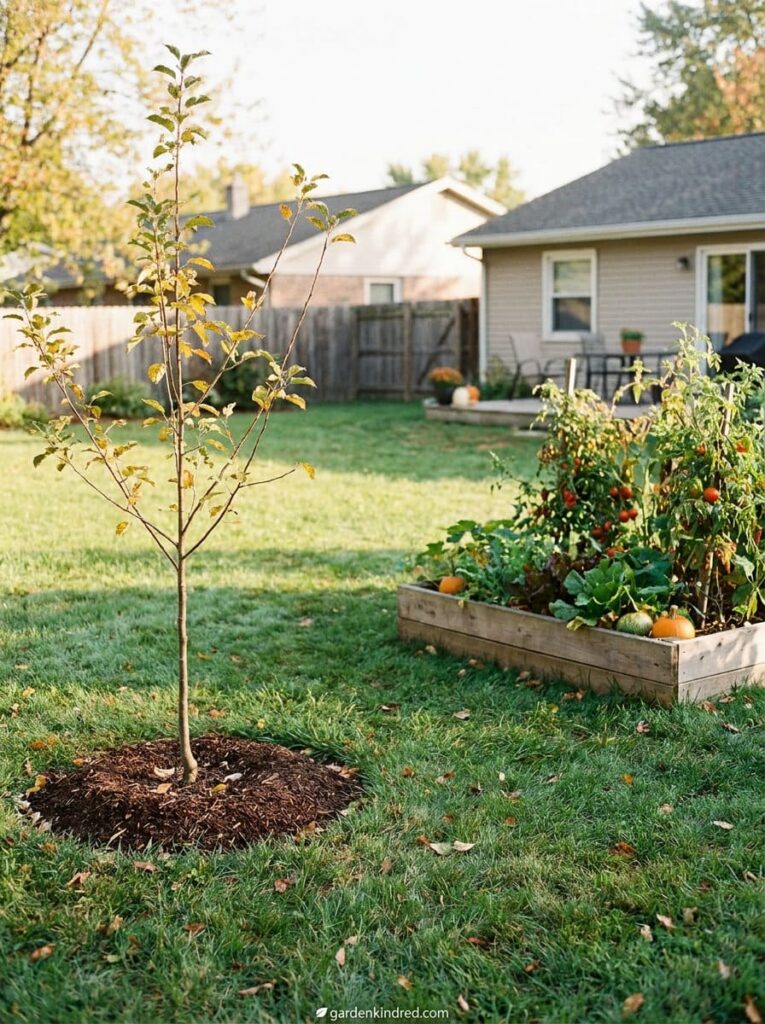
Why does fall beat spring for planting fruit trees in zones 5-8?
Fall planting works because of a temperature gap most gardeners never think about. Air cools down fast in September and October, but soil holds onto summer heat for weeks longer since it loses warmth much more slowly than air does.
That warm-soil, cool-air combination is exactly what a newly planted tree’s root system wants. Warm soil keeps root growth active, while the cooling air signals the top of the tree to stop pushing new leaf growth and start shutting down for the season, according to University of Connecticut Extension. Roots keep working even after the leaves drop, right up until the ground actually freezes.
The dormancy switch itself runs on a hormone. Rising levels of abscisic acid, sometimes called the plant’s dormancy hormone, block new top growth once day length and temperature drop past a certain point, as explained by Wisconsin Horticulture Extension. A tree planted in October isn’t wasting a season standing there doing nothing. Below the soil line it’s building the root mass that spring growth will run on.
Spring-planted trees skip that window. They go straight into leaf-out and have to build roots and top growth at the same time, right as summer heat and dry spells start stressing them. A fall-planted tree already has a head start on root volume before it ever has to deal with July.
There’s a real deadline on this, though. Soil temperatures drop fast once November hits, and a tree planted too late doesn’t get enough weeks of active root growth before the ground locks up, per Illinois Extension. In zones 5 and 6, aim to get bare-root or container trees in the ground by mid-October. Zone 7 and 8 gardeners have more room, often into late November, since the ground rarely freezes hard there.
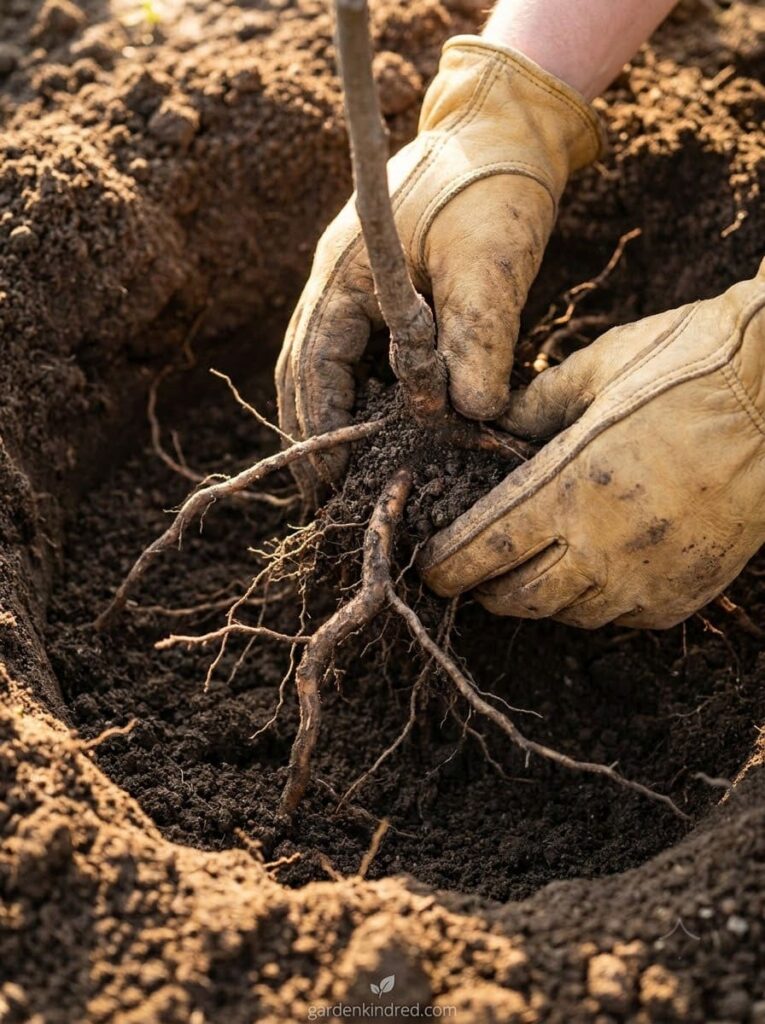
How do you position a fruit tree so it doesn’t rob your vegetable beds?
The two things a fruit tree can take from a vegetable garden are light and root-zone water. Both problems come from the same source: the tree’s canopy and root spread, which usually extend about as far out as the branches do, sometimes farther.
Sun-loving crops like tomatoes, peppers, squash, and corn need roughly 6 to 10 hours of direct light a day to fruit well. A fruit tree’s canopy casts a moving shadow that lengthens through the afternoon, so a tree planted on the south side of a garden bed can shade the entire bed by 3 p.m. even if it looked clear at noon. Put new fruit trees on the north or northwest side of your vegetable garden so their shadow falls away from the beds, not across them.
Root competition is the sneakier problem, because you don’t see it happening. Tree roots are usually bigger, older, and more established than a first-year vegetable’s roots, and they win the fight for water and nutrients nearly every time, a dynamic well documented by home garden researchers at Green Bay Botanical Garden. This is exactly what happened in my own pepper row. The apple’s roots weren’t visibly invading the bed, but they were pulling moisture from the same soil volume.
Not every tree competes the same amount. Trees with a strong central taproot, like American persimmon and pawpaw, put most of their energy into vertical root growth in the first several years rather than a wide shallow mat, so they can sit closer to a garden edge than a tree with fibrous, spreading roots. Shallow-rooted trees like fig do the opposite, their roots stay close to the surface and spread wide looking for water, which puts them in direct competition with anything planted nearby.

Fall-planted trees are actively growing roots for weeks after the leaves stop, and a root stimulator drench at planting time (and again a few weeks later) gives that establishment period a real boost, which matters most for the deeper-rooted trees on this list like persimmon and pawpaw that need their root system working before hard winter sets in.
Shop NowThis post contains affiliate links. We may earn a commission on qualifying purchases at no extra cost to you.
As a baseline, keep a semi-dwarf or standard fruit tree’s trunk at least 10 to 15 feet from your main vegetable rows, and closer to 15 to 20 feet for anything that will eventually reach full standard size. For the shallow-rooted or wide-canopied trees on this list, lean toward the higher end of that range.
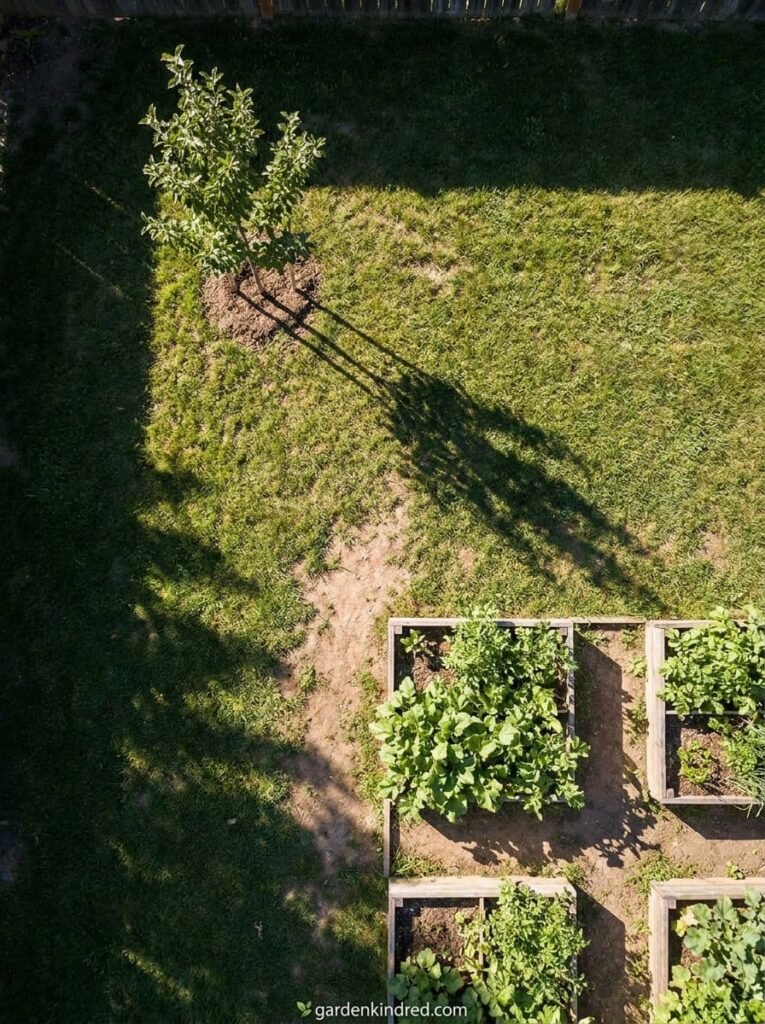
1. Semi-dwarf apple (Malus domestica)
Apple is the safest starting tree for a yard that also grows vegetables, mostly because the semi-dwarf rootstocks used by most nurseries keep the whole tree, canopy and roots both, in a manageable footprint.
A tree on M.7 or M.111 semi-dwarf rootstock typically reaches 12 to 16 feet tall and wide at maturity, according to growing guides from University of Minnesota Extension. Full standard apple trees on seedling rootstock can push past 25 feet, which is a very different commitment next to a vegetable bed, so confirm the rootstock before you buy.
Space a semi-dwarf apple at least 12 to 15 feet from your nearest vegetable row, and give it 15 to 18 feet from any other tree. Chill hour requirements (the number of hours between roughly 32 and 45 degrees Fahrenheit the tree needs over winter to bloom properly the following spring) run 500 to 1,000 hours for most common varieties, which fits zones 5 through 8 without much trouble.
Apple roots are moderately deep and don’t spread as aggressively as maple or oak, but they’re still fibrous and will reach into loose garden soil if the tree sits too close. Most apple varieties also need a second variety nearby for pollination, so budget space for two trees if you go this route.
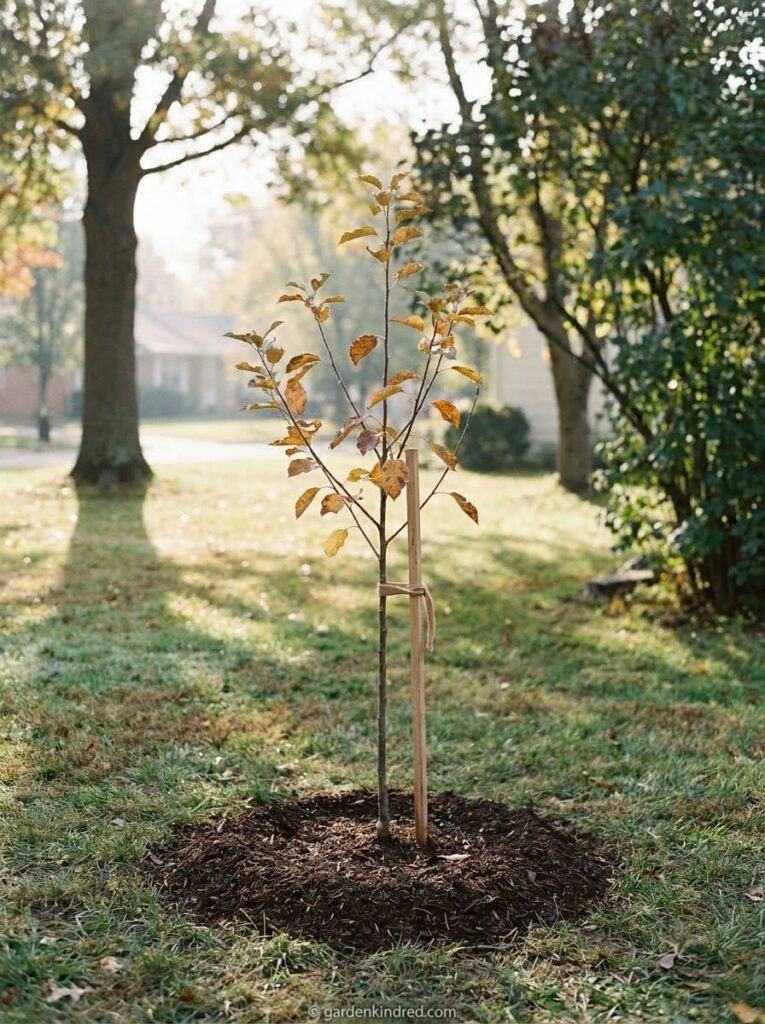
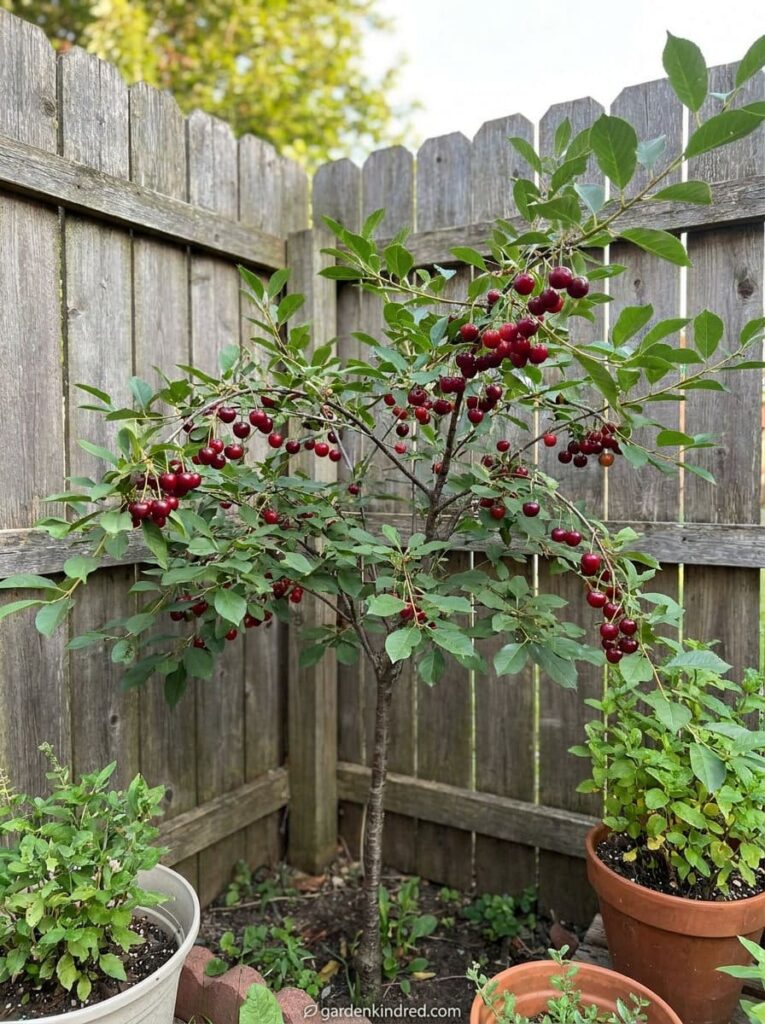
2. Tart cherry (Prunus cerasus)
If you only have room for one fruit tree and want to skip the pollination-partner problem entirely, tart cherry (also called sour cherry, the pie-cherry type, not the sweet eating cherry) is one of the few tree fruits that’s fully self-fertile on its own.
Dwarf tart cherry varieties mature around 8 to 10 feet tall and wide, semi-dwarf types reach 12 to 15 feet, and standard trees can hit 15 to 18 feet, per growing data compiled from extension and nursery sources at Harvest to Table. For a yard with a vegetable garden, a dwarf variety on Gisela rootstock is the easiest fit, needing only 8 to 10 feet of dedicated space.
Cherries hit fruiting age faster than most tree fruits too, typically bearing a real crop within 3 to 5 years of planting rather than the 4 to 6 years apple or pear can take. That matters if you’re impatient, which I am.
Tart cherry does best in full sun and moderately well-drained soil, and it’s genuinely hardy through zone 5, some varieties are rated to zone 4. Keep it on the sunnier side of your layout since it won’t tolerate the partial shade some of the other trees on this list can handle.
3. Asian pear (Pyrus pyrifolia)
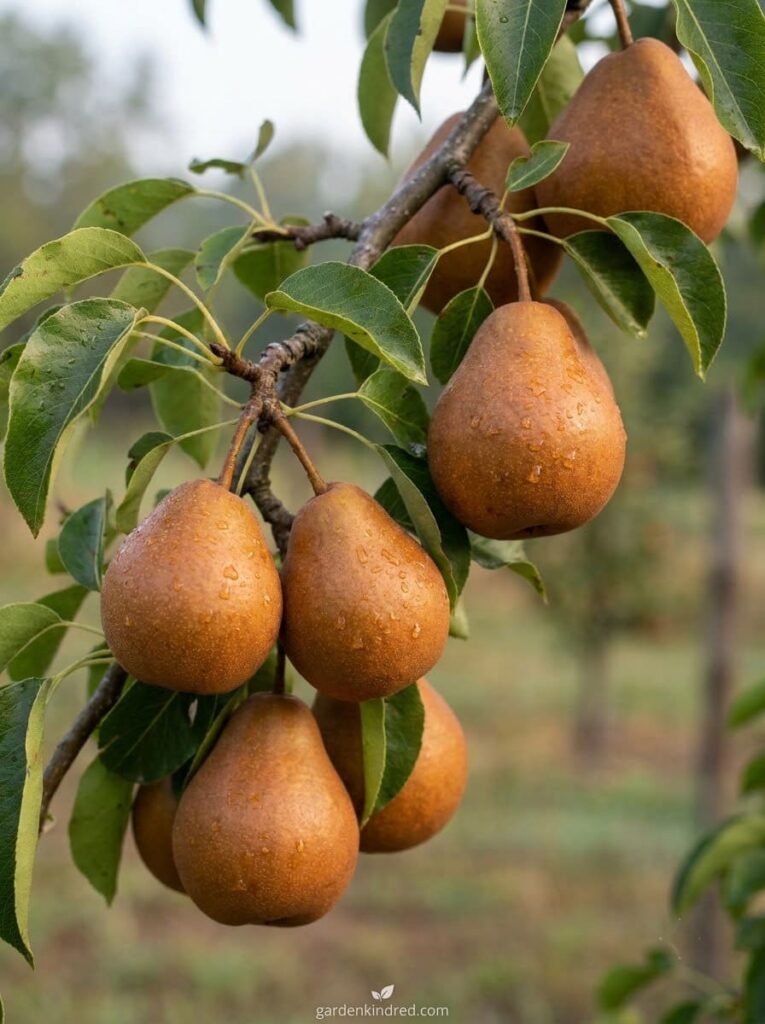
Asian pear gets skipped on most “best fall trees” lists because it isn’t as well known in the U.S. as European pear, but it’s a genuinely good fit for a smaller yard since dwarf cultivars stay compact and the fruit sets reliably even for beginners.
A dwarf Asian pear cultivar like ‘Chojuro’ matures around 8 to 10 feet tall with a 6 to 8 foot spread, while standard trees reach 12 to 15 feet, according to the Clemson Cooperative Extension Home & Garden Information Center. Space trees 10 to 15 feet apart, and the same distance from a vegetable bed is a safe minimum.
Chill hour needs vary a lot by variety, from as low as 350 to 450 hours for ‘Chojuro’ and ’20th Century’ up to 600 to 900 hours for other cultivars, so this is one tree where picking the right variety for your specific zone matters more than usual. Zone 8 gardeners especially should check the chill hour rating before buying, since a variety that needs 900 hours may not get a proper winter chill in a mild zone 8 climate.
Like apple, Asian pear generally needs a second compatible variety within about 50 feet for good pollination, so plan for two trees or confirm a neighbor already has one.
4. American persimmon (Diospyros virginiana)
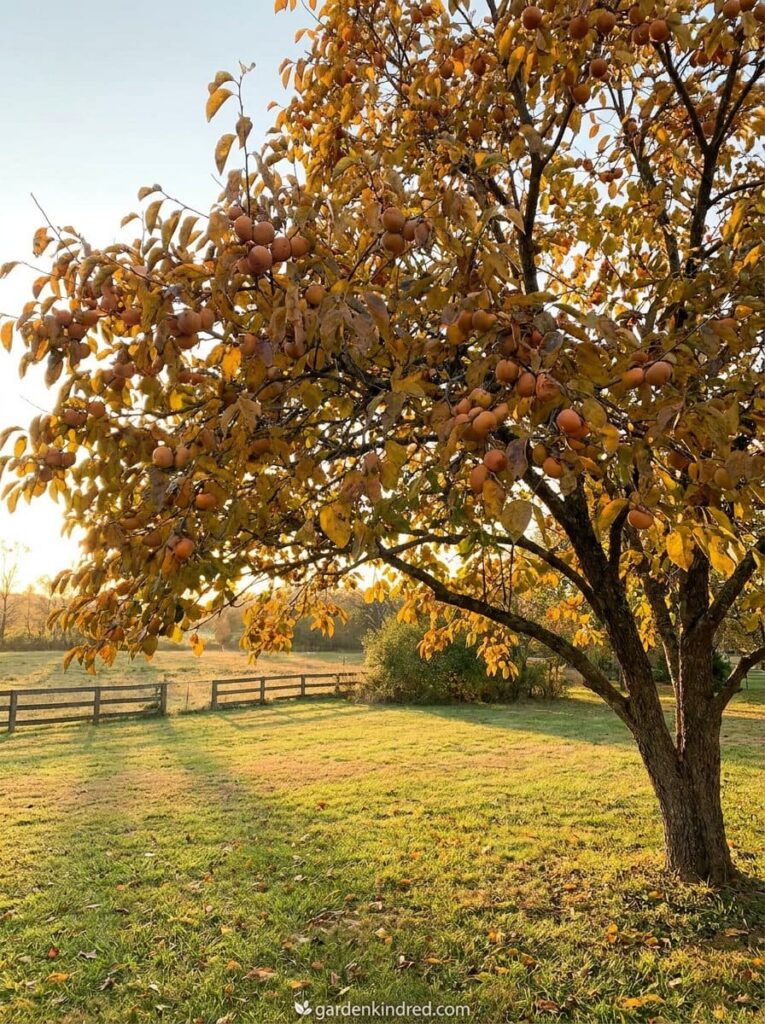
This is the tree I’d point to first if root competition with a vegetable garden is your main worry, because American persimmon’s root architecture is the opposite of a shallow, spreading shade tree.
Persimmon develops a long central taproot that can descend 8 feet or more into the soil, with the tap root fully forming over its first 2 to 3 years in the ground, per fact sheets from the University of Kentucky. Most of its feeder roots concentrate in the top 12 to 18 inches of soil rather than fanning out wide near the surface where they’d tangle with vegetable roots.
That said, persimmon is a big tree. Left alone, it can reach 30 to 80 feet tall in the wild, though open-grown yard specimens in full sun tend to stay on the shorter, broader end of that range, more like 25 to 35 feet. Recommended spacing runs 20 to 30 feet minimum between trees or from structures, wider than anything else on this list.
Because of its size, treat American persimmon as an investment tree for a bigger yard, planted well off to one side rather than tucked near a garden bed. Most named cultivars (‘Prok,’ ‘Meader’) are self-fertile, so you don’t need a second tree, and the fruit is genuinely worth the wait once you’ve had a properly ripe one.
5. Pawpaw (Asimina triloba)
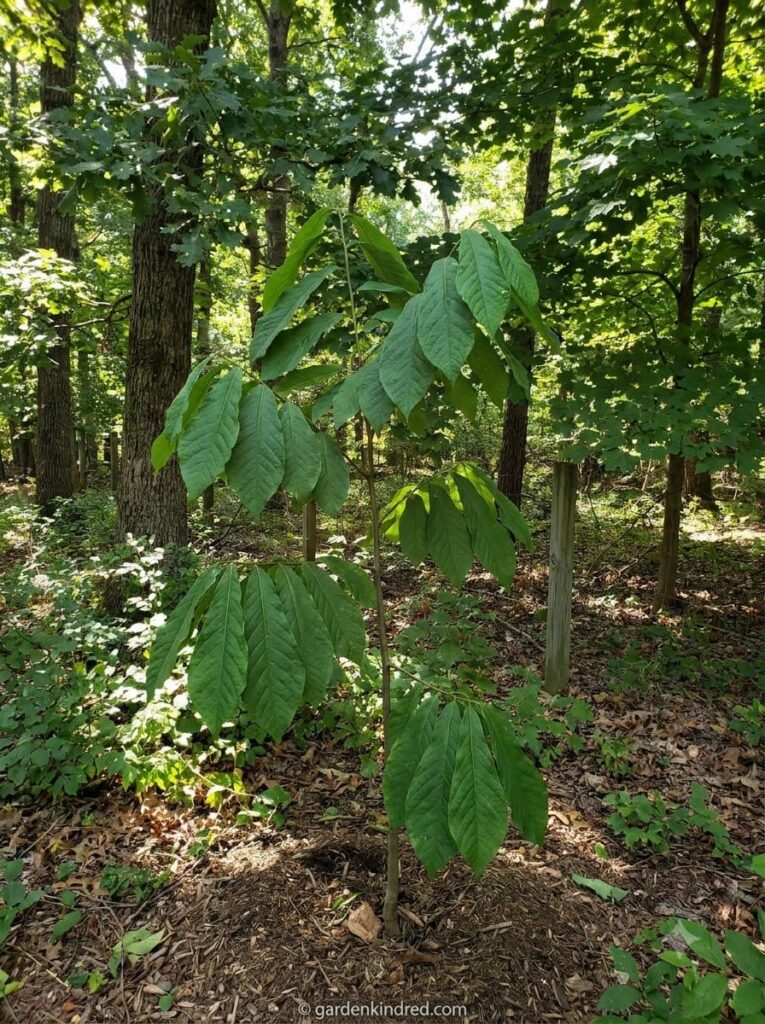
Pawpaw is native to the eastern half of the U.S. and it’s the one tree on this list that actually wants some shade while it’s young, which makes it useful for an oddly shaped yard where a full-sun spot is hard to find.
Seedlings and young trees are genuinely shade-tolerant for their first two to three years, since pawpaw evolved as a woodland understory species and can scorch in full sun before its root system is developed enough to support it, according to guidance from NC State Cooperative Extension and research summarized by Cornell Small Farms. Mature trees flip that requirement and need at least 6 hours of direct sun to fruit heavily, so plan for the tree to eventually reach a sunnier position as its canopy grows above nearby shade.
At maturity, pawpaw reaches 15 to 30 feet tall and 15 to 25 feet wide with an upright pyramidal shape. Its root system is coarse and fleshy rather than fine and fibrous, similar to magnolia, and it resents transplanting once established, so pick the permanent spot carefully the first time.
Pawpaw is hardy through zones 5 to 8 and needs a second genetically distinct tree for pollination, plus hand-pollination is often necessary in a home yard since its natural pollinators (flies and beetles, not bees) aren’t always reliable visitors. Give it 15 to 20 feet of space and keep it away from a full-sun vegetable bed while it’s young, since that shade tolerance runs both directions.
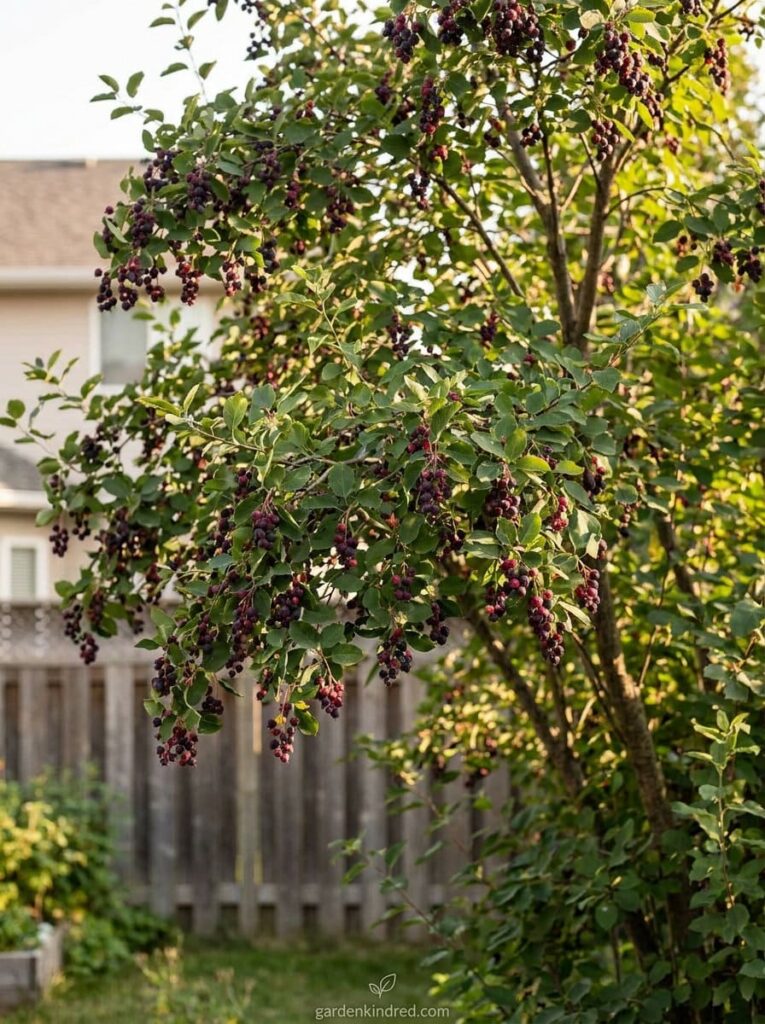
6. Serviceberry (Amelanchier species)
Serviceberry, also called juneberry or shadbush, is the most flexible tree on this list because it works as either a small single-trunk tree or a large multi-stem shrub, and either form fruits well.
Depending on species and form, mature serviceberry ranges from 4 to 25 feet tall and 4 to 15 feet wide, per plant profiles from North Carolina State Extension’s Plant Toolbox. The tree-form varieties most useful for a fruit-focused planting (Amelanchier x grandiflora, A. laevis) generally settle in the 15 to 20 foot range.
One quirk to plan around: serviceberry naturally suckers from the base, sending up new shoots that will slowly turn a single tree into a small colony if you let them grow. That’s a feature if you want a hedge, but if you want a clean single-trunk tree near a vegetable garden, you’ll need to prune suckers off every year or two, a maintenance note confirmed by Penn State Extension.
The fruit itself ripens fast, ready to harvest just 2 to 3 months after flowering, and tastes close to a blueberry with a slight almond note from the seed. Serviceberry is self-fertile, tolerates a wide range of soils, and its root system stays relatively well-behaved as long as you’re managing suckers, making it a reasonable pick even at the closer end of the 10 to 15 foot spacing range from a garden bed.
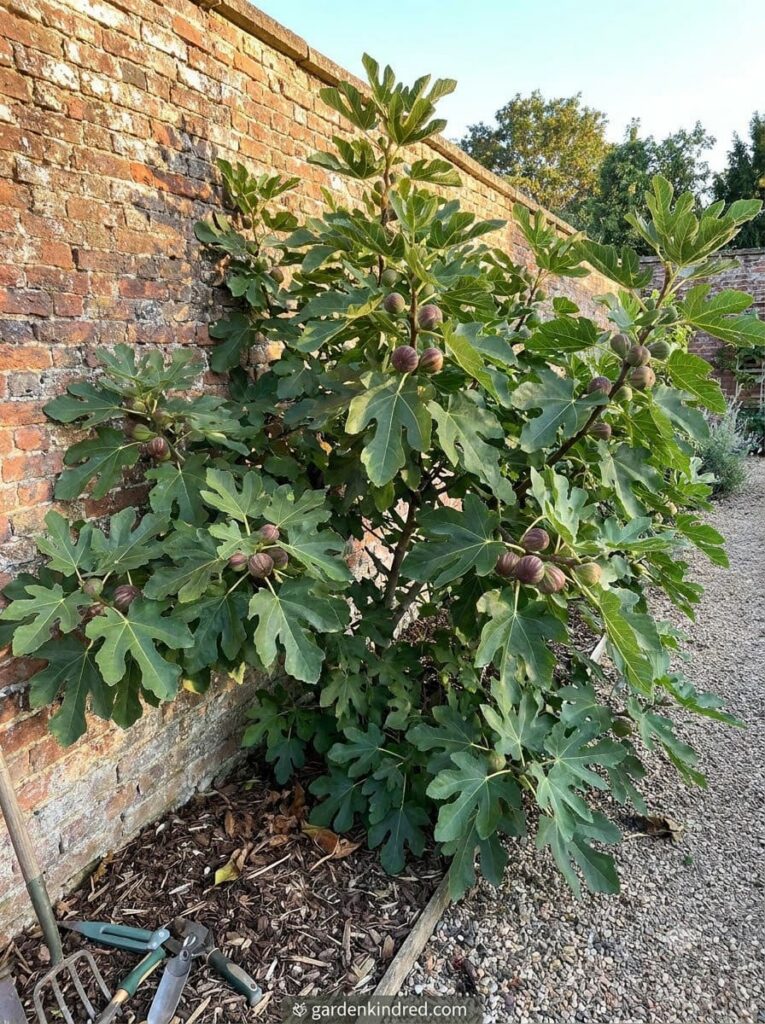
7. Cold-hardy fig (Ficus carica)
Fig is the one tree on this list where fall planting itself needs a caveat, and where zone matters more than usual.
Fall planting works well in zone 8, where winters stay above about 15 degrees Fahrenheit, but it’s riskier in zones 6 and 7, where a newly planted fig may not have enough time to establish before a hard freeze hits, according to growing guides at Gardener’s Path. If you’re in zone 6 or 7, plant by mid-September to early October at the latest, or wait for spring instead.
Cold-hardy varieties like ‘Chicago Hardy’ have a useful trick for northern gardens. Their above-ground stems are hardy only to about 10 degrees Fahrenheit, but the root crown survives down to -20 degrees Fahrenheit, so even if a hard winter kills every branch back to the ground, the plant regrows from the roots and still fruits on that season’s new growth. That makes fig one of the few “trees” on this list that can function more like a dieback shrub in zone 6, still productive, just smaller.
Roots are the real spacing concern here. Fig roots are shallow and can be aggressive, spreading wide in search of moisture rather than going deep, per Clemson HGIC’s fig growing guide. Keep fig at least 15 feet from a vegetable bed, more if your soil is sandy or fast-draining, since that’s exactly the loose, well-worked soil fig roots will chase into a garden bed the fastest.
How do these 7 trees compare at a glance?
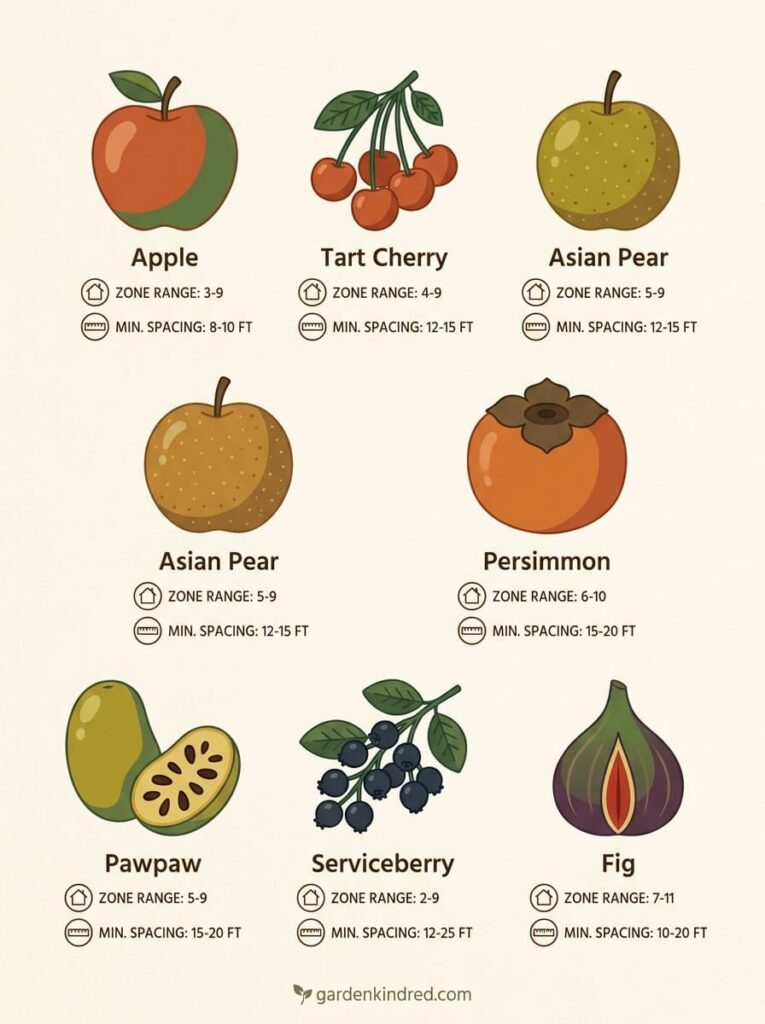
| Tree | Best zones | Mature size | Min. spacing from veg bed | Root behavior |
|---|---|---|---|---|
| Semi-dwarf apple | 5-8 | 12-16 ft | 12-15 ft | Moderate, fibrous |
| Tart cherry (dwarf) | 4-8 | 8-10 ft | 10-12 ft | Moderate, fibrous |
| Asian pear (dwarf) | 5-8 (check chill hrs) | 8-10 ft | 10-15 ft | Moderate, fibrous |
| American persimmon | 5-9 | 25-35 ft (open-grown) | 20-30 ft | Deep taproot, low competition |
| Pawpaw | 5-8 | 15-30 ft | 15-20 ft | Coarse, fleshy, low spread |
| Serviceberry (tree form) | 4-9 | 15-20 ft | 10-15 ft | Suckering but shallow-manageable |
| Cold-hardy fig | 6-8 (zone 6-7 = spring safer) | 6-15 ft (dieback in cold zones) | 15+ ft | Shallow, wide-spreading |
Frequently asked questions
Can you really grow fruit trees and vegetables in the same small yard?
Yes, but the tree has to be chosen and placed with the vegetable garden’s sun and water needs in mind from the start, not added in as an afterthought. Trees with deep taproots and manageable canopy size, like persimmon and pawpaw, cause the least competition. Wide shallow-rooted trees like fig need the most distance.
What happens if I plant a fruit tree too close to my vegetable garden?
The tree’s roots will out-compete vegetable roots for water and nutrients in the shared soil, even without any visible root intrusion into the bed, and its canopy will eventually shade part of the garden as it matures. The symptom is usually a slow yield decline in the rows nearest the tree, not sudden dramatic failure, which is why it’s easy to miss for a season or two.
Do fall-planted fruit trees need extra watering before winter?
Yes. Even though the tree looks dormant above ground, roots are actively growing until the soil freezes, and they need consistent moisture to establish. Water deeply once a week through fall unless you get a solid inch of rain, and continue occasional watering through any dry winter warm spells.
Which of these trees fruits fastest after planting?
Tart cherry and serviceberry are the quickest, often producing a meaningful first crop within 3 years. Apple and Asian pear typically take 3 to 5 years. Persimmon and pawpaw are the slowest, often 4 to 7 years to first significant fruiting, which is part of why their bigger footprint is worth planning around properly the first time.
Products We Recommend
This post contains affiliate links. We may earn a commission on qualifying purchases at no extra cost to you.
32oz Tree & Shrub Drench
Fall-planted trees are actively growing roots for weeks after the leaves stop, and a root stimulator drench at planting time (and again a few weeks later) gives that establishment period a real boost, which matters most for the deeper-rooted trees on this list like persimmon and pawpaw that need their root system working before hard winter sets in.
Shop Now
Rapitest Soil Test Kit for Gardens, Vegetables, Flowers and Lawns
Before you decide where a new fruit tree goes relative to your vegetable beds, testing the soil pH and nutrient levels at both spots tells you whether the tree and your vegetables actually want the same conditions, since a tree that prefers more acidic soil (like fig or persimmon) can shift pH in ways that matter to nearby crops over time.
Shop now
Heavy Duty Steel Tree Stake Kit
A newly planted fall tree has roots but no real anchoring yet, and winter wind is exactly what knocks a young tree sideways or snaps its leader before spring growth locks it in place. This kit includes 3 stakes, 3 straps, and 31.2 feet of rope sized for a first-year tree.
Shop nowNever miss an update — choose Garden Kindred as your preferred source on Google.
How it works: Tap the button below to open Google's settings page, then check the box next to Garden Kindred.
Tap the checkbox to turn it blue — that's how you know it's set.